Sump Pump Cover Ideas and 10 Ways to Hide a Sump Pump in a Finished Basement
How to hide, enclose, and integrate your sump pump in a finished basement. Every approach from $30 covers to $2,500 custom cabinetry.
A sump pump does not have to be an eyesore in a finished basement. In 2026, homeowners are using decorative pit covers ($30 to $150), custom enclosures ($200 to $1,500), noise isolation techniques, and smart layout planning to make sump pumps virtually invisible while maintaining full service access.
A sump pump is one of the most important pieces of equipment in a waterproofed basement. It runs silently in the background and keeps your basement dry during every storm. But when you finish a basement into living space, that open pit with exposed PVC pipes, a visible pump, and a discharge line running up the wall becomes the one thing that looks out of place.
Every homeowner who finishes a basement with a sump pump faces the same question: how do I make this look good without compromising function? The answer is not to hide the pump and forget about it. The answer is to design around it so it looks intentional, stays fully accessible for maintenance, and continues to protect your basement exactly as it should.
See our how to finish a basement guide for the full finishing process and our pre-finish audit checklist for what to verify before starting.
TL;DR
- The cheapest fix is a decorative or airtight pit cover, $30 to $150, installed in minutes.
- For a finished room, a louvered closet ($300 to $1,000) or a built-in bench ($500 to $1,500) hides the pump and the discharge line.
- Whatever you build, keep a 3 ft by 3 ft clear access area, a reachable GFCI outlet, and a way to get to the check valve.
- If you have a radon system or want to cut noise and odor, use a sealed airtight cover.
- Yes, you can finish a basement that has a sump pump. Plan the room layout around it before framing.
Quick Comparison: Sump Pump Design Solutions 2026
| Design Approach | Cost | Best For | Concealment Level | DIY Friendly |
|---|---|---|---|---|
| Sealed airtight pit cover | $50-$150 | Radon blocking, noise reduction | Moderate | Yes |
| Decorative flush-mount cover | $30-$100 | Budget concealment | Good | Yes |
| Custom tile or wood inset cover | $100-$300 | Seamless floor appearance | Excellent | Moderate |
| Utility closet enclosure | $300-$1,000 | Most finished basements | Excellent | Moderate |
| Built-in bench or window seat | $500-$1,500 | Media rooms, playrooms | Excellent | Moderate |
| Decorative screen or divider | $100-$400 | Gyms, workshops | Good | Yes |
| Custom cabinetry integration | $800-$2,500 | High-end bars, media rooms | Excellent | No |
| Discharge pipe trim boxing | $50-$200 | All basements | Good | Yes |
| Discharge pipe behind wall | $200-$800 | New finishing projects | Excellent | Moderate |
| Noise reduction package (4 steps) | $60-$250 | Bedrooms, offices, media rooms | N/A - functional | Yes |
The Golden Rule: Never Sacrifice Access for Aesthetics
Before any design decision, understand this non-negotiable principle: you must be able to reach the sump pump, pit, and discharge line for maintenance and emergency access at all times.
A sump pump needs quarterly testing (pouring water into the pit to verify activation), annual cleaning (removing sediment and debris from the pit), battery backup inspection (checking charge and testing activation), and occasional pump replacement every 7 to 10 years.
Any cover, enclosure, or concealment method that makes these tasks difficult, time-consuming, or impossible is a bad design. The best sump pump design ideas make the pump invisible during everyday use and fully accessible in under 30 seconds when maintenance is needed.
See our sump pump buying guide for maintenance schedules and our smart sump pumps guide for monitoring systems that reduce the need for physical checks.
Sump Pump Pit Covers and Lids
The simplest and most affordable design upgrade is replacing the basic plastic or plywood cover that most pumps come with. A quality pit cover improves the appearance, reduces pump noise, blocks sewer gas and radon from entering the basement, and prevents objects from falling into the pit.
Sealed Airtight Covers ($50 to $150)
Sealed airtight sump pit covers are the best functional upgrade. They use a gasket seal and mechanical fasteners to create an airtight barrier over the pit. This blocks radon gas (a significant concern in many basements), eliminates sewer odors from the pit, reduces pump noise by 30 to 50 percent, prevents humidity from escaping the pit into the finished space, and keeps debris and small objects out of the pit.
Airtight covers are typically clear or semi-opaque polycarbonate or white PVC. The clear versions let you visually inspect the water level without removing the cover. Most include pre-cut holes for the discharge pipe, power cord, and float switch cable, plus a removable inspection port.
For basements with radon concerns, a sealed pit cover is not optional. It is a required component of any radon mitigation system. See our radon testing and mitigation guide and radon and waterproofing guide for how the sump pit connects to radon entry.
Recommended: Airtight Sump Pit Cover
Clear polycarbonate sealed cover with gasket, pre-cut cord/pipe holes, and inspection port. Fits most standard 18-24 inch pit openings.
Check Price on AmazonDecorative Flush-Mount Covers ($30 to $100)
Flush-mount covers sit level with the surrounding floor and are designed to blend in rather than stand out. They come in various finishes including black, white, gray, and faux-stone textures. Some are designed to accept tile or flooring material on top, making the cover virtually invisible when the floor is finished.
The trade-off with decorative covers is that most are not airtight. They improve appearance but do not provide the radon blocking and noise reduction benefits of sealed covers. For basements where aesthetics are the primary concern and radon is not an issue, decorative covers are an affordable solution.
Recommended: Decorative Flush-Mount Sump Cover
Low-profile cover with faux-stone finish that blends with most basement flooring. Available in multiple sizes.
Check Price on AmazonCustom Wood or Tile-Inset Covers ($100 to $300 DIY)
For a truly invisible look, some homeowners build custom covers from hardwood or plywood that match the surrounding flooring, with a recessed panel that accepts the same tile or LVP used on the rest of the basement floor. The cover sits in a frame flush with the finished floor surface and lifts out for access.
Building a custom cover requires basic woodworking skills and careful measurement. The cover must be strong enough to support foot traffic (use 3/4 inch plywood minimum), have a way to lift it easily (recessed finger pulls or a flush-mount pull ring), and not seal so tightly that it traps moisture or prevents the pump from operating.
This is the most visually seamless option but requires more effort to build and more care to ensure it does not interfere with pump operation. Always test the pump with the cover in place before finishing the surrounding floor. See our best basement flooring guide for flooring options that work around sump pits.
Sump Pump Enclosures and Concealment
For homeowners who want to completely hide the sump pump area, enclosures range from simple utility closets to custom built-in furniture.
Utility Closet Enclosure ($300 to $1,000)
The most common approach in professionally finished basements is framing a small utility closet around the sump pit. The closet typically measures 3 feet by 3 feet to 4 feet by 4 feet and includes a standard interior door or a removable panel for access.
Design requirements for a sump pump closet:
- Ventilation is mandatory. A completely sealed closet traps humidity from the pit, creates a mold-friendly environment, and can overheat the pump motor. Include a louvered door or vent grilles top and bottom to allow air circulation. The total vent area should be at least 1 square foot.
- The closet floor should remain unfinished concrete or sealed concrete around the pit. Do not install carpet, hardwood, or any moisture-sensitive flooring inside the closet because the area around the pit will occasionally get wet during maintenance or high water events.
- Leave enough room inside to kneel and work on the pump. A 3 foot by 3 foot closet is the minimum. If the discharge line runs vertically inside the closet, you need room to access it as well.
- Install a GFCI outlet inside the closet for the pump and battery backup. The outlet must be above the expected water line in case of backup pump failure.
- Consider adding a battery-powered LED light inside the closet so you can see during maintenance. A motion-activated light that turns on when you open the door is ideal.
Built-In Bench or Window Seat ($500 to $1,500)
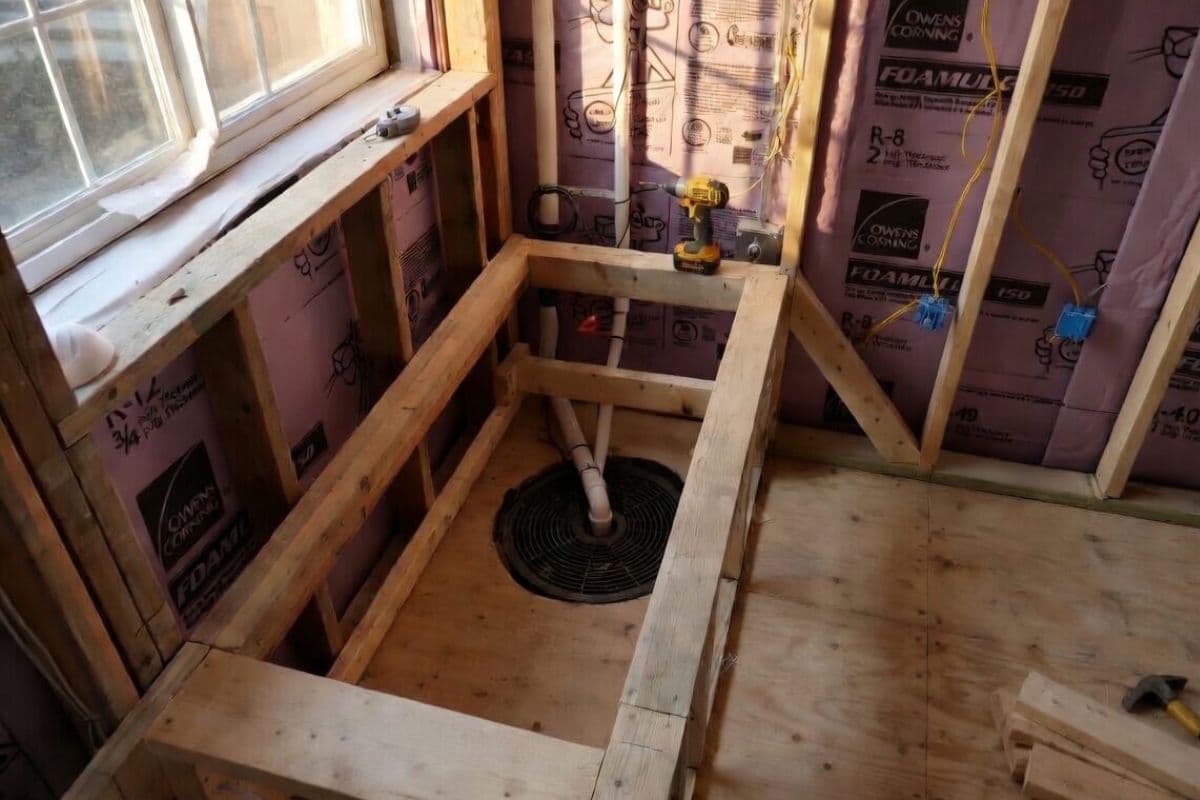
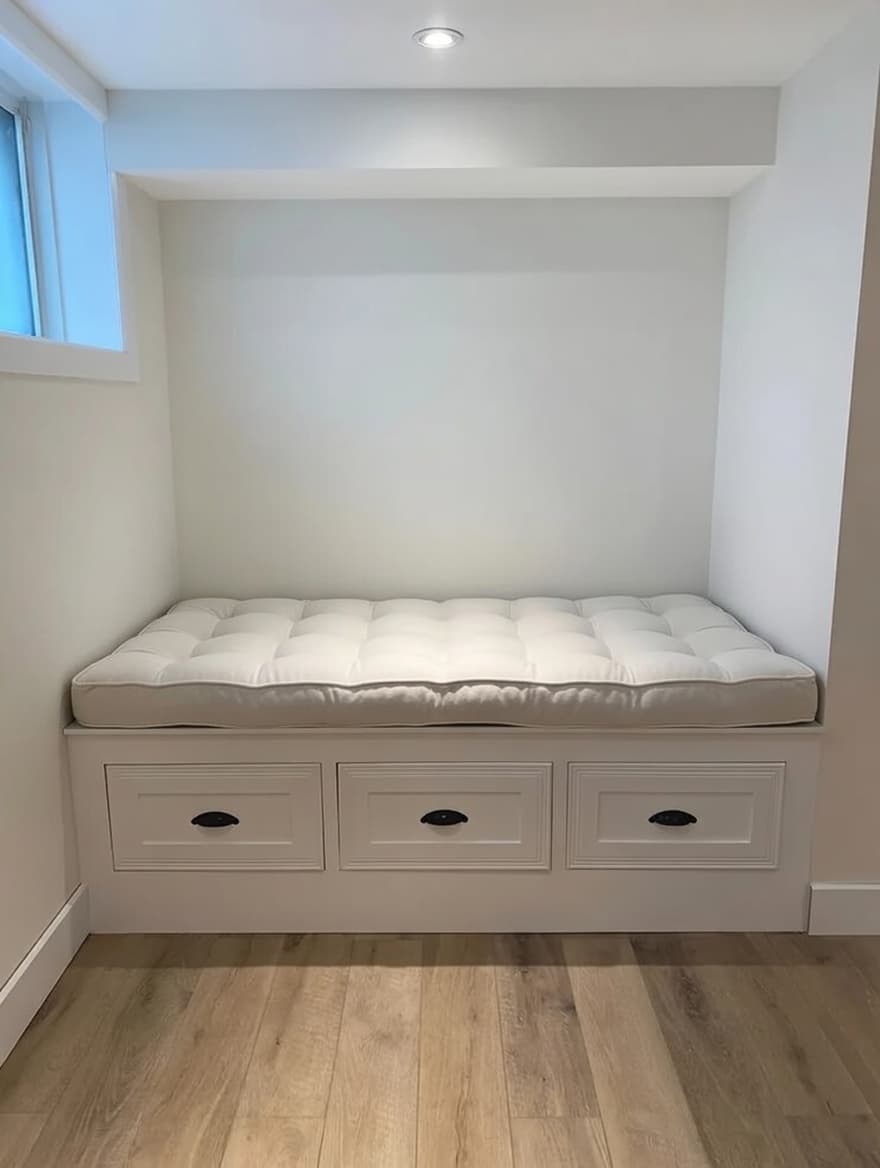
A creative approach for basements where the sump pit is along a wall: build a bench or window seat over the pump area with a hinged top that lifts for access. The bench serves as functional seating in a media room, playroom, or home gym while completely hiding the pump underneath.
- The bench top must be hinged, not screwed down, for easy access. Use a piano hinge or heavy-duty lid support hinges that hold the top open while you work.
- The front of the bench should be open or have removable panels for airflow. A solid enclosed bench without ventilation will trap moisture and create mold problems.
- This design works best when the sump pit is within 12 inches of a wall. If the pit is in the middle of the floor (common in older basements), a bench enclosure is not practical.
Decorative Screen or Room Divider ($100 to $400)
The simplest concealment method for unfinished or partially finished basements: a freestanding decorative screen or room divider placed in front of the sump pump area. This hides the pump from view without any construction and can be moved instantly for maintenance. Screens work well in basements used as home gyms, workshops, or storage areas where a fully finished look is not required. Choose a screen that allows airflow (slatted or fabric screens, not solid panels) to prevent moisture buildup behind it.
Cabinetry Integration ($800 to $2,500 Custom)
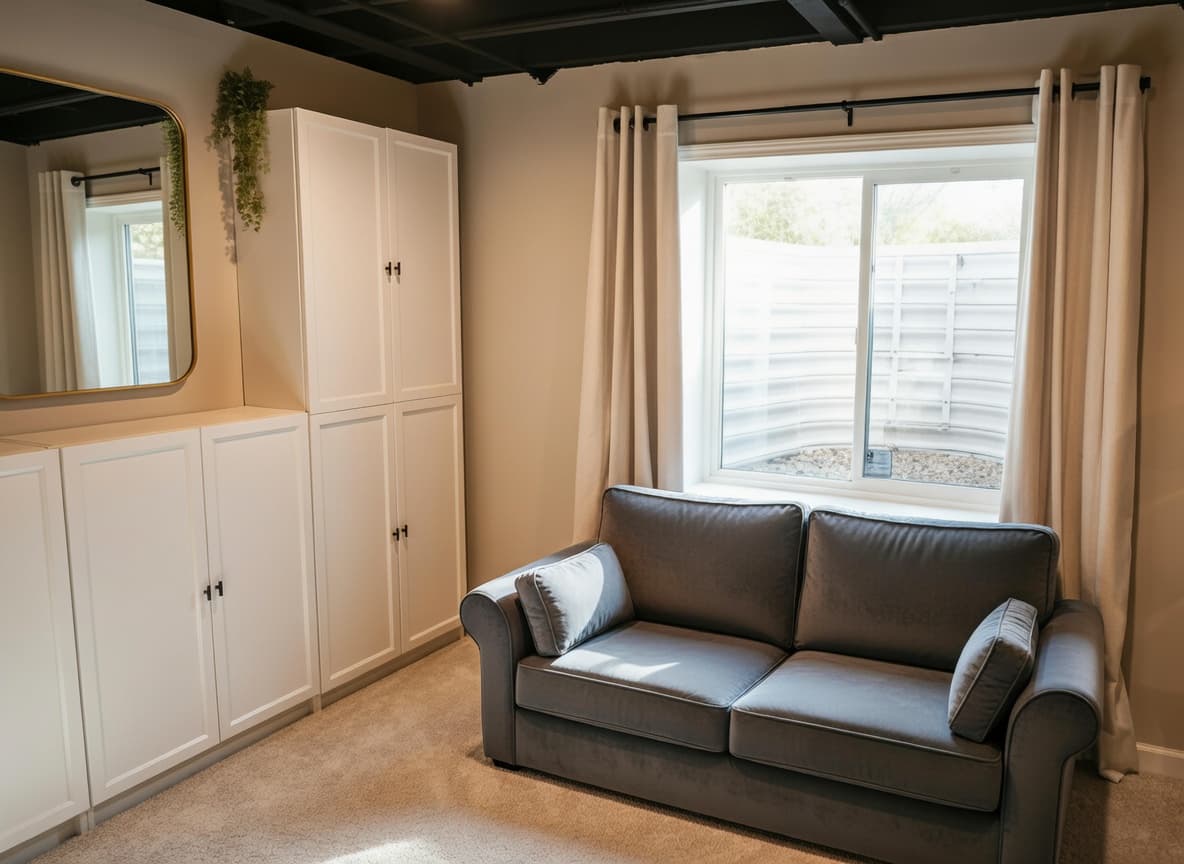
For high-end finished basements, home bars, media rooms, in-law suites, a custom cabinet built around the sump pump integrates it into the room's cabinetry. The cabinet matches the surrounding millwork and includes a door or removable panel for access. This is the most expensive option but produces a completely seamless result. Work with a finish carpenter or cabinet maker who understands that the cabinet must have ventilation, a waterproof interior (sealed plywood or PVC board, not MDF which absorbs moisture), and easy access. Show them the pump and explain the maintenance requirements before they design the cabinet.
Discharge Line Concealment
The PVC discharge pipe running from the sump pit up the wall and out through the rim joist is often the most visible and least attractive part of the sump pump system. Here are the most effective ways to conceal it.
Box It In with Trim ($50 to $200 DIY)
Build a simple three-sided box from 1x4 or 1x6 lumber around the discharge pipe, running from the floor to the ceiling or to the point where the pipe exits the wall. Paint or stain the box to match the surrounding trim or wall color. This is the most common approach and takes 1 to 2 hours. The box should be screwed together (not nailed) so it can be disassembled quickly if you ever need to replace the discharge pipe, check valve, or connections. Leave the bottom open for air circulation and the top open or loosely capped.
Run Behind the Wall ($200 to $800)
If you have not yet framed and drywalled your basement walls, the cleanest approach is routing the discharge pipe behind the wall framing before drywall goes up. The pipe runs vertically inside the wall cavity and exits through the rim joist behind the drywall. The only visible element is a small access panel at the check valve location. This requires planning during the framing stage. It is not practical to retrofit after drywall is installed without significant demolition. If you are currently planning your basement finishing, discuss discharge pipe routing with your contractor before framing begins.
Paint to Match ($10 to $30)
The simplest and cheapest option: paint the PVC pipe the same color as the wall behind it. Use a PVC primer followed by interior latex paint in the wall color. The pipe does not disappear, but it becomes far less noticeable. This is a good temporary solution while you plan a more permanent concealment.
Decorative Pipe Cover ($30 to $80)
Snap-on decorative pipe covers designed for concealing plumbing and HVAC pipes slide over the PVC discharge line and provide a cleaner look than exposed pipe. Available in white, gray, and wood-grain finishes. They snap on and off for easy access to the pipe and check valve underneath.
Recommended: Decorative Pipe Cover
Snap-on pipe cover in white and wood-grain finishes. Fits 1.5 to 2 inch PVC discharge pipes. No tools required for installation or removal.
Check Price on AmazonNoise Reduction Design
Sump pumps are not loud by modern standards, most quality submersible pumps operate at 40 to 55 dB, but in a quiet finished basement used as a bedroom, media room, or home office, the pump cycling on and off can be noticeable. Here are design strategies that reduce pump noise to near-silent levels.
Vibration Isolation Pad ($15 to $40)
Place a rubber or neoprene isolation pad under the pump inside the pit. The pad absorbs vibration from the pump motor that would otherwise transfer through the pit walls into the concrete slab and up through the finished floor. This is the single most effective noise reduction step and costs almost nothing.
Recommended: Sump Pump Vibration Isolation Pad
High-density rubber pad sized for standard sump pump bases. Reduces motor vibration transfer by up to 70 percent.
Check Price on AmazonInsulated Pit Cover
A sealed airtight cover (described above) blocks airborne noise from escaping the pit. The combination of an isolation pad and an airtight cover reduces pump noise by 50 to 70 percent compared to an open pit with no pad.
Discharge Pipe Insulation
Wrap the discharge pipe in foam pipe insulation to dampen the sound of water rushing through the pipe when the pump cycles. The rushing water sound is often more noticeable than the pump motor itself, especially when the pipe runs through a wall cavity near a living space. Foam pipe insulation costs $5 to $15 for enough to cover a typical discharge run.
Check Valve Upgrade ($20 to $50)
A slamming check valve is one of the most common sump pump noise complaints. When the pump shuts off, water in the discharge pipe falls back down and hits the check valve with a loud thud. A spring-loaded quiet check valve ($20 to $50) closes gradually instead of slamming, eliminating the thud.
Recommended: Spring-Loaded Quiet Check Valve
Silent spring-loaded check valve that eliminates water hammer. Available for 1.5 and 2 inch discharge pipe.
Check Price on AmazonPump Upgrade
If your current pump is inherently loud (pedestal pumps are louder than submersible, and older pumps are louder than new ones), upgrading to a modern submersible pump rated for quiet operation (under 45 dB) may be the most effective long-term solution. See our best sump pumps 2026 guide for quiet models and our submersible vs pedestal comparison for noise differences.
Basement Layout Planning Around the Sump Pump
The best time to design around a sump pump is before you finish the basement. Here is how to plan your layout so the pump integrates naturally into each room type, with typical concealment costs for each scenario.
Home Theater or Media Room ($300 to $1,500 for pump concealment)
Place the viewing area, screen, and seating as far from the sump pit as possible. If the pit is along the back wall, the screen goes on the back wall and seating faces it from the opposite side. Enclose the pump in a utility closet behind the screen wall ($300 to $1,000) or build a platform riser for the back row of seating with the pump accessed through a panel in the riser ($500 to $1,500). The ambient noise of a movie or music system easily masks a well-insulated pump. Add the full noise reduction package ($60 to $250) for quiet scenes.
Home Office ($300 to $800 for pump concealment)
The sump pump closet or enclosure can double as a supply closet. Build shelving above the pump area (above the expected water line) for office supplies, files, or equipment. The pump occupies the bottom of the closet and supplies occupy the top. A louvered closet door keeps everything hidden. Total cost is typically $300 to $800 for the closet framing, door, and shelving.
Home Gym ($50 to $200 for pump concealment)
Sump pumps and home gyms coexist well because gym flooring (rubber tiles or mats) naturally dampens vibration and the ambient noise of exercise equipment masks pump operation. Place the pump pit in a corner and cover it with a sealed lid ($50 to $150). Use interlocking rubber floor tiles around the pit area that can be individually removed for pit access. Total concealment cost is typically just the sealed cover plus a few extra floor tiles ($50 to $200). See our basement home gym guide for complete gym design advice.
Bedroom or Guest Suite ($400 to $1,500 for pump concealment and noise reduction)
Bedrooms require the most aggressive noise reduction because the pump may cycle while someone is sleeping. Use all four noise reduction strategies (isolation pad, sealed cover, pipe insulation, quiet check valve) for $60 to $250 total. Enclose the pump in a closet with a solid-core door, not a louvered door ($400 to $1,000 for the closet plus $150 to $300 for a solid-core door). If possible, locate the bed on the opposite side of the room from the pump. Consider a smart sump pump monitor that alerts your phone instead of relying on audible alarms that would wake sleepers.
Bar or Entertainment Area ($800 to $2,500 for pump concealment)
Build the sump pump into the bar's base cabinetry or into a utility chase behind the bar back wall ($800 to $2,500 depending on cabinetry complexity). The cabinetry provides concealment and the bar area's ambient noise during use masks pump operation. Ensure the cabinet section housing the pump has ventilation and a removable panel for access.
Building Code Requirements for Sump Pump Enclosures
Most building codes do not specifically address sump pump enclosures, but several general requirements apply:
- Electrical access. The sump pump must be plugged into a dedicated GFCI-protected outlet that remains accessible without tools. Do not hard-wire a sump pump. It must be unpluggable for service. Do not bury the outlet behind drywall or inside a sealed enclosure.
- Service access. While no specific code specifies minimum clearance around a sump pit, building inspectors expect reasonable access for maintenance and pump replacement. A 3 foot by 3 foot clear area around the pit is a practical minimum.
- Ventilation. If the sump pit is connected to a radon mitigation system, the sealed cover is part of that system and must not be modified. If the pit is enclosed in a closet, the closet must have adequate ventilation to prevent moisture buildup (louvered door or vent grilles).
- Discharge line. The discharge pipe must remain accessible at the check valve location. If the pipe is concealed behind a wall, an access panel at the check valve is required for service.
See our basement permits guide for general finishing code requirements.
Frequently Asked Questions
Can you finish a basement that has a sump pump?
Yes. Most finished basements in wet areas have one. The rule is to plan around the pump before you frame anything. Keep it reachable, keep it on a dedicated GFCI outlet, and frame a closet, bench, or cabinet with a removable panel or louvered door so you can pull the pump without tearing out drywall. Add a battery backup or water-powered backup before you install flooring, since one failed pump can ruin carpet, drywall, and furniture in a single storm. See our sump pump backup guide and our guide to finishing a basement.
How do I hide a sump pump in a finished basement?
The most common methods are replacing the basic lid with a decorative flush-mount cover ($30 to $100), building a small utility closet around the pit ($300 to $1,000), integrating the pump into a built-in bench or window seat ($500 to $1,500), or enclosing it in custom cabinetry ($800 to $2,500). The discharge pipe can be boxed in with painted trim ($50 to $200), routed behind the wall during framing, or concealed with snap-on decorative pipe covers ($30 to $80). All concealment methods must maintain full access to the pump for quarterly testing, annual cleaning, and eventual replacement.
Can I cover my sump pump pit with flooring?
You can install a removable cover over the pit that accepts the same flooring material used on the rest of the basement floor, creating a nearly invisible look. However, the cover must be removable without tools for pump access. Do not permanently install flooring over the pit or seal it in a way that prevents access. Custom covers with inset tile or LVP that match the surrounding floor cost $100 to $300 to build and provide the most seamless appearance. See our best basement flooring guide for flooring options that work around sump pits.
How do I make my sump pump quieter?
Reduce sump pump noise with four strategies: place a rubber vibration isolation pad under the pump ($15 to $40), install a sealed airtight pit cover ($50 to $150), wrap the discharge pipe in foam insulation ($5 to $15), and replace a slamming check valve with a spring-loaded quiet check valve ($20 to $50). Combined, these reduce pump noise by 50 to 70 percent. If the pump itself is old or a loud pedestal model, upgrading to a modern submersible pump rated under 45 dB provides the most significant improvement. See our best sump pumps 2026 guide for quiet models.
Do I need ventilation in a sump pump closet?
Yes. A completely sealed closet traps humidity escaping from the sump pit, creates conditions for mold growth on the closet walls and ceiling, and can overheat the pump motor. Install a louvered door or vent grilles at the top and bottom of the closet to allow air circulation. The total vent area should be at least 1 square foot. If the sump pit is part of a radon mitigation system, the pit cover itself should be sealed airtight, but the closet around it still needs ventilation to manage humidity.
Can I build a bench over my sump pump?
Yes, a built-in bench or window seat over the sump pump area is one of the most popular design solutions for finished basements. The bench top must be hinged for easy access (use piano hinges or lid-support hinges that hold the top open), and the front of the bench must be open or have removable panels for airflow. Do not build a fully enclosed bench with no ventilation because trapped moisture will cause mold. This design works best when the sump pit is within 12 inches of a wall. Pits in the center of the floor are better served by a utility closet or decorative cover.
Should I seal my sump pump pit?
Yes, sealing the sump pit with an airtight cover is recommended for all finished basements. A sealed cover reduces pump noise, blocks radon gas from entering the living space, prevents humidity from escaping the pit, stops sewer odors, and keeps debris out of the pit. If your basement has elevated radon levels or a radon mitigation system, a sealed pit cover is required, not optional. Sealed airtight covers cost $50 to $150 and are one of the highest-value upgrades for any sump pump installation.
How much clearance do I need around a sump pump?
There is no specific building code requirement for clearance around a residential sump pump pit, but practical maintenance needs dictate a minimum of 3 feet by 3 feet of clear access area. This provides enough room to kneel, remove the cover, inspect the pump, pour test water into the pit, and eventually remove and replace the pump. If you are building an enclosure, size it to at least 3 feet by 3 feet interior clear space. A larger enclosure (4 feet by 4 feet) is more comfortable for maintenance.
What is the best sump pump cover for a finished basement?
For finished basements where both appearance and function matter, a sealed airtight polycarbonate cover ($50 to $150) is the best option. Clear polycarbonate lets you visually inspect the water level without removing the cover, the gasket seal blocks radon and odors, and the mechanical fasteners hold the cover secure while remaining removable for maintenance. For the most seamless appearance, a custom cover with inset flooring material ($100 to $300 DIY) makes the pit virtually invisible. For basements without radon concerns, a decorative flush-mount cover ($30 to $100) provides a clean look at the lowest cost.
Glossary of Sump Pump Design Terms
- Sump pit cover / sump lid
- A cover placed over the sump pit opening to block debris, reduce noise, prevent odors, and in sealed versions block radon gas. Covers range from basic plastic lids ($10 to $20) to sealed airtight polycarbonate covers ($50 to $150) to custom flush-mount covers with inset flooring ($100 to $300).
- Airtight sump cover
- A pit cover with a gasket seal and mechanical fasteners that creates an airtight barrier over the sump pit. Required for radon mitigation systems and recommended for all finished basements because they block radon, reduce noise, prevent odors, and control humidity escaping from the pit.
- Check valve
- A one-way valve installed in the sump pump discharge pipe that prevents water from flowing back into the pit after the pump shuts off. Standard check valves close with a loud thud called water hammer. Spring-loaded quiet check valves ($20 to $50) close gradually and eliminate the noise.
- Discharge pipe / discharge line
- The PVC pipe (typically 1.5 to 2 inch diameter) that carries pumped water from the sump pit up through the wall and outside the home. Often the most visible component of a sump pump system and the primary target for concealment with trim boxing, wall routing, or decorative covers.
- Vibration isolation pad
- A rubber or neoprene pad placed under the sump pump inside the pit to absorb motor vibration that would otherwise transfer through the pit walls into the concrete slab and finished floor above. Cost: $15 to $40. The single most cost-effective noise reduction measure for sump pumps.
- Utility closet / mechanical closet
- A framed and drywalled closet built around a sump pump pit to conceal the pump, pit, and discharge pipe behind a door or removable panel. Requires ventilation (louvered door or vent grilles) to prevent moisture buildup and must maintain service access to the pump, outlet, and discharge connections.
- Flush-mount cover
- A sump pit cover designed to sit level with the surrounding finished floor, creating a flat surface that blends into the flooring. Some flush-mount covers accept inset tile or vinyl plank material to match the surrounding floor exactly. Typically not airtight.
- Water hammer
- The loud thud or banging sound caused by a check valve slamming shut when the sump pump turns off and water in the discharge pipe falls back against the valve. Spring-loaded quiet check valves eliminate water hammer by closing gradually.
- GFCI (Ground Fault Circuit Interrupter)
- An electrical outlet or breaker that instantly shuts off power when it detects an electrical fault, protecting against shock in wet environments. Building code requires GFCI-protected outlets in all basement locations. The sump pump must be plugged into a GFCI outlet that remains accessible without removing any enclosure or cover.
Related Guides
How to Finish a Basement
Complete step-by-step guide to finishing your basement into livable space.
Pre-Finish Audit Checklist
What to verify before starting your basement finishing project.
Sump Pump Buying Guide
How to choose the right sump pump for your basement with maintenance schedules.
Best Sump Pumps 2026
Top-rated submersible sump pumps including quiet models under 45 dB.
Smart Sump Pumps Guide
Monitoring systems that reduce the need for physical checks.
Submersible vs Pedestal Sump Pump
Noise differences and which type is right for finished basements.
Sump Pump Cost
Installation and replacement costs broken down by pump type.
Best Basement Flooring
Flooring options that work well around sump pits in finished basements.
Basement Home Gym
Complete gym design advice including how to work around utility equipment.
Basement Permits Guide
Code requirements for finishing a basement including electrical and access rules.
Radon Testing and Mitigation
How the sump pit connects to radon entry and mitigation requirements.
Radon and Basement Waterproofing
Why sealed sump covers are required as part of radon mitigation systems.
Drop Ceiling vs Drywall
Ceiling options for finished basements and their access implications.
Basement ADU and Rental Suite
Converting a basement to a rental unit including utility equipment integration.
Basement Renovation Mistakes
Common errors that compromise sump pump access and function during finishing.
From Our Network
- The Garage Guide. Complete garage organization and best garage cabinets guides covering similar concealment and built-in cabinetry techniques for hiding utility equipment in garages.
- The Septic Guide. Best septic tank risers guide, which addresses a similar access-vs-appearance challenge for buried septic tank lids.
Get Help With Your Basement Finishing Project
Connect with pre-vetted basement finishing contractors in your area. Free assessments, no obligation.