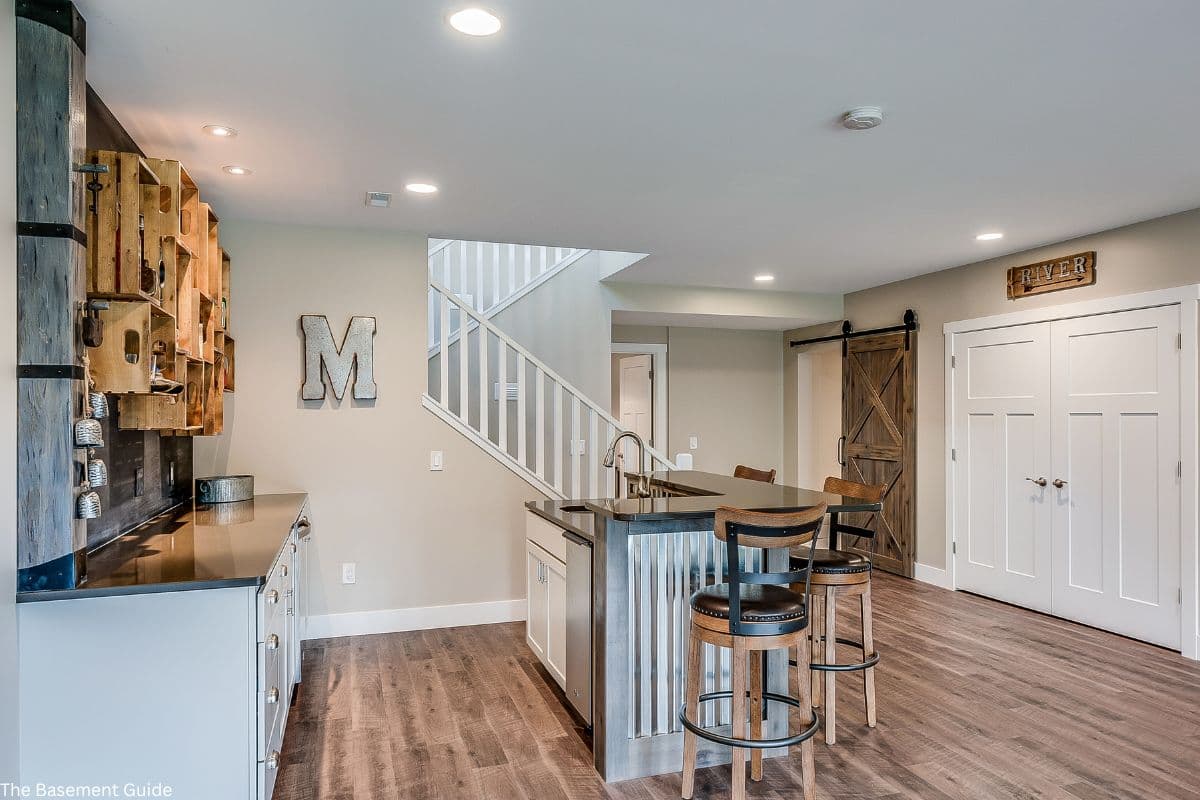
A basement ADU (Accessory Dwelling Unit) is a self-contained secondary living space created within an existing basement that includes a bedroom, bathroom, kitchen or kitchenette, and typically a separate entrance, meeting local zoning and building code requirements to be legally occupied and rented as an independent dwelling. Unlike a simple basement finish, an ADU must satisfy a higher bar of code compliance covering egress, utility separation, fire safety, and habitability standards that vary significantly by municipality, making zoning verification the required first step before any design or construction begins. The total project cost runs $55,000 to $120,000 for a code-compliant one-bedroom unit, but a well-executed basement ADU generates $1,800 to $4,000 per month in rental income and adds $50,000 to $150,000 or more to resale value, producing one of the strongest ROI profiles of any home improvement available. Waterproofing is the single most critical pre-construction requirement: a damp or musty basement rental violates habitability standards, drives tenant turnover, and can result in the unit being condemned by a building inspector.
Converting your basement into an Accessory Dwelling Unit (ADU) or rental suite is one of the highest-ROI home projects available right now. A well-designed basement apartment can bring in $1,800 to $4,000 per month in rent while adding $50,000 to $150,000 or more to your home’s resale value.
But basements are tricky. Moisture, waterproofing, egress, utilities, and zoning rules can make or break the project. This expert guide walks you through exactly what to look for, the critical waterproofing steps most people miss, realistic 2026 costs, design must-haves, legal requirements, and the smartest way to maximize profit.
Why Basement ADUs Are Booming in 2026
More cities are relaxing zoning to allow basement rentals as a way to increase housing supply. Remote work and multigenerational living have increased demand for private basement suites. A finished, legal basement ADU typically rents faster and commands higher rates than above-grade units.
Key Benefits
- ✓Steady passive income — $1,800 to $4,000 per month in most markets.
- ✓Massive equity boost at sale — buyers pay a premium for income-producing space.
- ✓Tax deductions on repairs, depreciation, and utilities.
- ✓Flexible use — rent it, house family, or use as a guest suite.
Verify It Is Legally Possible in Your Area
This is the first and most important step. Never assume your basement can be rented. Call your local building department or planning office before you buy materials. Many cities now have fast-track ADU approval processes and even offer grants or fee waivers.
What to Check
Zoning and Building Codes
Check local zoning for ADU or accessory apartment rules specific to your property.
Minimum Ceiling Height
Most areas require at least 7 feet finished, many now want 7 feet 6 inches.
Egress Requirements
Every bedroom needs a code-compliant egress window (minimum 5.7 sq ft clear opening, sill 44 inches from floor).
Separate Entrance
An exterior door or private stairwell is often mandatory for legal rentals.
Utility Metering and Parking
Separate utility metering or legal sub-metering, parking requirements, occupancy limits, and short-term rental restrictions.
Critical First Step
Call your local building department before spending a dollar. Many cities now offer grants, fee waivers, and fast-track ADU approvals.
Waterproofing: The Make-or-Break Factor
Tenants will not tolerate dampness, mold smells, or musty air. A wet basement makes your rental illegal in most jurisdictions and destroys your ROI fast. This is the single biggest reason basement rentals fail or get shut down.
Non-Negotiable Waterproofing Requirements
Exterior Grading Fix
Soil must slope away from the foundation at least 6 inches over 10 feet. Downspouts extended minimum 10 feet from the house.
Seal All Foundation Cracks
Use epoxy or polyurethane injection for every crack in the foundation walls and floor.
Interior Perimeter French Drain
A full drainage system tied to a high-quality sump pump with battery backup is essential for any rental suite.
Crystalline Waterproofing or Membrane
Apply crystalline waterproofing or dimpled membrane on all below-grade walls.
Dehumidifier and Vapor Barrier
Whole-basement dehumidifier maintaining 40–50% relative humidity, plus vapor barrier and mold-resistant insulation against concrete.
Budget: $8,000–$18,000
For proper waterproofing on a typical 800 sq ft basement. Do not skip this — it is the number one reason basement rentals fail.
Realistic 2026 Costs for a Turnkey Basement Rental
Here are current national averages for a 700–1,000 sq ft finished basement ADU with one bedroom, full bathroom, and kitchenette.
$55K–$120K
Total Realistic Range
For a high-quality, code-compliant unit
$1,800–$3,500/mo
Expected Monthly Rent
Varies by location and finish level
3–6 Years
Typical Payback Period
Plus strong appreciation at sale
Design Features That Attract Great Tenants
Private Entrance
Whenever possible, provide a separate exterior entrance for tenant privacy and independence.
Full Bathroom and Kitchenette
Full bath with shower, good ventilation, and a functional kitchenette with sink, refrigerator, microwave, and counter space.
Legal Bedroom with Egress
At least one legal bedroom with a proper egress window meeting code requirements.
Soundproofing Between Floors
Resilient channels and extra insulation between floors and walls. Upstairs noise complaints kill rentals.
Durable, Low-Maintenance Materials
Luxury vinyl plank flooring, mold-resistant drywall, quartz counters, smart thermostat, keyless entry, and good Wi-Fi.
Common and Expensive Mistakes to Avoid
- •Starting finishes before waterproofing is 100% complete — moisture will destroy drywall, flooring, and insulation.
- •Skipping proper egress windows — makes bedrooms illegal and puts tenants at risk.
- •Using cheap materials that fail in humid conditions — use mold-resistant products throughout.
- •Not separating utilities — leads to tenant disputes and code violations.
- •Underestimating soundproofing — upstairs noise complaints are the number one reason tenants leave basement rentals.
Bottom Line
A basement ADU is one of the best wealth-building moves you can make in 2026, but only if it is dry, legal, safe, and comfortable. Prioritize waterproofing above everything, verify zoning early, and budget for quality finishes that stand up to tenant use.
Frequently Asked Questions
Is a basement ADU legal in my city?
It depends entirely on your local zoning ordinance. Many cities have relaxed ADU rules since 2020 as a housing supply measure, but rules vary widely even within a metro area. Some jurisdictions require owner-occupancy of the primary unit, minimum lot sizes, off-street parking, or prohibit short-term rentals. The only reliable answer is a direct call to your local building department or planning office before spending any money on design or materials. Many cities now offer ADU pre-application meetings and fast-track approval processes. Some offer grants or permit fee waivers for qualifying projects.
How much does a basement ADU cost?
A code-compliant one-bedroom basement ADU with a full bathroom and kitchenette typically costs $55,000 to $120,000 depending on the condition of the existing basement, local labor rates, and finish level. The biggest cost variables are waterproofing ($8,000 to $18,000), egress windows ($3,000 to $8,000 each), plumbing for the bathroom and kitchenette ($7,000 to $15,000), and electrical with a separate panel ($6,000 to $12,000). Permits and engineering add $3,000 to $10,000. Budget for contingency of at least 15 percent on top of your base estimate. The payback period on a well-located unit is typically 3 to 6 years through rental income alone, before accounting for the appreciation in home value.
Do I need a separate entrance for a basement rental?
Most jurisdictions that permit basement ADUs require or strongly recommend a separate exterior entrance for the tenant, both for privacy and as a secondary means of egress. A separate entrance allows the tenant to access the unit without passing through the primary living space and is typically required for the unit to be classified as a legal independent dwelling rather than just a finished basement room. Options include a walk-out door through a below-grade entry well, a door through the garage, or an exterior stairwell on the side of the house. Confirm requirements with your local building department since some areas allow shared entrance configurations with proper fire separation between units.
What are the waterproofing requirements for a legal basement rental?
Most jurisdictions require that any habitable basement space be dry, free of mold, and maintained at a habitable humidity level as a condition of the certificate of occupancy and ongoing rental licensing. In practice this means a full interior perimeter drainage system tied to a reliable sump pump with battery backup, all foundation cracks sealed, crystalline waterproofing or a dimpled membrane on below-grade walls, and a whole-basement dehumidifier maintaining 40 to 50 percent relative humidity. A unit that develops moisture problems after tenants move in is subject to complaint-driven inspections and can be condemned or have its rental permit revoked. Waterproofing is the one area where cutting corners has direct legal and financial consequences beyond the construction cost.
How do I separate utilities for a basement ADU?
Utility separation requirements vary by jurisdiction but typically involve either a separate utility meter for the unit or a landlord-paid utility arrangement with the cost factored into rent. A separate electrical panel for the ADU is standard practice and often required. Water and gas sub-metering is available where full separate metering is not required or feasible. Separate HVAC is strongly recommended even where shared systems are permitted, both for tenant comfort and to avoid disputes over temperature control and energy costs. A dedicated water heater for the ADU is also standard. Confirm requirements with your local utility companies and building department early in the planning process.
Glossary of Terms
Accessory Dwelling Unit (ADU)
A self-contained secondary housing unit on the same property as a primary residence, with its own entrance, kitchen, bathroom, and sleeping area. Subject to local zoning approval and building code compliance. Can be attached to the main house, detached, or carved from existing space such as a basement. Also called an in-law suite, granny flat, or secondary suite depending on the region.
Egress Window
A window sized and positioned to serve as an emergency exit from a basement sleeping room, meeting IRC minimums of 5.7 square feet net clear opening, 20-inch minimum width, 24-inch minimum height, and a maximum sill height of 44 inches above the finished floor. Required by code for any bedroom in a basement ADU. A bedroom without a compliant egress window cannot be legally rented as a sleeping room. See our egress window cost guide.
Hydrostatic Pressure
The force exerted by water-saturated soil against a foundation wall and floor slab. Pushes groundwater through concrete pores, cracks, and the cove joint at the floor-wall perimeter. The primary source of moisture problems in basement rentals and the reason a full perimeter drainage system with sump pump is required before finishing any below-grade habitable space.
Crystalline Waterproofing
A chemical treatment applied to concrete walls and floors that penetrates the concrete matrix and grows insoluble crystals inside the pores, permanently blocking water migration. Unlike surface coatings that sit on top of the concrete and can be pushed off by hydrostatic pressure, crystalline treatment becomes part of the concrete and self-heals new hairline cracks when moisture is present. See our crystalline waterproofing guide.
Certificate of Occupancy (CO)
A document issued by the local building department after final inspection confirming that a finished space meets all applicable code requirements and is legally habitable. A basement ADU cannot be legally rented without a CO. Obtaining the CO requires passing all required inspections including framing, rough electrical, rough plumbing, insulation, and final completion.
Separate Entrance
An exterior door providing direct access to the ADU that does not require passing through the primary dwelling. Required or strongly recommended in most jurisdictions for a basement unit to qualify as a legal independent dwelling. Options include a walk-out door through a below-grade entry well, a side-of-house stairwell, or access through a garage with proper fire separation.
Related Guides
Complete Waterproofing Guide
Everything you need to know about stopping basement leaks for good.
Egress Window Cost Guide
What to budget for code-compliant egress windows in your basement.
Basement Finishing Cost Guide
Full breakdown of costs to finish your basement from start to move-in.
Basement Insulation Guide
Choose the right insulation to keep your basement comfortable and energy efficient.
Basement Bathroom Guide
How to add a bathroom in your basement the right way. Plumbing, costs, and code requirements.
Get Expert Help With Your Basement ADU
Connect with pre-vetted waterproofing professionals in your area. Free assessments, no obligation.