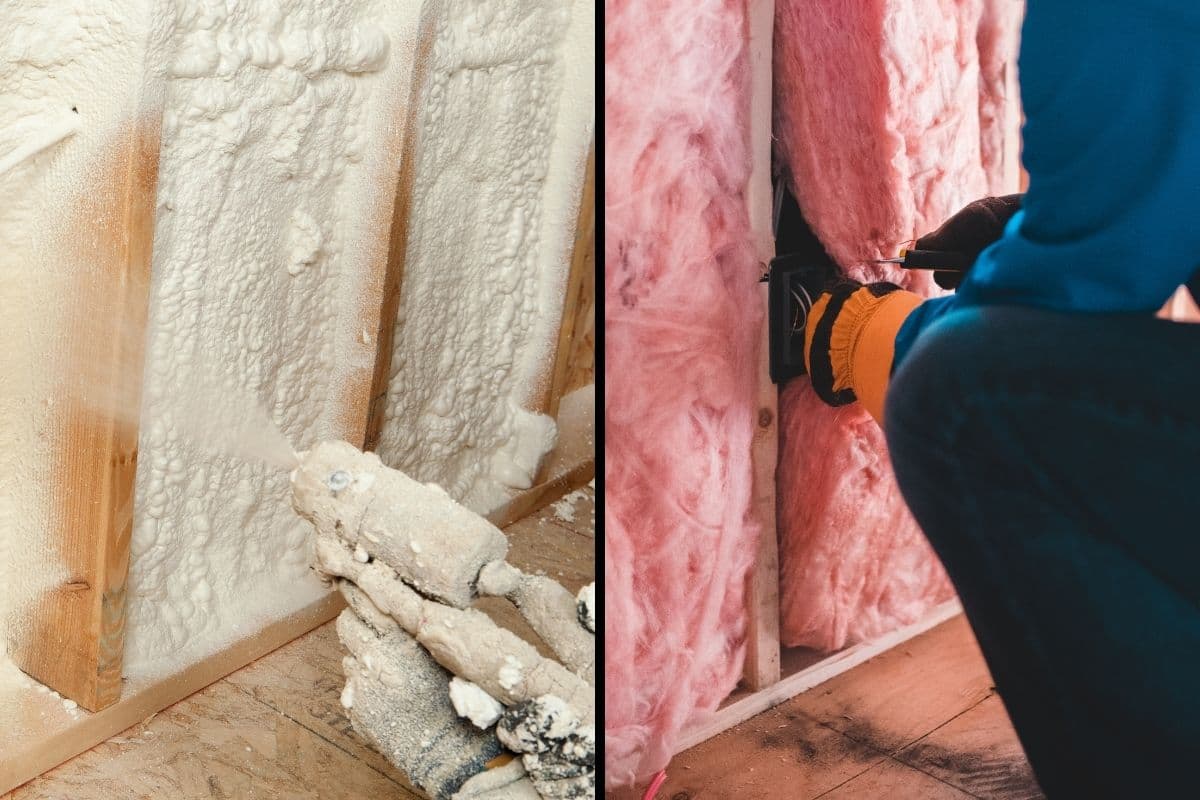
Insulating your basement is one of the smartest upgrades you can make – it lowers energy bills, keeps moisture in check, and turns a cold, clammy space into one you can actually use. But the two best insulation options for basements, spray foam and rigid foam board, work very differently, cost very differently, and suit different situations.
We've put together everything you need to know to pick the right one – how each type works, what it actually costs, how it handles moisture, how it holds up over time, and when one clearly beats the other.
How Spray Foam Insulation Works
Spray foam starts as a liquid – a mixture of isocyanate and polyol resin. When sprayed onto a surface, the two chemicals react and expand into a solid foam that bonds directly to whatever it touches. Concrete, wood, masonry, block – it doesn't matter. The result is a seamless, continuous insulation layer with no joints, seams, or gaps.
There are two types of spray foam, and the difference matters a lot for basements.
Closed-Cell Spray Foam
The dense, rigid, premium option. Delivers roughly R-6 to R-7 per inch, making it one of the highest-performing insulation materials you can buy. Because of its tightly packed cell structure, closed-cell foam pulls triple duty – it insulates, blocks air movement, and acts as a vapor barrier, all in one layer. It won't absorb water, adds structural rigidity, and seals every crack and irregularity in your foundation as it expands. For basements, closed-cell spray foam is the gold standard.
Open-Cell Spray Foam
Lighter, softer, and a good bit cheaper. Delivers roughly R-3.5 to R-3.7 per inch – about half the thermal performance of closed-cell. It's a solid air barrier but is not a vapor barrier, meaning moisture can pass through it. Reasonable for above-grade walls or interior basement walls covered with drywall and a separate vapor retarder, but a poor pick for spraying directly onto a damp foundation wall.
Important: Spray foam needs specialized equipment to apply. Small DIY kits exist for rim joists, but any full-wall basement spray foam project should be handled by a professional.
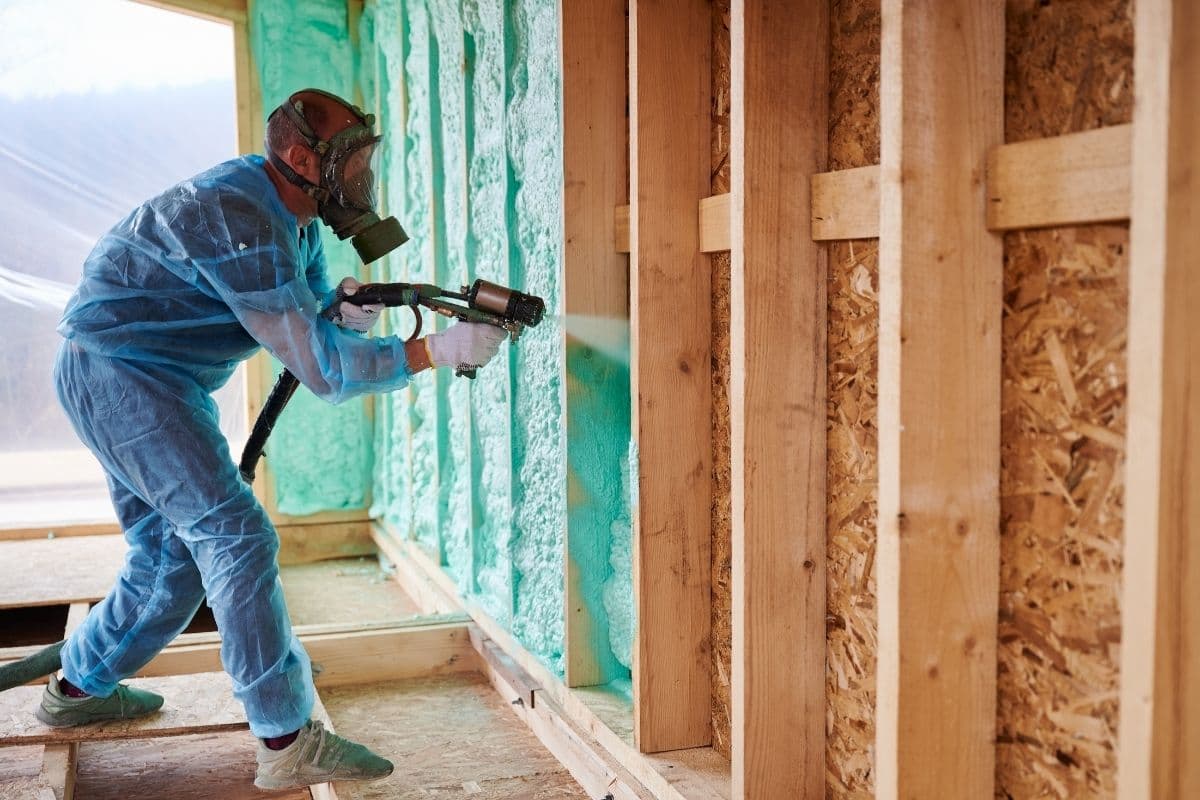
Closed-cell spray foam creates a seamless insulation and vapor barrier layer bonded directly to the foundation.
How Rigid Foam Board Insulation Works
Rigid foam board comes in flat, pre-manufactured panels – typically 4×8 feet – in thicknesses from half an inch up to 4 inches. You cut the boards to fit your wall, adhere or fasten them to the surface, and then seal all the joints between panels with tape or canned spray foam.
There are three types of rigid foam board, and they're not interchangeable – especially in a basement.
EPS (Expanded Polystyrene)
The white beadboard foam. Lowest R-value (R-3.6 to R-4.2 per inch) but cheapest. Somewhat vapor-permeable, allowing small amounts of moisture to pass through rather than trapping it against the foundation. R-value stays remarkably stable over time. The catch: EPS absorbs more water than XPS, so avoid direct contact with soil or standing water.
XPS (Extruded Polystyrene)
The colored foam board – pink, blue, or green depending on the brand. Delivers roughly R-5 per inch, handles moisture well, and has good compressive strength. For most basement wall projects, XPS is the default recommendation. It holds up in damp conditions and is widely available. One caveat: XPS can gradually lose a small amount of R-value over many years as blowing agents off-gas, though in below-grade applications this effect is minimal.
Polyiso (Polyisocyanurate)
Foil-faced board with the highest R-value per inch (R-5.6 to R-6.5). Premium choice for above-grade walls, roofs, and attics. But polyiso has a real weakness for basements – its R-value drops significantly in cold temperatures, potentially losing 20–30% below 40°F. It also doesn't love prolonged moisture exposure. Most building science professionals steer people away from polyiso for below-grade basement walls.
Big practical advantage: You can install rigid board yourself. A utility knife, tape measure, construction adhesive, and a few cans of spray foam sealant for the joints – that's all you need.
The Head-to-Head Comparison
Thermal Performance (R-Value)
| Material | R-Value per Inch | 2 Inches Gives You |
|---|---|---|
| Closed-Cell Spray Foam | R-6 to R-7 | R-12 to R-14 |
| Open-Cell Spray Foam | R-3.5 to R-3.7 | R-7 to R-7.4 |
| XPS Rigid Board | R-5 | R-10 |
| EPS Rigid Board | R-3.6 to R-4.2 | R-7.2 to R-8.4 |
| Polyiso Rigid Board | R-5.6 to R-6.5 | R-11.2 to R-13 (drops in cold) |
Spray foam wins on raw R-value per inch, but R-value alone only tells part of the story. What actually determines real-world energy performance is the total thermal envelope – including how well it stops air movement. Spray foam expands into every irregularity, crack, and void as part of the installation. There are no joints to tape, no gaps to fix later.
Code reference: Most building codes require R-10 to R-15 for basement walls, with R-19 or higher recommended in colder climates (zones 5–8). Both spray foam and rigid board can meet these targets.
Moisture and Vapor Performance
Below grade, moisture management is arguably more critical than thermal performance.
Spray Foam
Closed-cell spray foam is a vapor barrier and moisture barrier in one shot. It bonds directly to concrete, leaves no air gap where condensation can form, and creates a monolithic seal. If your basement runs damp but isn't actively leaking, closed-cell spray foam handles it without breaking a sweat.
Rigid Board
Moisture-resistant but not moisture-proof. XPS does well in typical basement dampness, but the Achilles' heel is always the joints. Even with proper taping, seams can loosen over the years, and any gap creates a spot where warm indoor air meets cold concrete – hello, condensation.
Critical point: Neither insulation type is a substitute for waterproofing. If you've got water visibly coming through cracks, pooling on the floor, or actively seeping through the walls – fix the water problem first. Insulating over an active leak traps moisture behind the insulation, leading to mold, rot, and hidden structural damage.
A Note on Radon
Closed-cell spray foam, because it creates a seamless air barrier bonded directly to the foundation, can help reduce entry points where radon seeps in. Rigid foam board, with its joints and edges, is inherently less effective at this because any unsealed gap is a potential pathway.
That said, neither spray foam nor rigid board is a radon mitigation system. If a radon test comes back at or above 4 pCi/L (the EPA's action level), you need a dedicated sub-slab depressurization system.
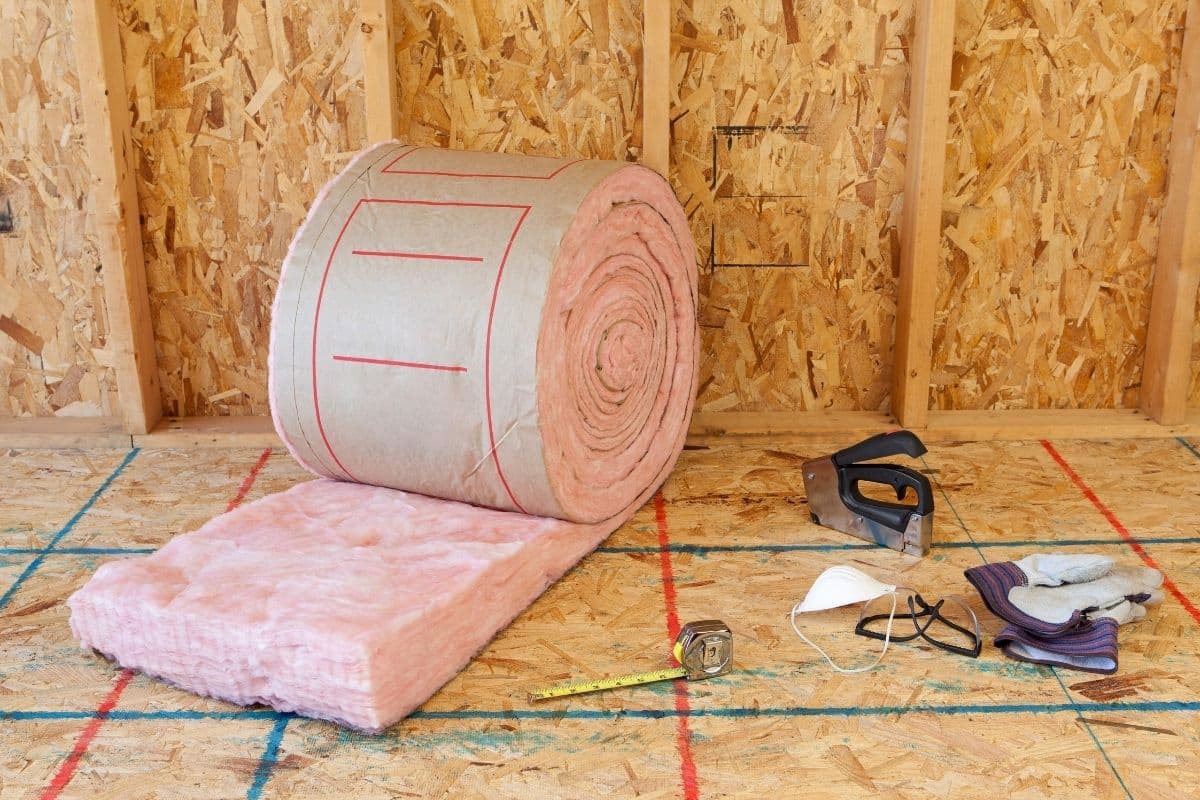
XPS rigid foam boards cut and fitted against basement foundation walls with sealed joints.
2026 Cost Comparison
| Option | Cost | R-Value Achieved |
|---|---|---|
| 2″ XPS rigid board (DIY) | $800–$1,000 materials | ~R-10 |
| 2″ XPS rigid board (pro installed) | $2,400–$3,700 | ~R-10 |
| 2″ closed-cell spray foam (pro) | $2,500–$4,500 | R-12 to R-14 + vapor barrier |
| 3″ open-cell spray foam (pro) | $1,000–$2,000 | ~R-10.5 to R-11 (no vapor barrier) |
Based on a typical 1,000 sq ft basement wall area.
Bottom line: If budget is your main constraint and you're handy with basic tools, rigid foam board at a third of the cost of professional spray foam is hard to argue with. But if you're hiring a contractor either way, the price gap narrows enough that spray foam's performance advantages start to justify the premium.
Installation: DIY vs Professional
Rigid Foam Board – DIY Friendly
A realistic weekend project. Measure, cut, glue, seal. No special equipment or training needed. You can also work at your own pace – one wall this weekend, another next month.
Spray Foam – Pro Only
The equipment is expensive, the chemicals need proper handling, and the house should be vacated during and for about 24 hours after application. Getting the mixing ratios or application temperature wrong can result in foam that never fully cures – a hazardous mess that's expensive to remediate.
Longevity and Durability
Closed-cell spray foam is remarkably durable once cured. It doesn't sag, settle, compress, or lose its grip over time. R-value holds steady indefinitely. Expect it to last the life of the house – 50+ years.
Rigid foam board is also long-lasting, but the more practical concern is whether the installation holds up. If boards come loose, if tape fails, or if house settling opens gaps at seams, performance quietly degrades. That's an installation quality issue, not a material defect – but it's something spray foam simply doesn't deal with.
Sound Reduction & Fire Safety
If noise matters – home theater, music room, office – open-cell spray foam is the best sound dampener. Closed-cell provides moderate reduction. Rigid foam board offers the least noise control of the foam options.
Fire safety: Every foam insulation material is combustible and must be covered with a fire-rated thermal barrier – almost always 1/2-inch drywall – per building codes. This applies to both spray foam and rigid foam board in any space you're finishing for living.
When to Choose Each Option
Choose Spray Foam When:
- Your basement walls are rough, cracked, or uneven
- You need maximum moisture protection
- You're finishing the basement for living space
- You have complex areas (rim joists, irregular framing, pipe penetrations)
- Budget is secondary to performance
Choose Rigid Foam Board When:
- Budget is your main concern
- You're comfortable with DIY work
- You're insulating an unfinished basement
- Your foundation is dry and well-waterproofed
- You want to work in stages over time
The Hybrid Approach: Often the Best of Both Worlds
Plenty of experienced contractors recommend a combination – use rigid XPS boards against the foundation for the bulk of the insulation, then use canned spray foam or a thin pass of closed-cell spray foam to seal all the joints, edges, rim joists, and penetrations. You get the cost savings of rigid board on the big, flat surfaces and the sealing power of spray foam where it counts most.
This approach typically runs 20–40% less than going all spray foam while delivering 80–90% of the performance. For most basement insulation projects, it's arguably the best bang for your buck.
What to Consider Before You Decide
Fix Water Problems First
Neither spray foam nor rigid board should go over a wall that's actively letting water in. Check your gutters, grading, and drainage before spending a dime on insulation.
Check Local Building Codes
Requirements vary by climate zone. There may be rules about vapor barriers, thermal barriers over foam, and approved products for below-grade use.
Budget for the Full Project
The insulation itself is one piece. You'll also need framing, drywall, possibly electrical work. Sometimes going with the cheaper insulation leaves more room in the budget to finish the space properly.
Think About Your Climate
In milder areas (zones 1–3), rigid board is usually plenty. In cold climates (zones 5–8), spray foam's superior air sealing and higher R-value per inch pay bigger dividends on energy bills.
Final Advice
If you're finishing your basement into living space and hiring a contractor anyway, go with closed-cell spray foam. The cost premium over rigid board is modest when you look at the total project budget, and the performance – seamless air sealing, built-in vapor barrier, high R-value – removes the most common causes of insulation failure in basements.
If you're insulating an unfinished basement on a budget, or you enjoy hands-on projects, 2 inches of XPS rigid foam board glued to the foundation walls with every joint carefully sealed is the best value play available.
And here's the thing that matters more than which product you pick: seal the joints. The single biggest insulation failure in basements isn't choosing the wrong material – it's leaving air gaps at seams, edges, and penetrations. Whether you choose spray foam or rigid board, an airtight installation beats a perfect material choice every time.
Glossary
- R-Value
- A measure of how well a material resists heat flow. Higher is better. Rated per inch of thickness.
- Board Foot
- A unit for pricing insulation. One board foot equals one square foot of material at one inch thick.
- Closed-Cell Foam
- Dense spray foam with fully enclosed cells. Blocks air, moisture, and vapor. Higher R-value and cost.
- Open-Cell Foam
- Softer spray foam with partially open cells. Effective air barrier but allows moisture to pass through.
- EPS
- Expanded Polystyrene. White beadboard rigid foam. Cheapest, lowest R-value per inch, excellent long-term stability.
- XPS
- Extruded Polystyrene. Colored rigid foam board. Mid-range cost and R-value with strong moisture resistance.
- Polyiso
- Polyisocyanurate. Foil-faced rigid foam with highest R-value per inch. Not recommended for basements.
- Vapor Barrier
- A material that prevents water vapor from passing through a wall assembly.
- Thermal Drift
- Gradual loss of R-value in certain foam products over time as blowing agents escape.
- Continuous Insulation
- Rigid foam installed as an unbroken layer, eliminating thermal bridging through studs.
- Rim Joist
- The horizontal framing member on top of the foundation wall. A notorious source of air leaks and energy loss.