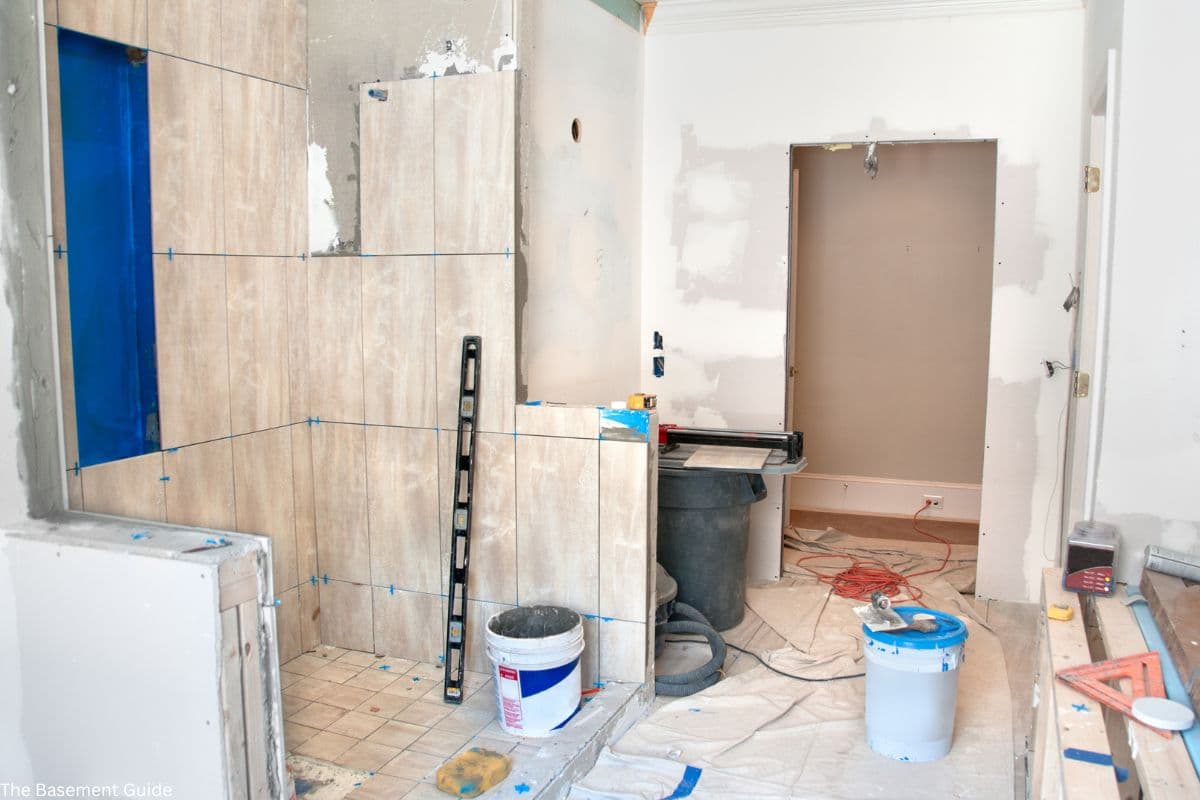
A basement bathroom is a full or partial bathroom installed below grade in a finished or semi-finished basement, requiring specialized plumbing solutions to overcome the challenge of draining waste upward to the main sewer line when gravity drainage is not possible. Unlike above-grade bathrooms where drain lines flow downward by gravity to the sewer, basement bathrooms often sit below the municipal sewer line or the home’s main drain, requiring an ejector pump, macerating toilet system, or up-flush unit to move waste up and out. The total cost, complexity, and timeline of the project depend on whether a rough-in already exists below the slab, how close the new bathroom is to existing drain and vent lines, and which plumbing system is appropriate for the space. A properly permitted and installed basement bathroom is one of the highest-ROI upgrades available in a basement finishing project, adding $15,000 to $40,000 in resale value while making the space genuinely livable for family, guests, or rental tenants.
Adding a bathroom to a basement is one of the smartest investments in a basement finishing project. It transforms a storage area into truly livable space, makes the basement viable as a rental suite or ADU, and is consistently cited by real estate agents as one of the features buyers most want when evaluating homes with finished basements. This guide covers everything you need to know: plumbing systems, permit requirements, costs, materials, and what to address before construction begins.
Why a Basement Bathroom Is Worth It
A basement without a bathroom is a space people visit reluctantly. A basement with a bathroom becomes a place people actually use. Beyond convenience, a basement bathroom adds $15,000 to $40,000 or more to resale value in most markets. If the basement is being finished as a rental suite or ADU, a bathroom is not optional — it is a basic requirement for habitable space. For multi-generational households, a basement bathroom gives aging parents or adult children genuine privacy and independence. And for a home gym, home theater, or entertainment space, the convenience of not having to go upstairs mid-workout or mid-movie is real.
The Biggest Challenge: Draining Below Grade
Above-grade bathrooms drain by gravity — waste flows downhill through drain pipes to the sewer line. In a basement, the floor slab often sits below or at the same level as the main sewer line, which means gravity drainage is not always possible. This is the central plumbing challenge of every basement bathroom project, and your three options are:
Option 1: Gravity Drain (Breaking the Slab)
If your home has a rough-in below the slab from original construction, or if the basement floor sits high enough above the sewer line to allow gravity drainage, you can use a conventional drain system. This requires breaking the concrete floor to install or connect drain pipes, then patching the slab. It is the most durable, low-maintenance option and the only one that allows a standard toilet without a pump. Breaking and patching the slab adds $2,000 to $5,000 to the project if no rough-in exists.
Option 2: Sewage Ejector Pump
A sewage ejector system uses a sealed pit (ejector pit) installed below the slab to collect waste from the toilet, sink, and shower. An ejector pump then grinds and pumps the waste up through a pipe to the main drain line above. This is the most common professional solution for basement bathrooms without a rough-in, handling full bathroom waste volumes reliably. The ejector pit and pump cost $600 to $1,500 installed, plus the cost of slab work to install the pit.
Option 3: Macerating or Up-Flush System
An up-flush or macerating toilet system sits entirely above the floor, requiring no slab penetration. A macerator unit attached to the toilet grinds waste and pumps it up through a small-diameter pipe to the drain line. Systems like Saniflo can handle a full bathroom including toilet, sink, and shower. These are the fastest and least disruptive installation option and work well in finished basements where breaking the slab is not practical. Up-flush systems cost $800 to $2,500 for the unit plus installation, and require access to a power outlet and drain line. The tradeoff is noise during operation and a motor that will eventually need replacement.
| Plumbing Option | Slab Work Required | Cost Range | Best For |
|---|---|---|---|
| Gravity drain (existing rough-in) | None | $0 added cost | Homes with pre-installed rough-in |
| Gravity drain (new rough-in) | Yes — break and patch | $2,000 to $5,000 added | Long-term, permanent installation |
| Sewage ejector pump | Yes — pit installation | $600 to $1,500 added | Full bathrooms, professional installs |
| Macerating / up-flush system | No | $800 to $2,500 added | Finished basements, faster installs |
Waterproofing Before You Build
A basement bathroom adds significant moisture to a space that already faces chronic humidity challenges. Installing a bathroom in an unprotected or damp basement is one of the most expensive mistakes homeowners make — water behind tile, mold inside walls, and efflorescence under the floor slab can destroy a new bathroom in a few years and require a complete tear-out. Address these items before framing begins.
Resolve any active water intrusion. Any history of seepage, efflorescence, or dampness must be corrected with proper waterproofing before construction. See our complete basement waterproofing guide for options and costs.
Seal foundation cracks. Any active foundation cracks should be professionally repaired before tiling or drywalling over them. See our foundation crack repair cost guide.
Apply a vapor barrier or crystalline waterproofing to walls and floor before framing and tiling.
Install a dedicated exhaust fan vented directly outside. A below-grade bathroom generates steam and moisture with no natural ventilation. Code requires mechanical ventilation; a high-CFM quiet fan with a timer is the right spec.
Use moisture-resistant materials throughout: cement board or tile backer on shower walls, mold-resistant drywall on non-wet surfaces, waterproof flooring, and mildew-resistant grout and caulk.
Permits and Code Requirements
A basement bathroom always requires permits. Plumbing, electrical, and framing work all require inspections. Unpermitted bathroom work is a serious liability at resale — it will surface in a home inspection, and you may be required to demonstrate code compliance or remove the work. Permit costs vary by municipality but typically run $300 to $800 for a bathroom addition.
Key code requirements to confirm with your local building department before starting:
Ceiling height: Most jurisdictions require 7 feet minimum for habitable space, with some allowance for beams and ducts.
Ventilation: An exhaust fan vented to the exterior is required. Venting into the attic or wall cavity is not permitted.
GFCI protection: All outlets within 6 feet of a water source require GFCI protection. This is a code requirement and a safety non-negotiable.
Egress: If the bathroom is part of a bedroom suite, the bedroom requires a code-compliant egress window. See our egress window cost guide.
Plumbing venting: All drain lines require proper venting to prevent sewer gas from entering the living space. Air admittance valves (AAVs) are permitted in some jurisdictions as an alternative to running a vent through the roof.
See our basement permits guide for jurisdiction-specific guidance.
How Much Does a Basement Bathroom Cost in 2026?
Total cost depends on bathroom size, plumbing system, finish level, and whether any pre-finish waterproofing or slab work is required.
Cost by Bathroom Type
| Bathroom Type | Cost Range | What Is Included |
|---|---|---|
| Half bath (toilet and sink) | $8,000 to $15,000 | Basic plumbing, electrical, drywall, flooring, fixtures |
| Three-quarter bath (toilet, sink, shower) | $12,000 to $22,000 | Above plus shower surround or tile, exhaust fan |
| Full bath (toilet, sink, tub/shower combo) | $15,000 to $28,000 | Full tile work, tub or walk-in shower, all fixtures |
| High-end or spa bath | $25,000 to $45,000+ | Custom tile, heated floor, frameless glass, premium fixtures |
Cost by Component
| Component | Typical Cost Range |
|---|---|
| Plumbing rough-in (new, breaking slab) | $2,000 to $5,000 |
| Sewage ejector pump system | $600 to $1,500 |
| Macerating / up-flush unit | $800 to $2,500 |
| Framing and partition walls | $1,500 to $4,000 |
| Waterproofing and vapor barrier | $500 to $3,000 |
| Cement board and tile backer | $300 to $800 |
| Shower tile (materials and labor) | $2,000 to $8,000 |
| Flooring (LVP or tile, installed) | $800 to $3,000 |
| Toilet | $200 to $800 |
| Vanity and sink | $400 to $2,500 |
| Exhaust fan (installed) | $150 to $500 |
| Electrical and GFCI outlets | $500 to $1,500 |
| Lighting | $300 to $1,000 |
| Permits | $300 to $800 |
Hidden Costs to Budget For
Mold remediation: If discovered during demo or framing, add $1,500 to $9,000 before construction can continue.
Panel upgrade: Older homes may need electrical panel capacity added for bathroom circuits. Add $1,500 to $4,000 if needed.
Vent routing: Getting an exhaust fan vent to the exterior in a finished basement can require creative routing through walls or rim joists. Add $200 to $800 for complex vent runs.
Floor drain: A floor drain in the shower area or near the toilet costs $300 to $600 installed and is cheap insurance against leaks and pump failures.
DIY vs Professional Installation
Plumbing and electrical work in a basement bathroom should always be handled by licensed professionals. These trades require permits and inspections, and unlicensed work creates liability, insurance complications, and resale problems. The consequences of a plumbing failure in a below-grade bathroom — sewage backup, water damage, mold — are severe enough that this is not the place to cut costs on labor.
DIY is reasonable for framing non-load-bearing partition walls, installing cement board, tiling if you have experience, painting, and installing vanity fixtures after rough-in is complete and inspected. A hybrid approach — licensed plumber and electrician for mechanical work, DIY for cosmetic finishes — can save $3,000 to $8,000 on a mid-range project while keeping all code-required work properly permitted and inspected.
Material Choices for a Below-Grade Bathroom
Flooring
Tile and luxury vinyl plank (LVP) are the only appropriate choices for a basement bathroom floor. Both are 100 percent waterproof. Tile is more durable but cold underfoot without radiant heat. LVP is warmer, faster to install, and available in a wide range of styles. Never use carpet in a bathroom or sheet vinyl with unsealed seams — both trap moisture and grow mold in a below-grade environment.
Wall Surfaces
Cement board or tile backer board is required behind any tile surface in the shower or tub surround. Standard drywall, even moisture-resistant varieties, is not appropriate behind tile in a wet zone. For non-wet wall surfaces outside the shower, mold-resistant drywall (green or purple board) is the correct spec. Standard drywall in a basement bathroom will grow mold behind the paint within a few years.
Fixtures
For tight basement bathroom layouts, a wall-hung toilet or compact elongated toilet saves floor space. A corner shower with a prefabricated base is faster to install and easier to waterproof than a custom-tiled shower. A pedestal sink or floating vanity keeps the floor visible and makes a small space feel larger. Low-profile fixtures designed for small bathrooms are worth specifying from the start rather than trying to adapt standard fixtures to a tight layout.
How Long Does a Basement Bathroom Take?
| Scope | Typical Timeline |
|---|---|
| Half bath, existing rough-in | 1 to 2 weeks |
| Half bath, new plumbing | 2 to 4 weeks |
| Full bath, up-flush system | 2 to 4 weeks |
| Full bath, new slab rough-in | 4 to 8 weeks |
| High-end custom bath | 6 to 12 weeks |
Permit approval adds 1 to 3 weeks on the front end in most markets. Custom tile, specialty fixtures, and glass shower enclosures have lead times of 2 to 6 weeks — order early.
Frequently Asked Questions
How much does it cost to add a bathroom to a basement?
A half bath (toilet and sink) runs $8,000 to $15,000. A three-quarter bath with a shower runs $12,000 to $22,000. A full bath with a tub or walk-in shower runs $15,000 to $28,000. High-end custom bathrooms with heated floors, custom tile, and frameless glass can reach $45,000 or more. The biggest cost variables are whether slab work is needed for plumbing rough-in, which drainage system is used, finish level, and local labor rates. Always get three itemized quotes from licensed plumbers and general contractors before setting a final budget.
Do I need to break the concrete floor to add a basement bathroom?
Not always. If your home has an existing plumbing rough-in below the slab from original construction, no slab work is needed. If no rough-in exists but you want a conventional gravity drain system, yes — the slab must be broken to install drain pipes. The alternative is a macerating or up-flush system that sits entirely above the floor and requires no slab penetration. Up-flush systems cost $800 to $2,500 for the unit and are faster to install, but require power, generate some noise during operation, and have a motor that will eventually need replacement.
Do I need a permit to add a basement bathroom?
Yes, always. Basement bathroom additions involve plumbing, electrical, and framing work — all of which require permits and inspections in virtually every US jurisdiction. Unpermitted bathroom work is a liability at resale and can void your homeowners insurance for related claims. Permit costs typically run $300 to $800. Work with a licensed plumber and electrician who pull permits as standard practice, and confirm inspection requirements with your local building department before work begins.
What is the best toilet for a basement bathroom?
For basements where the floor sits below the main drain line, a macerating toilet or up-flush system is the simplest option since it requires no slab work. Saniflo is the most widely installed brand and handles a full bathroom including toilet, sink, and shower from a single unit. For basements with an existing rough-in or a new gravity drain installation, any standard toilet works. Compact elongated models and wall-hung toilets are good choices for tight basement bathroom layouts where saving floor space matters.
Can I add a basement bathroom myself?
Framing, cement board installation, tiling, and finish work are reasonable DIY tasks for experienced homeowners. Plumbing and electrical work should always be done by licensed professionals — these trades require permits and inspections, and the consequences of a plumbing failure in a below-grade bathroom are serious. A sewage backup or water leak inside a finished basement wall causes mold, structural damage, and remediation costs that far exceed any labor savings from unlicensed plumbing work. Hire licensed pros for mechanical trades and handle cosmetic finishes yourself for the best balance of savings and quality.
How do I ventilate a basement bathroom?
A dedicated exhaust fan vented directly to the exterior is required by code and essential for moisture control in a below-grade bathroom. The fan should be rated for the bathroom square footage — a minimum of 1 CFM per square foot, with 50 CFM as the practical minimum for any basement bathroom. Route the duct through the rim joist to the exterior, not into the wall cavity or attic. A fan with a built-in timer or humidity sensor runs automatically after each use and is worth the small added cost. Never vent a basement bathroom exhaust fan into the ceiling or attic — it will cause mold and is a code violation.
Will adding a basement bathroom increase my home’s value?
Yes, consistently. A basement bathroom adds $15,000 to $40,000 in resale value in most markets, with the return highest in areas where above-grade square footage is expensive and in homes where the basement is fully finished. Buyers strongly prefer homes with a bathroom on every level, and a basement without a bathroom is a meaningful objection for buyers considering using the space as a guest suite, ADU, or primary living area. A properly permitted, professionally installed bathroom with documentation delivers the full resale benefit. Unpermitted work does not add value and creates inspection complications.
Glossary of Basement Bathroom Terms
Macerating Toilet
A toilet system that uses a macerator pump to grind waste into a slurry and pump it up through a small-diameter pipe to the main drain line. Requires no slab penetration, making it ideal for finished basements. Saniflo is the dominant brand. Requires a nearby power outlet and generates noise during the pump cycle.
Sewage Ejector Pump
A pump installed in a sealed pit below the basement floor that collects waste from the toilet, sink, and shower and pumps it up to the main drain line. More powerful than a macerating system and better suited for high-use or full-bathroom applications. Requires slab work to install the pit.
Up-Flush System
A broader term for any above-floor waste management system that pumps waste upward to the main drain, including macerating toilet systems. Used when the basement floor sits below the main sewer line and gravity drainage is not possible.
Rough-In Plumbing
Drain, waste, and vent pipes stubbed up through or installed below the concrete slab during original construction, ready for a future bathroom. A home with existing rough-in avoids the cost of breaking the slab. Confirmed by checking for capped pipe stubs on the basement floor.
Ejector Pit
A sealed underground pit installed below the basement slab that collects sewage from a basement bathroom before the ejector pump activates to send waste to the main drain. Must be properly sealed to prevent sewer gas from entering the living space.
CFM (Cubic Feet per Minute)
The airflow rating of an exhaust fan. Basement bathrooms require a minimum of 50 CFM, with 1 CFM per square foot of bathroom area as the standard sizing rule. Higher CFM ratings improve moisture removal but may require larger duct diameter.
GFCI (Ground Fault Circuit Interrupter)
A safety device required by code for all electrical outlets within 6 feet of a water source. Detects current leakage and shuts off power within milliseconds to prevent electrocution. Identified by the test and reset buttons on the outlet face.
Cement Board
A rigid panel made of portland cement and aggregate used as a tile backer on shower walls and bathroom floors. Does not deteriorate when wet, unlike standard or moisture-resistant drywall. Required behind any tile surface in a wet zone.
Air Admittance Valve (AAV)
A one-way mechanical valve that allows air into a drain line to prevent siphoning of the trap without requiring a vent pipe run through the roof. Permitted as an alternative to traditional venting in many jurisdictions. Useful for basement bathrooms where running a conventional vent is difficult.
Vapor Barrier
A waterproof membrane installed on basement walls and floors to prevent moisture migration from the concrete into the finished living space. Essential in any below-grade bathroom to prevent mold growth behind finished surfaces.
Related Guides
Complete Waterproofing Guide
Why waterproofing before any below-grade bathroom build is non-negotiable.
Basement Finishing Cost Guide
Full cost breakdown for finishing your basement from framing through final inspection.
Basement ADU & Rental Suite Guide
Everything you need to know about adding a legal below-grade rental unit.
Egress Window Cost Guide
Required for any basement bedroom adjacent to the bathroom suite.
Basement Permits Guide
What permits you need, what inspections to expect, and how to navigate the process.
How to Prevent Basement Mold
Essential reading before adding a moisture source to your basement.
Basement Flooring Guide
Waterproof flooring options for below-grade bathrooms and adjacent spaces.
Foundation Crack Repair Cost
Fix foundation cracks before tiling over them.
Mold Remediation Cost
What remediation costs if moisture problems are discovered mid-project.
Sewage Ejector Pumps vs. Upflush Toilets
Which drainage system fits your basement bathroom: install cost, lifespan, and slab-break tradeoffs.
Get Expert Help With Your Basement Bathroom
Connect with pre-vetted waterproofing and plumbing professionals in your area. Free assessments, no obligation.