How Much Does a French Drain Cost? 2026 Prices by Foot, Length, and Type
Protect your foundation and yard. Real price data from $10 to $50 per foot in a yard, $40 to $85 per foot inside a basement, with full breakdowns by installation type, DIY savings, and recommended products.
TL;DR
- Yard or exterior French drain: $10 to $50 per linear foot. Most homeowners pay $1,000 to $5,000.
- Interior basement French drain: $40 to $85 per linear foot. Most homeowners pay $4,000 to $12,000 for a typical 1,000 sq ft basement.
- Interior drain plus sump pump: about $4,800 to $15,000, since most interior systems need one.
- 100 feet costs about $1,000 to $2,500 for a shallow yard drain, $2,500 to $5,000 for a deep exterior drain, and $4,000 to $8,500 for an interior basement drain.
- DIY a shallow yard drain for $400 to $800 in materials and tool rental. Interior basement drains are a pro job.
- Drain tile, weeping tile, and perimeter drain are other names for the same idea. Prices on this page apply to all of them.
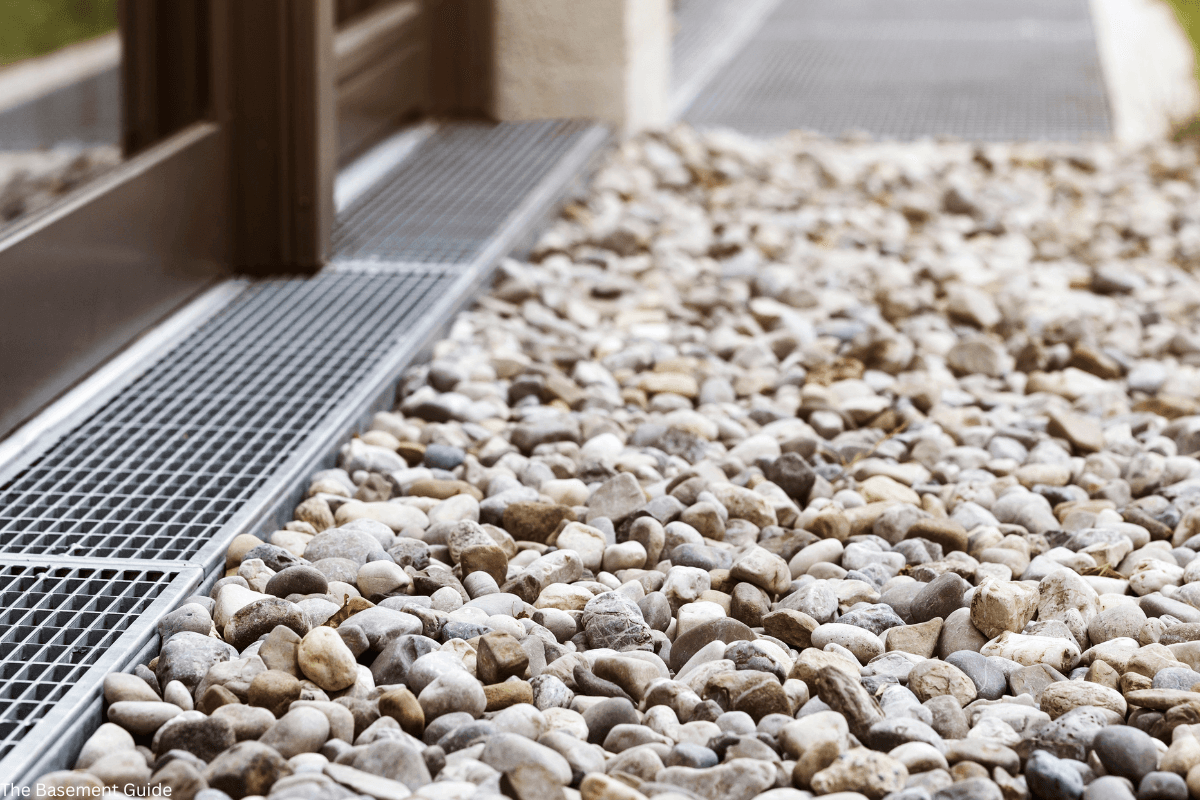
Whether you are dealing with a swampy backyard or a basement that seeps during every storm, a French drain is the gold standard for residential water management. A French drain is a gravel-filled trench containing a perforated pipe that collects and redirects groundwater or surface water away from a foundation, basement, or low-lying yard area. French drain installation costs $10 to $25 per foot for a shallow yard drain, or $25 to $50 per foot for a deep drain along the foundation. Most homeowners pay $1,000 to $5,000. Interior basement French drain: $40 to $85 per linear foot. Most homeowners pay $4,000 to $12,000 for a typical 1,000 sq ft basement. The total price depends primarily on whether the drain is installed inside the basement (requiring concrete removal and a sump pump) or outside in the yard (requiring excavation and grading).
A French drain is a passive, gravity-fed drainage system with no mechanical components that works by creating a preferential pathway for groundwater and surface water to follow, collecting water in a gravel-filled trench and directing it through a perforated pipe to a lower discharge point. Despite sharing a name, an interior basement French drain and an exterior yard French drain are fundamentally different projects in scope, cost, and purpose. An exterior French drain intercepts water before it reaches the foundation by capturing surface runoff or shallow groundwater in the yard and redirecting it away from the structure, while an interior basement perimeter drain intercepts water after it has already entered or is actively entering the foundation assembly and routes it to a sump pump for removal. Understanding which type your property needs is the most important decision in this project because the two systems solve different problems, and installing the wrong type wastes the entire budget without resolving the underlying water issue. For a complete project estimate that combines french drain installation with sump pump tie-in and any associated waterproofing, try our basement waterproofing cost calculator.
2026 French Drain Price Breakdown
- ✔ Concrete jackhammering
- ✔ Perforated pipe & gravel
- ✔ New sump pump & pit
- ✔ Trench excavation
- ✔ Geotextile filter fabric
- ✔ Drainage rock & topsoil
Cost by Drain Type
Not all French drains are created equal. Here is what each type typically costs and when it makes sense to choose one over the other.
| Drain Type | Per Linear Foot | Typical Total | Best For |
|---|---|---|---|
| Shallow Yard Drain | $10 to $25 | $1,000 to $2,500 (100 ft) | Soggy lawns, standing water, downspout runoff |
| Deep Exterior Drain (along foundation) | $25 to $50 | $2,500 to $5,000 (100 ft) | Water pooling against foundation walls |
| Curtain Drain | $12 to $30 | $1,200 to $3,000 (100 ft) | Intercepting water uphill of the house |
| Interior Basement Perimeter Drain | $40 to $85 | $4,000 to $12,000 (1,000 sq ft basement) | Water entering at the floor and wall joint |
| Exterior Footing Drain with Full Excavation | Priced per job | $7,000 to $18,000 | Rebuilding the original foundation drain, usually with exterior waterproofing |
The last row is a different job. Digging down to the footing is part of exterior basement waterproofing. See our interior vs. exterior waterproofing comparison for that pricing.
French Drain Cost by Length
Use this chart to sanity-check a quote. Find your length, then the column that matches the job.
| Length | Shallow Yard ($10 to $25/ft) | Deep Exterior ($25 to $50/ft) | Interior Basement ($40 to $85/ft) |
|---|---|---|---|
| 25 ft | $250 to $625 | $625 to $1,250 | $1,000 to $2,125 |
| 50 ft | $500 to $1,250 | $1,250 to $2,500 | $2,000 to $4,250 |
| 100 ft | $1,000 to $2,500 | $2,500 to $5,000 | $4,000 to $8,500 |
| 150 ft | $1,500 to $3,750 | $3,750 to $7,500 | $6,000 to $12,750 |
| 200 ft | $2,000 to $5,000 | $5,000 to $10,000 | $8,000 to $17,000 |
Two things the chart doesn't show:
- Minimum job charges. Many drainage contractors charge a $1,000 to $1,500 minimum, so a 25 foot yard drain often costs more than the per-foot math.
- Add-ons. Concrete removal, a sump pump, catch basins, downspout tie-ins, and a discharge line to daylight are often priced separately. Ask for them as line items.
How long is a basement perimeter drain? Measure the outside walls of the basement and add them up. A 1,000 sq ft basement is usually about 125 to 130 linear feet. Contractors sometimes do only the walls that leak, which can cut the length in half.
French Drain and Sump Pump Cost
Most interior basement French drains need a sump pump. The drain collects water at the footing, and the pump lifts it out of the house. Exterior drains can often drain to daylight by gravity, so they usually don't need a pump.
| Package | Typical Cost |
|---|---|
| Interior drain, 100 ft, plus sump pump | $4,800 to $11,000 |
| Interior drain, 150 ft, plus sump pump | $6,800 to $15,250 |
| Sump pump and pit added to an existing drain | $800 to $2,500 |
| Battery backup pump added | $350 to $900 installed |
These totals use $40 to $85 per foot for the drain and $800 to $2,500 for the sump pump installed. For pump picks, see our best sump pumps for 2026. For full pump pricing, see our sump pump cost guide.
Key Cost Factors
What makes one 50-foot drain cost twice as much as another? These are the variables that matter most.
Interior vs. Exterior: Which Do You Need?
This is the single biggest decision and it determines your final price. Interior and exterior French drains solve different problems, and choosing the wrong one wastes money.
Choose Interior When:
- ✔ Water seeps through floor or wall joints
- ✔ High water table pushes water up
- ✔ Exterior excavation is not practical
- ✔ You are finishing or remodeling the basement
Choose Exterior When:
- ✔ Surface water pools near the foundation
- ✔ Yard stays soggy days after rain
- ✔ New construction or major landscaping
- ✔ Downspouts need a proper discharge point
Many homes benefit from both. A complete interior and exterior waterproofing approach catches water from all directions. If budget is tight, start with whichever side is causing the active problem.
DIY French Drain: Can You Do It Yourself?
A shallow exterior yard drain is one of the more achievable DIY drainage projects. You can save 40 to 60 percent on labor costs by doing the digging and assembly yourself. Interior basement drains, however, require jackhammering concrete and installing a sump pump system, which is best left to licensed waterproofing contractors.
DIY Cost Savings
A 50 foot shallow yard drain costs about $500 to $1,250 from a contractor, or more if they have a job minimum. Doing it yourself costs about $400 to $800, including roughly 3 cubic yards of washed gravel, perforated pipe, filter fabric, and a one-day trencher rental at $200 to $400. The savings are real but modest on short runs. On 100 feet or more, or deep drains along the foundation, DIY saves more, but the digging is brutal.
DIY Steps for an Exterior French Drain
Recommended Products & Tools
These are the drainage products we recommend based on durability, value, and real-world performance. Whether you are tackling a DIY install or just want to understand what your contractor should be using.
French Drain Man Downspout Extension Kit
Professional-grade downspout adapter that connects gutters to underground drainage lines. Eliminates surface water pooling near the foundation. Easy snap-fit connection with no special tools required.
Check Price on Amazon →NDS Channel Drain Kit
Pre-sloped channel drain system ideal for driveways, patios, and pool decks. Includes grate covers and connects directly to French drain pipe runs. Handles heavy water flow from hardscape areas.
Check Price on Amazon →NDS 4-Inch Corrugated Perforated Pipe
The industry standard for French drain installations. Flexible corrugated design conforms to trench contours while perforations collect groundwater from all directions. Available in 100-foot rolls.
Check Price on Amazon →Pop-Up Drainage Emitters
Automatic pop-up emitters that open when water pressure builds and close when flow stops. Keeps debris out and provides a clean discharge point at the end of your drain line. Mounts flush with the lawn.
Check Price on Amazon →Catch Basins and Grates
Collect surface water at low points in your yard and route it into your French drain system. Essential for areas where water pools after rain. Multiple grate styles to match landscaping.
Check Price on Amazon →Landscape Fabric for Drainage
Non-woven geotextile fabric that wraps the gravel bed to prevent soil and sediment from clogging the pipe. The single most important factor in long-term French drain performance. Use on every install.
Check Price on Amazon →Pros and Cons of French Drains
Advantages
- + Highly effective at managing both surface and subsurface water
- + Long lifespan of 20 to 40 years when properly installed
- + Passive system with no moving parts (exterior) means low maintenance
- + Protects foundation from cracking and settling
- + Can increase property value by solving drainage issues
Disadvantages
- − Interior systems require jackhammering and significant disruption
- − Can clog over time without proper filter fabric
- − Exterior installation disrupts landscaping temporarily
- − Does not solve roof or plumbing leaks
- − Needs a proper discharge point or sump pump to work
When to Hire a Professional
Call a licensed drainage contractor for any of these situations:
Common Contractor Red Flags
- ✖ No written contract or warranty
- ✖ Demands full payment upfront
- ✖ Skips filter fabric to save money
- ✖ Uses smooth pipe instead of perforated where perforated is needed
- ✖ Cannot explain their drainage plan or discharge point
Maintenance Tips
A French drain is not completely maintenance-free. These simple habits keep your system working for decades.
Frequently Asked Questions
How much does a French drain cost to install in 2026?
Yard or exterior French drain: $10 to $50 per linear foot. Most homeowners pay $1,000 to $5,000. Interior basement French drain: $40 to $85 per linear foot. Most homeowners pay $4,000 to $12,000 for a typical 1,000 sq ft basement. A typical 100-foot exterior installation costs $1,000 to $2,500 for a shallow yard drain, or $2,500 to $5,000 for a deep drain along the foundation. Exterior or yard drains cost $10 to $25 per foot for a shallow yard drain, or $25 to $50 per foot for a deep drain along the foundation. Interior basement perimeter drain systems cost $4,000 to $12,000 or more for a 1,000 square foot basement at $40 to $85 per linear foot, with the higher cost driven by concrete jackhammering, sump pump installation, and the complexity of working inside an occupied home. The single biggest cost variable within each type is soil and site conditions, clay soil, rocky ground, and obstructions like utilities, tree roots, and existing hardscaping can each add $500 to $2,000 to the base cost. Always get at least three written quotes that specify the drain type, pipe material, filter fabric, discharge point, and warranty before committing to a contractor.
Is an interior French drain better than an exterior French drain for basement waterproofing?
Neither is universally better. They address different water problems, and choosing between them depends on where your water is coming from rather than which system is more expensive or comprehensive. An interior basement perimeter drain is the right choice when water is entering through the floor-wall joint, rising from below due to a high water table, or seeping through the lower wall sections under hydrostatic pressure, because it intercepts water at the point of entry and removes it before it can spread across the floor. An exterior French drain at the foundation footing is the right choice when water is saturating the soil adjacent to the foundation wall and driving hydrostatic pressure against it from outside, because it relieves that pressure at the source before water reaches the wall. Many homes with chronic basement water problems benefit from both systems working together: the exterior drain reduces the volume of water pressing against the foundation, and the interior drain manages any residual water that does enter. See our interior vs exterior waterproofing guide for the full decision framework.
Can I install a French drain myself to save money?
A shallow exterior yard French drain is one of the more achievable DIY drainage projects for a homeowner comfortable with physical labor and basic excavation work. The realistic DIY savings on a 50-foot exterior drain are $1,000 to $2,500 in labor, with materials running $500 to $1,500 versus a professional installation cost of $2,500 to $4,000. The key requirements for a successful DIY exterior drain are maintaining a consistent 1 percent minimum slope toward the discharge point, using proper non-woven geotextile filter fabric wrapped completely around the gravel bed, and calling 811 before digging to mark underground utilities. Interior basement French drains are not appropriate DIY projects for most homeowners because they require jackhammering reinforced concrete, correctly sloping the drain channel under the slab, integrating the system with a sump pit, and pouring new concrete over the completed drain, all of which require specialized equipment and experience to do correctly. An improperly installed interior drain that does not slope correctly or connect properly to the sump will fail immediately and require professional repair at greater total cost than hiring correctly from the start. See our DIY vs hiring a pro guide for how to evaluate this decision honestly.
How long does a French drain last before it needs to be replaced?
A properly installed French drain lasts 20 to 40 years when the correct filter fabric is used, gravel sizing is appropriate for the soil type, and basic annual maintenance is performed. The primary cause of premature French drain failure is clogging: fine soil particles migrate through undersized or missing filter fabric over time and fill the gravel voids and pipe perforations, reducing the system's ability to collect and move water. Clay-heavy soils are the most aggressive at clogging French drains because clay particles are small enough to pass through low-quality filter fabrics and dense enough to compact within the gravel bed. Annual flushing of the drain line with a garden hose from the highest access point pushes accumulated sediment toward the discharge end before it hardens into a permanent clog. Interior basement drain systems that incorporate a sump pump have the additional maintenance requirement of pump testing and battery backup replacement, which affects the functional lifespan of the complete system independent of the drain tile itself. See our why does my basement still flood guide for the signs that a French drain is failing or underperforming.
Does a French drain increase home value?
Yes, solving basement water and yard drainage problems with a documented French drain installation consistently improves home value and marketability, particularly in regions where basement water issues are common and buyers are conditioned to ask about drainage history. A dry basement with documented waterproofing work including a French drain and sump pump system can increase appraised value by 5 to 15 percent compared to a comparable home with undocumented or problematic drainage, because buyers and appraisers treat unresolved water history as a material risk that discounts the offer price. The value effect is strongest for interior basement perimeter drain systems that transform a wet basement into a dry, usable space, because the square footage becomes genuinely livable and can be legally finished. Exterior yard drains that eliminate standing water near the foundation add value by removing a visible drainage problem that would otherwise show up in a home inspection report as a recommended repair item. Keep all contractor invoices, warranties, and inspection records as part of the home's documentation package, because documented drainage work is significantly more valuable to buyers and appraisers than undocumented improvements. See our waterproofing and home appraisal value guide for data on how drainage improvements affect appraised outcomes.
Does a French drain need a sump pump to work?
Interior basement French drain systems almost always require a sump pump because the drain channel collects water at the lowest point in the basement and there is typically no gravity discharge path available below floor level. The perimeter drain channels water to a sump pit at the lowest point, and the pump then removes it through a discharge line to a point well away from the foundation. Without the pump, the sump pit would fill and overflow, defeating the entire purpose of the drain system. Exterior French drains use gravity flow exclusively and do not require a pump as long as the discharge point is lower than the drain inlet and the slope is maintained at a minimum of 1 percent throughout the run. However, exterior drains on flat properties or those discharging into a dry well rather than a daylight outlet may benefit from a pump in the collection basin when gravity alone is insufficient to move the collected water fast enough during heavy rain events. See our sump pump buying guide and backup power for sump pumps guide for how to choose and protect the pump that pairs with any interior French drain system.
How much does a 100-foot French drain cost?
About $1,000 to $2,500 for a shallow yard drain, $2,500 to $5,000 for a deep drain along the foundation, and $4,000 to $8,500 for an interior basement perimeter drain. Add $800 to $2,500 if the job needs a sump pump, and expect extra for concrete removal, catch basins, or a long discharge line.
How much does an interior French drain and sump pump cost?
Most homeowners pay $4,800 to $15,000 for an interior perimeter drain plus a sump pump. A 100 foot system with a pump typically runs $4,800 to $11,000, and a 150 foot system $6,800 to $15,250. A battery backup pump adds $350 to $900. Get at least three quotes with the drain, pump, and backup priced as separate lines.
Is drain tile the same as a French drain?
Mostly, yes. Drain tile, weeping tile (the common term in Canada), perimeter drain, and footing drain all describe a perforated pipe in gravel that collects groundwater and carries it away. "French drain" usually means a yard or exterior trench, while "drain tile" and "weeping tile" usually mean the drain around the foundation footing, inside or outside. The per-foot prices on this page apply to all of them.
Which French Drain Does Your Property Need?
| Your Situation | Drain Type Needed | Estimated Cost |
|---|---|---|
| Water seeping through basement floor or cove joint | Interior perimeter drain plus sump pump | $4,000 to $12,000 |
| High water table pushing water up through floor cracks | Interior perimeter drain plus sump pump | $4,000 to $12,000 |
| Water entering through lower wall sections under pressure | Interior perimeter drain plus sump pump | $4,000 to $12,000 |
| Yard stays soggy days after rain, no basement involvement | Shallow exterior yard drain | $1,000 to $2,500 |
| Surface water pooling near foundation after rain | Exterior French drain or regrading plus downspout extensions | $500 to $3,000 |
| Hillside or slope directing runoff toward foundation | Curtain drain uphill of foundation | $1,200 to $4,000 |
| Water saturating soil adjacent to foundation wall | Exterior footing drain with full excavation | $2,800 to $6,500 |
| Basement flooding despite existing interior drain | Inspect pump, check drain slope, consider exterior supplemental drain | $500 to $3,000 |
| New construction, foundation not yet backfilled | Exterior footing drain during construction | $1,500 to $4,000 |
| Flat yard, no natural gravity discharge point available | Interior drain with sump pump or exterior drain to dry well | $3,000 to $8,000 |
| Water entering through one specific wall section only | Targeted exterior drain on that wall plus crack injection | $1,500 to $4,000 |
| Both yard drainage and basement seepage problems | Combination exterior plus interior system | $6,000 to $15,000 |
| DIY budget under $1,500, exterior problem only | DIY shallow yard drain | $500 to $1,500 in materials |
Glossary
French Drain (Drain Tile)
A passive gravity-fed drainage system consisting of a gravel-filled trench containing a perforated pipe that collects groundwater or surface water and redirects it through gravity flow to a lower discharge point, with no mechanical components or electricity required for exterior applications. The system works by creating a preferential pathway for water to follow: water in the surrounding soil moves toward the low-pressure zone created by the gravel void space, enters the perforated pipe, and flows downhill to the discharge outlet. Interior basement applications pair the drain tile with a sump pump to remove collected water when no gravity discharge path exists below floor level. See our complete basement waterproofing guide for how French drains fit into a complete waterproofing system.
Interior Perimeter Drain
A French drain system installed beneath the basement floor along the base of the foundation walls, consisting of a jackhammered trench, perforated drain pipe surrounded by gravel, and a connection to a sump pit that pumps collected water out of the basement. Interior perimeter drains are the most widely installed professional waterproofing solution for existing homes because they intercept water at the floor-wall joint and sub-slab level where hydrostatic pressure most commonly drives water entry. A complete interior perimeter drain system with sump pump typically costs $4,000 to $12,000 for a standard basement and carries 25-year warranties from reputable contractors. See our French drain vs sump pump guide for how the two components work together.
Exterior French Drain
A gravel and perforated pipe trench along the outside of the foundation that collects water before it reaches the basement walls.
Curtain Drain
A French drain dug uphill of the house, across the slope, that intercepts surface and groundwater and carries it around the house before it gets close to the foundation.
Hydrostatic Pressure
The lateral and upward force exerted by water-saturated soil against a foundation wall or floor, which increases with soil moisture content and depth and is the primary driver of water intrusion through foundation walls, the cove joint, and floor cracks. French drains reduce hydrostatic pressure by intercepting and removing the groundwater that would otherwise saturate the soil adjacent to the foundation, lowering the water table around the structure and reducing the force pushing against the foundation walls. Interior perimeter drains manage hydrostatic pressure by giving the water a controlled exit route rather than attempting to block it under sustained pressure. See our bowing basement walls guide for how unchecked hydrostatic pressure eventually causes structural wall movement.
Geotextile Filter Fabric
A non-woven or woven synthetic fabric wrapped around the gravel bed of a French drain to prevent fine soil and sediment particles from migrating into the gravel voids and perforated pipe over time, which is the primary cause of French drain clogging and premature system failure. Non-woven needle-punched geotextile is the standard for most residential French drain applications because it allows water to pass freely while filtering out fine particles from clay, silt, and sandy soils. Using undersized or missing filter fabric is the most common contractor shortcut that leads to drain failure within 5 to 10 years rather than the 20 to 40 year lifespan a properly installed system achieves.
Perforated Pipe
A drainage pipe with holes or slots along its length that allow groundwater from the surrounding gravel bed to enter the pipe and flow by gravity toward the discharge point or sump pit. Corrugated polyethylene perforated pipe is the most common residential choice at $1 to $3 per linear foot due to its flexibility, light weight, and ease of installation, while rigid PVC perforated pipe costs $3 to $8 per linear foot but provides greater structural rigidity and longer service life in applications where soil loading or vehicle traffic above the drain is a concern. The pipe is installed with perforations facing down in most interior applications so that water enters from the gravel bed below rather than from above where sediment would accumulate in the pipe.
Sump Pump
An electrically powered pump installed in a pit at the lowest point of the basement floor that automatically activates when the collected water level reaches a set threshold, pumping water through a discharge line to a location well away from the foundation. Every interior French drain system requires a sump pump to function because collected water has no gravity path out of the basement, and every sump pump must be paired with a battery backup unit to maintain operation during the power outages that most commonly occur during the storms generating the most water. See our sump pump buying guide and backup power for sump pumps guide for selection and backup guidance.
Discharge Point
The location where a French drain system releases collected water, which must be at a lower elevation than the drain inlet and positioned well away from the foundation to prevent the discharged water from re-entering the soil near the structure. Common discharge points include a pop-up emitter that releases water at a lower point in the yard, a dry well that allows water to percolate into deep soil away from the foundation, a storm drain connection where permitted by local ordinance, or in the case of interior systems, a sump pump discharge line that typically runs 10 to 20 feet from the foundation before releasing above grade. An improperly located discharge point that releases water too close to the foundation negates the entire drainage benefit of the system.
Related Guides
Complete Waterproofing Guide
The full playbook for keeping your basement dry in 2026.
Sump Pump Installation Cost
What to expect for professional sump pump pricing in 2026.
Interior vs. Exterior Waterproofing
Understand which approach works best for your situation.
Waterproofing Cost Guide
What to expect for professional waterproofing pricing in 2026.
Foundation Crack Repair Cost
Pricing for fixing cracks before they lead to water intrusion.
Mold Remediation Cost Guide
What to expect for professional mold removal pricing in 2026.
Basement Insulation Guide
R-values, materials, and installation methods for below-grade walls.
Best Sump Pumps for 2026
Interior Basement Drainage Systems
Get a Professional Quote
Get an accurate estimate for your specific yard or basement layout from local drainage experts.