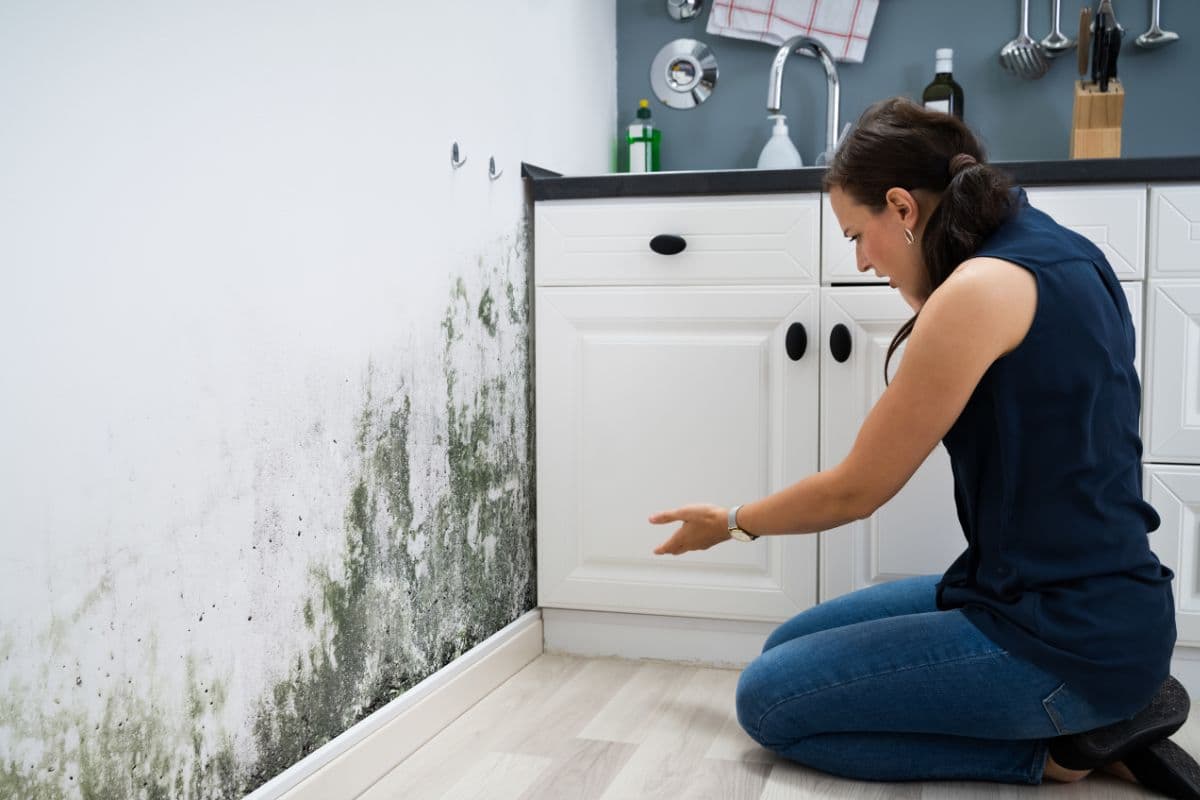
Mold remediation is the professional process of identifying, containing, physically removing, and treating mold colonies in a home to return airborne spore levels to safe, normal concentrations. Unlike simple surface cleaning, remediation addresses the full scope of growth including mold behind walls, inside insulation, and within structural framing using containment barriers, HEPA filtration, antimicrobial treatment, and independent post-remediation testing. Basement and crawl space environments are the most common remediation sites because chronic moisture, limited airflow, and organic building materials create ideal conditions for mold growth. A complete remediation project always includes identifying and fixing the underlying moisture source, without which mold will return regardless of how thorough the removal was.
How Much Does Mold Remediation Cost in 2026?
The total cost of mold remediation depends on three things: how much area is affected, where the mold is growing, and whether structural materials need to be torn out and replaced. Here is what homeowners are paying nationally in 2026.
Cost by Affected Area
| Area Size | Typical Cost Range | What Is Involved |
|---|---|---|
| Small (under 10 sq ft) | $500 to $1,500 | Surface mold on a small section of drywall, ceiling, or exposed concrete. May be DIY-able with proper safety equipment. Professional testing recommended before and after. |
| Medium (10 to 50 sq ft) | $1,500 to $4,000 | Common for basement wall sections, crawl spaces, and areas behind finished walls. Requires professional containment barriers, HEPA filtration, and antimicrobial treatment. |
| Large (50 to 100 sq ft) | $4,000 to $7,000 | Multiple wall sections, floor-to-ceiling growth, or mold behind large areas of finished basement walls. Full containment, demolition of affected materials, and post-remediation air quality testing required. |
| Whole basement (100+ sq ft) | $7,000 to $15,000 | Extensive structural involvement including framing, subfloor, insulation, and HVAC components. May require temporary relocation during remediation. |
Cost Per Square Foot
Most remediation companies price at $10 to $25 per square foot for standard work. Difficult access areas like crawl spaces or mold behind finished walls can push that to $25 to $30 per square foot. HVAC duct remediation is priced separately and typically runs $2,000 to $10,000 depending on the size of the system.
Why small jobs don't follow the per-square-foot rate: the $10 to $25 per square foot rate applies to larger jobs. Small jobs are priced closer to a minimum charge because setting up containment, running air scrubbers, and paying for clearance testing cost about the same whether the moldy area is 5 square feet or 50. That's why a 10 sq ft patch can cost $500 to $1,500 even though the per-foot math says less.
How this compares to national averages: national cost data puts the average mold remediation job at about $2,200, often $1,100 to $3,400. That average includes small bathroom, closet, and attic jobs. Basement and crawl space projects tend to cover more area and involve moisture problems, which is why they usually land in the $1,500 to $9,000 range on this page.
What Factors Drive the Cost Up?
Two basements with the same amount of visible mold can have wildly different remediation bills. Here is what actually moves the needle on price.
Where the Mold Is Growing
Mold on an exposed concrete foundation wall in an unfinished basement is the cheapest scenario. It is accessible, non-porous, and cleanup is straightforward. Mold behind finished drywall costs more because the wall has to come down. Mold inside HVAC ductwork ($2,000 to $10,000) is the most expensive due to specialized equipment and the risk of spreading spores throughout the house.
Important: If you can see mold, there is often more hiding behind the wall. A 5-square-foot patch on the drywall surface might be 50 square feet on the back side. This is why professional inspection with moisture meters and thermal imaging matters before quoting.
Type of Mold
Most remediation companies follow the same process regardless of species. That said, black mold (Stachybotrys chartarum) typically costs 10 to 25 percent more because it requires higher-grade respiratory protection, more rigorous containment, and careful handling. The color alone does not identify the species. Only lab testing can confirm it.
Structural Damage
If mold has been growing long enough to damage materials, you are paying for remediation plus repairs. Replacing mold-damaged drywall, insulation, carpet, or wood framing adds $500 to $5,000. This is where delayed action really costs you. A $1,500 cleanup becomes a $7,000 project once it eats through drywall and into the studs.
Mold Testing
Pre-remediation testing (air and surface samples sent to a lab) costs $300 to $600. Post-remediation clearance testing adds $200 to $400. Get post-remediation testing done by an independent tester, not the same company doing the remediation.
Root Cause Repair
Remediation without fixing the moisture source is a waste of money. Mold will come back, often within weeks. Your total project cost should include whatever waterproofing, plumbing repair, grading correction, or humidity control is needed.
Common Root Cause Fixes
- Foundation crack repair: $300 to $800 per crack
- Sump pump installation: $600 to $2,500
- Interior waterproofing: $3,000 to $8,000
- Quality dehumidifier: $200 to $1,500
Does Homeowners Insurance Cover Mold Remediation?
Standard homeowners insurance covers mold remediation only when the mold was caused by a covered peril, meaning a sudden, accidental event your policy covers.
Typically Covered
- Burst pipe causing water damage and mold
- Water heater failure flooding the basement
- Firefighter water damage leading to mold
Almost Never Covered
- Ongoing moisture problems or poor ventilation
- Humidity, condensation, or slow leaks
- Water seeping through the foundation over time
Even when covered, many policies cap mold remediation at $5,000 to $10,000. Some insurers offer mold endorsements that increase the limit. Water backup coverage can help if a sump pump failure or sewer backup caused the damage.
Tips for Dealing With Insurance
- Document everything with photos and video before cleanup
- Get the mold tested to identify the species
- Save all receipts and reports
- Do not delay. Insurers can deny claims if you waited too long
Can I Remove Mold Myself?
For small areas under 10 square feet, yes. The EPA recommends that homeowners can handle small mold cleanups themselves, but anything larger than about a 3-foot by 3-foot patch should be left to professionals.
DIY Cleanup Steps
- Wear an N95 respirator, gloves, and eye protection
- Seal off the area with plastic sheeting if possible
- Scrub hard surfaces with detergent and water (skip bleach as it does not kill mold on porous surfaces)
- Dry the area completely
- Cut out and discard mold-damaged drywall or insulation
Call a Professional When:
- The affected area is larger than 10 square feet
- Mold is behind walls or in HVAC systems
- You can smell mold but cannot find it
- Anyone in your household has respiratory issues
- The mold returned after you already cleaned it (moisture source not fixed)
DIY supplies cost $50 to $300 compared to $1,500 or more for professional remediation. The savings are real for small jobs, but doing it wrong, such as spreading spores, missing hidden growth, or not fixing the moisture source, can turn a small problem into a big one.
What Does the Professional Remediation Process Look Like?
Understanding the process helps you evaluate quotes and spot red flags. A legitimate remediation follows a specific sequence.
1. Inspection and Testing
The company assesses visible mold, checks moisture levels, and takes air or surface samples. Some offer free inspections while others charge $200 to $600. Be wary of companies that skip testing and jump straight to remediation.
2. Containment
The work area is sealed off with plastic sheeting and negative air pressure (a fan pulling air out through a HEPA filter). If a company does not set up containment for anything beyond a tiny surface cleanup, that is a red flag.
3. Removal
Contaminated porous materials (drywall, insulation, carpet) are cut out, bagged, and disposed of. Non-porous surfaces are scrubbed or media-blasted, then treated with antimicrobial solutions. HEPA vacuums clean all surfaces.
4. Drying and Dehumidification
Commercial dehumidifiers and air movers dry the space thoroughly. Moisture levels are verified with meters before the area is cleared for reconstruction.
5. Post-Remediation Testing
An independent tester takes air samples to confirm mold spore levels have returned to normal. This is your proof the job worked.
6. Reconstruction
Removed drywall, insulation, and other materials are replaced. May be handled by the remediation company or a separate contractor.
The whole process takes 1 to 5 days for most basement jobs. Severe whole-house remediation can take 1 to 2 weeks.
How to Choose a Mold Remediation Company
The mold remediation industry has more than its share of companies that use fear to inflate prices. Here is how to protect yourself.
Get at least three quotes
Prices for the same job can vary by 50 percent or more. Three quotes give you a realistic range.
Check certifications
Look for IICRC (Institute of Inspection, Cleaning and Restoration Certification) with S520 accreditation, the industry standard for mold remediation.
Separate testing from remediation
The tester should not be the same company doing the work. This is an obvious conflict of interest.
Ask what is included
A good quote should itemize containment setup, removal, disposal, antimicrobial treatment, HEPA vacuuming, and post-remediation testing.
Watch for scare tactics: Phrases like “your family is in immediate danger” and “we need to start today” are sales techniques, not professional assessments. Get the mold tested and make an informed decision.
Mold Remediation Cost by Location
While this guide focuses on basements, mold can grow anywhere moisture collects.
| Location | Typical Cost | Notes |
|---|---|---|
| Basement | $1,500 to $15,000 | Most common location due to high humidity and water intrusion. |
| Crawl Space | $500 to $4,000 | Smaller area but limited access makes work labor-intensive. Vapor barrier installation ($1,500 to $5,000) often needed. |
| Bathroom | $500 to $2,000 | Usually surface mold from steam and poor ventilation. Plumbing leaks behind walls can increase the scope. |
| Attic | $1,500 to $6,000 | Poor ventilation and roof leaks are the usual culprits. Insulation removal and replacement often add to cost. |
| HVAC System | $2,000 to $10,000 | The most dangerous location because the system blows mold spores throughout the house. Do not run your HVAC if you suspect mold in the ductwork. |
Crawl space ranges cover remediation only. A new vapor barrier adds $1,500 to $5,000 when needed. See the crawl space section below.
Crawl Space Mold Remediation Cost
Crawl space mold remediation usually costs $500 to $4,000 for the remediation itself. If the crawl space needs a new vapor barrier, add $1,500 to $5,000, which can push a full project past $4,000.
Crawl spaces cost more per square foot than open basements, typically $25 to $30, because crews work lying down in tight spaces, and many jobs involve treating the underside of the subfloor and the floor joists across the entire crawl space.
What drives crawl space cost:
- How much of the subfloor and framing is affected. Spot treatment costs far less than treating every joist.
- Access. Low clearance, a small entry hatch, or obstructions like ductwork slow the job.
- Moisture control. Most crawl space mold comes from ground moisture and humid outdoor air. A vapor barrier, sealing vents, or full encapsulation is often part of a lasting fix. See our crawl space encapsulation guide.
- Insulation. Moldy fiberglass batts between the joists usually have to be removed and replaced.
Fix the moisture, or plan to do it again. Crawl space mold treated without a vapor barrier or humidity control almost always returns within a few seasons.
How to Prevent Mold and Avoid Paying for Remediation Twice
Remediation is pointless if you do not fix the conditions that caused the mold. Here is what actually works.
Keep humidity below 50 percent. A good dehumidifier with a built-in hygrometer is one of the best investments for a basement. Mold needs humidity above 60 percent to thrive.
Fix water problems immediately. A small leak today is a $5,000 mold problem in six months. Foundation cracks, failing sump pumps, clogged gutters, and poor exterior grading are the most common sources.
Improve air circulation. Stagnant air allows humidity to concentrate. A fan, bathroom exhaust, or HVAC supply register keeps air moving.
Do not store cardboard or fabric against basement walls. Use plastic bins, keep items on shelving above the floor, and leave a gap between storage and walls.
Inspect regularly. A monthly walk-through, especially in spring and after heavy rains, catches problems early. Look for efflorescence, musty smells, and condensation.
For a more complete prevention plan, check out our basement mold prevention guide.
Get Mold Remediation Quotes
Connect with certified mold remediation professionals in your area. Free quotes, no obligation.
Final Thoughts
Mold remediation is one of those expenses that feels painful in the moment but prevents much bigger costs down the road. A $2,000 remediation that catches the problem early is a bargain compared to $15,000 of structural damage from letting it spread.
The two most important things you can do: fix the moisture source (not just the mold), and do not try to save money by ignoring the problem or covering it up. Paint over mold and it comes back. Clean visible mold but skip the hidden growth behind the wall and it comes back. Remove all the mold but do not waterproof the basement, and it comes back.
Get it tested, get it quoted, get it fixed, and fix the water.
Frequently Asked Questions
Is mold remediation worth the cost?
Yes, and the sooner you act the cheaper it is. A small problem caught early might cost $500 to $1,500. That same mold left for six months can grow into a $5,000 to $10,000 project once it spreads behind walls and damages structural materials. Beyond cost, mold exposure can cause respiratory symptoms, allergic reactions, and chronic sinus issues, particularly in children, the elderly, and anyone with asthma or a compromised immune system. Remediation also protects your home’s resale value. Undisclosed mold is a common deal-killer during home inspections, and documented professional remediation with clearance testing is far more valuable to buyers than a seller simply saying the problem was handled.
How long does mold remediation take?
Most basement jobs take 1 to 5 days from containment setup through final air quality testing. A small, well-contained area on an exposed concrete wall might be completed in a single day. Larger projects involving demolition of finished walls, structural drying, and reconstruction typically take 1 to 2 weeks. The timeline also depends on how long drying takes before materials can be replaced, which varies with humidity levels and the size of the affected area. Ask your contractor for a written timeline before work begins so you know when each phase ends and when independent clearance testing will occur.
Can mold come back after remediation?
Yes, if the moisture source is not fixed. Mold spores are present in virtually every environment. They only become a problem when they land on a surface with sufficient moisture and an organic food source. Professional remediation removes the existing colony and treats surfaces, but if the basement is still taking on water, running high humidity, or has an unrepaired leak, new mold will colonize the same area within weeks. This is why every remediation project must include a root cause repair plan covering waterproofing, plumbing, grading, or humidity control depending on what is driving the moisture.
What is the difference between mold removal and mold remediation?
Mold removal technically implies eliminating all mold, which is not possible since spores exist naturally in all indoor and outdoor air. Mold remediation means returning mold levels to normal, safe concentrations by physically removing the active colony, cleaning and treating affected surfaces, running HEPA filtration during the process, and verifying results with post-remediation air testing. The term remediation is the industry-standard language used by the IICRC and the EPA because it accurately describes the goal: not zero mold, but mold at levels that pose no health or structural risk.
Should I leave my home during mold remediation?
For large jobs involving significant demolition and whole-area HEPA filtration, yes. Most professionals recommend vacating the affected floor or the entire home during active remediation. The containment process stirs up airborne spores, and sensitive individuals including those with asthma, allergies, or compromised immune systems may experience symptoms even with containment barriers in place. For small, well-contained jobs on an unfinished basement wall, leaving is typically not required, but staying out of the work area entirely is. Ask your contractor specifically whether temporary relocation is recommended given the scope of your project.
Does black mold cost more to remove?
Black mold (Stachybotrys chartarum) typically costs 10 to 25 percent more than standard mold remediation due to additional safety protocols including higher-grade respiratory protection, more rigorous containment, and careful bagging and disposal procedures. However, color alone does not identify the species. Many mold types appear dark green, gray, or black, and only lab testing can confirm whether growth is Stachybotrys or another species. Do not let a contractor charge a black mold premium without lab confirmation of the species.
How do I find a certified mold remediation company?
Look for contractors holding IICRC certification with S520 accreditation, which is the industry standard for professional mold remediation. You can verify certification status directly on the IICRC website. Get at least three quotes and make sure testing is handled by an independent third party, not the same company doing the remediation work. Ask each contractor to provide a written scope of work itemizing containment setup, removal method, disposal, antimicrobial treatment, HEPA vacuuming, and post-remediation clearance testing. Avoid any company that skips inspection, pressures you to start immediately, or refuses to separate testing from remediation.
What should I do to prepare for mold remediation?
Before the crew arrives, clear the work area of furniture, storage bins, and personal items to give the team unobstructed access. Remove or bag any clothing, bedding, or soft goods stored near the affected area since porous materials can harbor spores. Shut off your HVAC system if the mold is near ductwork to prevent spore spread during work. Make arrangements for children and pets to stay elsewhere for the duration of active remediation. Document the visible mold with photos before any work begins, both for your own records and for any insurance claim. Your contractor should walk you through any additional site-specific prep during the inspection.
How much does crawl space mold remediation cost?
Most crawl space mold remediation costs $500 to $4,000, or about $25 to $30 per square foot because of the tight working conditions. If the crawl space needs a new vapor barrier, add $1,500 to $5,000. Without fixing ground moisture and humidity, crawl space mold usually comes back.
How much does black mold removal cost?
Black mold usually costs 10% to 25% more to remove than other common molds, because crews use stricter containment and protective gear. For a typical basement project, that means roughly $1,700 to $11,000 instead of $1,500 to $9,000. The extra cost comes from the precautions, not because black mold is harder to remove.
How much does mold remediation cost per square foot?
Most mold remediation costs $10 to $25 per square foot, and $25 to $30 in crawl spaces or behind finished walls. Small jobs don't follow the per-foot rate. Expect a minimum of about $500 to $1,500 even for a patch under 10 square feet.
Glossary
Mold Remediation
The professional process of containing, physically removing, and treating an active mold colony to return indoor spore levels to safe, normal concentrations. Remediation includes containment, HEPA filtration, surface treatment, and independent post-remediation verification testing.
Containment
Physical barriers made of plastic sheeting combined with negative air pressure used to isolate the work area and prevent mold spores from migrating into unaffected parts of the home during remediation.
HEPA Filtration
High-Efficiency Particulate Air filtration that captures 99.97 percent of airborne particles 0.3 microns or larger, including mold spores. Air scrubbers using HEPA filters run continuously during remediation to reduce spore counts in the work area.
Air Scrubber
A portable filtration unit that pulls contaminated air through HEPA filters and exhausts clean air, used during remediation to reduce airborne spore concentrations and maintain negative air pressure in the containment zone.
Antimicrobial Treatment
Chemical solutions applied to surfaces after physical mold removal to kill remaining spores and inhibit future growth. Effectiveness depends on surface type; antimicrobials work well on non-porous materials but do not substitute for physical removal on porous surfaces like drywall.
Clearance Testing
Post-remediation air and surface sampling performed by an independent third-party tester to verify that mold spore levels have returned to acceptable concentrations. Clearance testing is your documentation that the job was completed successfully.
IICRC S520
The Standard and Reference Guide for Professional Mold Remediation published by the Institute of Inspection, Cleaning and Restoration Certification. S520 accreditation is the benchmark credential to look for when hiring a remediation contractor.
Mycotoxin
A toxic compound produced by certain mold species, including Stachybotrys chartarum, as a byproduct of their metabolic processes. Mycotoxin exposure is associated with respiratory symptoms and other health effects, which is why toxigenic mold species require enhanced safety protocols during remediation.
Stachybotrys Chartarum
A toxigenic mold species commonly called black mold that produces mycotoxins and requires enhanced safety protocols during remediation. Color alone does not identify this species; only lab testing confirms its presence.
Negative Air Pressure
A containment technique where air is exhausted from the work area faster than it enters, creating inward airflow that prevents contaminated air from escaping the containment zone into clean areas of the home.
Porous vs Non-Porous Surfaces
The key distinction in remediation scope. Non-porous surfaces like concrete, metal, and glass can be cleaned and treated in place. Porous materials like drywall, insulation, carpet, and wood framing absorb mold into their structure and must be physically cut out and removed.
Efflorescence
White, chalky mineral deposits on concrete or masonry caused by water migrating through the material and depositing salts on the surface. Often mistaken for mold but is a mineral deposit, not biological growth. Its presence indicates an active moisture problem. See our efflorescence guide for more detail.
Related Guides
How to Prevent Basement Mold
Proven strategies to stop mold before it starts.
Musty Basement Smell: Causes and Fixes
Identify the odor source and eliminate it for good.
Complete Basement Waterproofing Guide
Interior vs. exterior methods, costs, and how to keep your basement dry.
Basement Humidity Guide
Measure, manage, and permanently reduce basement humidity.
Wet Basement Walls
Diagnose why your walls are wet and fix the problem at its source.
How to Dry Out a Basement After Flooding
Step-by-step recovery to prevent mold after water damage.