Basement
Waterproofing Cost
In 2026, professional basement waterproofing costs most homeowners between $2,500 and $8,200, with the national average sitting right around $5,230.
By The Basement Guide Editorial Team
Updated October 2026 · 18 min read
Those numbers can feel abstract until you’re standing in a basement that smells like wet concrete and wondering if the stain on the wall is getting bigger. This guide gives you real 2026 pricing by method, honest advice on what’s worth the money, and the information you need to avoid overpaying or underspending on one of the most important investments you’ll make in your home.
Basement waterproofing cost is not a single number because basement waterproofing is not a single product. It is a category of solutions ranging from a $20 tube of crack sealant to a $15,000 exterior excavation and membrane system, and the right solution for a given basement is determined by the water source, not the budget. The cost spread exists because the underlying problems are fundamentally different: condensation on cool walls requires humidity control, not drainage; a leaking crack requires targeted injection, not a full perimeter system; and hydrostatic pressure driving water through the floor-wall joint requires an interior French drain and sump pump that condensation control cannot replace. The most expensive mistake homeowners make is spending money on the wrong tier of solution, such as applying waterproof paint to a basement with active hydrostatic seepage, or installing a full interior drainage system in a basement where fixing the gutters and regrading the yard would have solved the problem for free. The first question before any budget discussion is identifying exactly where the water is coming from, which determines whether the right answer costs $50 or $15,000.
The short answer? Interior systems (most common): $3,000 to $8,000. Exterior excavation and membrane: $8,000 to $15,000.
Quick estimate
Try our basement waterproofing cost calculator to get a planning estimate based on your basement size, moisture severity, and project scope. Use it before requesting contractor quotes.
2026 Basement Waterproofing Costs at a Glance
| Method | Average Cost | Best For | Per Linear Foot |
|---|---|---|---|
| Crack injection (epoxy/polyurethane) | $250 to $800 per crack | Hairline cracks, minor leaks | N/A |
| Interior waterproof paint/sealer | $1,500 to $4,000 | Dampness, minor vapor | $1 to $8/sq ft |
| Interior French drain + sump pump | $3,000 to $8,000 | Seepage, hydrostatic pressure | $40 to $85 |
| Sump pump system (new or upgrade) | $800 to $2,500 | Standing water removal | N/A |
| Exterior membrane + drainage | $8,000 to $15,000 | Severe or persistent water | Quoted per job |
| Exterior French drain only | $4,000 to $8,000 | Surface water/grading issues | $40 to $85 |
| Full interior + exterior combined | $12,000 to $22,000 | Worst-case scenarios | Varies |
| National average (complete job) | $5,230 | N/A | N/A |
A note on these numbers: Pricing varies by region, foundation type, and severity. Homeowners in the rural Midwest may pay 20 to 30 percent less than those in the Northeast or Pacific Northwest. Get local quotes for your specific situation.
Is Basement Waterproofing Worth the Cost?
Yes, and it’s not even close. Untreated water problems get worse over time, never better. A small crack that seeps during heavy rain today becomes a foundation integrity issue in a few years. Mold can begin growing within 24 to 48 hours of a moisture event, and professional mold remediation runs $1,500 to $9,000 depending on how far it spreads.
Foundation repairs, the kind you need when water damage is left unchecked for years, average $5,000 to $15,000 and can reach $25,000 for serious structural work. Meanwhile, waterproofing itself returns roughly 30 percent ROI at resale according to 2026 industry data.
More importantly, unresolved water issues can reduce your home’s value by 10 to 25 percent, and some buyers will walk away entirely when an inspector flags active moisture. The U.S. Environmental Protection Agency recommends controlling moisture as the single most important step in preventing mold in homes.
You’re not just waterproofing a basement, you’re protecting the structural integrity, air quality, and resale value of your entire house.
How Much Does It Cost to Waterproof a 1,000 Sq Ft Basement?
Most professional waterproofing on a 1,000 sq ft basement costs $3,000 to $10,000, or about $3 to $10 per square foot. Where you land depends on the method.
Since most basements fall somewhere in the 800 to 1,200 square foot range, here’s what a typical 1,000 sq ft basement looks like across different methods:
| Method | 1,000 Sq Ft Basement | What You Get |
|---|---|---|
| Waterproof paint/sealer (DIY) | $300 to $800 | Surface-level dampness barrier. Temporary fix. |
| Waterproof paint/sealer (pro) | $1,500 to $4,000 | Better application, minor warranty. Still temporary. |
| Crack injection (2 to 3 cracks) | $500 to $2,400 | Targeted leak repair. Addresses specific entry points. |
| Interior French drain + sump pump | $5,000 to $10,000 | Full perimeter drainage system. Solves 80 percent of problems. |
| Exterior membrane + drain tile | $9,000 to $14,000 | Maximum protection. Stops water before it reaches foundation. |
A 1,000 sq ft basement with roughly 130 linear feet of perimeter is the most common job contractors quote. If you’re getting quotes significantly outside these ranges, ask questions, either the scope is different from what you expected, or you should get more bids.
Interior vs Exterior Waterproofing: What’s the Real Difference?
This is the biggest decision you’ll make, and the cost gap is significant. Understanding what each approach actually does helps you decide where your money is best spent.
Interior Waterproofing
$3,000 to $8,000
Interior waterproofing doesn’t stop water from reaching your foundation, it manages water after it gets inside. A contractor cuts a narrow channel along the perimeter of your basement floor, installs a perforated drain pipe in gravel, and routes everything to a sump pump that pushes the water outside.
That range covers most interior jobs, including the many where the contractor drains only the walls that leak. A full perimeter on a 1,000 sq ft basement, about 130 linear feet, usually runs $5,000 to $10,000.
- ✓Less invasive, no digging up your yard
- ✓Installs in 2 to 5 days
- ✓Handles the vast majority of basement water problems
- ✓Best for seepage along floor-wall joint, general dampness, or moderate hydrostatic pressure
Exterior Waterproofing
$8,000 to $15,000
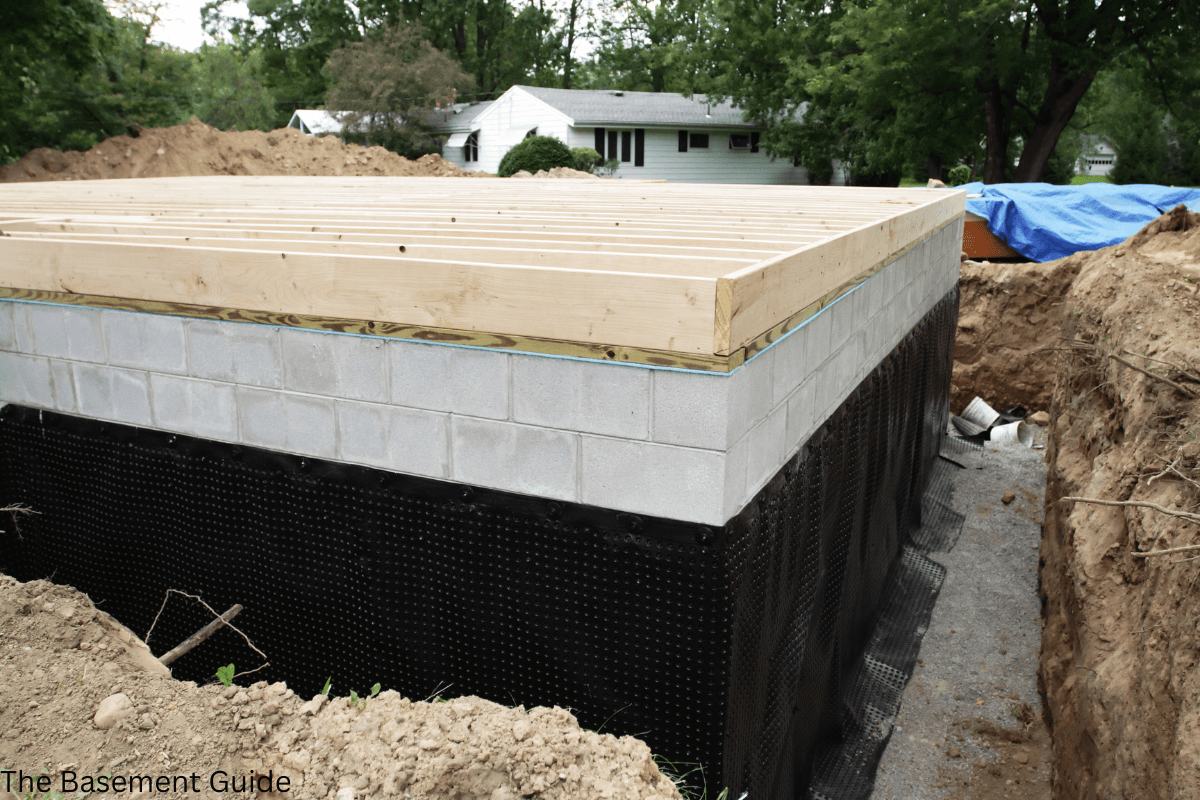
Exterior waterproofing stops water before it ever touches your foundation. A crew excavates down to the footing, applies a waterproof membrane, installs drain tile at the footing level, and backfills everything.
- ✓Most permanent and thorough solution
- ✓Costs 2 to 3 times more, takes 1 to 2 weeks
- ✓Tears up landscaping; may require moving decks or walkways
- ✓Best for severe water problems or exterior drainage failures
Which One Should You Choose?
For about 80 percent of homeowners, an interior French drain and sump pump system is the best balance of cost, effectiveness, and disruption. Start there unless you have a specific reason to go exterior, like water actively pouring through foundation walls during every rain, or a home with known exterior drainage failures.
See our full interior vs exterior waterproofing guide for a deeper dive.
What Is the Best Method to Waterproof a Basement?
For most homes, the answer is an interior perimeter French drain system paired with a quality sump pump, typically running $3,000 to $8,000 installed. It handles hydrostatic pressure, wall seepage, and floor-joint leaks in a single system. That said, the best method depends entirely on what’s causing your water problem:
- Minor dampness or condensation: Start with waterproof paint or sealer ($300 to $4,000) and a dehumidifier. This isn’t true waterproofing, it’s moisture management, but for mild issues, it may be all you need.
- One or two leaking cracks: Crack injection ($250 to $800 per crack) is targeted, affordable, and effective. Epoxy for structural cracks, polyurethane for active leaks.
- Widespread seepage or recurring water: Interior French drain + sump pump. The standard solution and where most homeowners land.
- Severe, persistent flooding: Full exterior waterproofing, possibly combined with an interior drainage system.
- Combination approach: Many experienced contractors recommend addressing the exterior drainage first (gutters, grading, downspout extensions, often free or cheap fixes) before spending thousands on interior systems. Sometimes fixing the surface water problem solves 90 percent of the issue.
See our complete waterproofing guide for a full breakdown of every method.
Factors That Affect Your Final Price
No two waterproofing jobs cost the same. Here’s what drives the number up or down:
- Basement size and perimeter length. Most contractors price interior drainage by the linear foot ($40 to $85/LF), so a larger basement costs more. A 1,000 sq ft basement with 130 LF of perimeter is a standard job. A 2,000 sq ft basement or L-shaped layout with 200+ LF will cost proportionally more.
- Severity of the water problem. There’s a significant price difference between “walls feel damp when it rains” and “I get two inches of standing water every spring.” Worse problems mean bigger pumps, more extensive drainage, and potentially structural repairs before waterproofing can begin.
- Foundation type. Poured concrete is easier and cheaper to waterproof than concrete block or stone foundations. Block walls have mortar joints that create multiple entry points, and stone or rubble foundations (common in pre-1940 homes) require specialized approaches that cost more.
- Accessibility. A walkout basement with easy access costs less than a fully below-grade basement. Exterior waterproofing costs jump when there’s a deck, patio, or mature landscaping that has to be removed and replaced.
- Existing damage. If water has already caused foundation cracks, mold growth, or structural deterioration, those repairs add to the total before waterproofing even begins. Water damage remediation alone runs $1,300 to $6,400.
- Your location. Labor rates, soil conditions, and water table levels vary significantly by region. Homeowners in the Northeast, Pacific Northwest, and Great Lakes region typically pay 15 to 30 percent more than the national average. Arid climates like the Southwest generally pay less.
- Add-ons. A contractor-installed whole-basement dehumidifier adds $800 to $2,000. A good portable unit costs $200 to $600. Battery backup for the sump pump adds $350 to $900 installed. Smart sump pump monitoring adds $100 to $300. These are worth it, especially the battery backup, but they push the total up.
Can I Waterproof My Basement Myself?
Some of it, yes. Here’s the honest breakdown:
Realistic DIY projects (under $1,000):
- Applying waterproof paint or sealer to walls, $300 to $800 in materials
- Sealing small cracks with hydraulic cement or polyurethane caulk, $20 to $50 per crack
- Improving exterior grading so water flows away from the foundation, often free
- Extending downspouts at least 6 feet from the house, $10 to $30 per downspout
- Adding or cleaning gutters, varies
Not realistic DIY projects:
- Interior French drain installation, requires cutting concrete, managing drainage slope, proper sump pit construction, and electrical work. One mistake with the slope means water pools instead of draining.
- Exterior waterproofing, requires professional excavation equipment, membrane application expertise, and proper backfill techniques. Getting this wrong can compromise your foundation.
- Sump pump installation, technically possible for a handy homeowner, but electrical work near water is a safety concern, and improper discharge routing causes neighborhood drainage problems.
The sweet spot: handle the cheap exterior fixes yourself (grading, gutters, downspouts, crack sealing) and hire a pro for drainage systems. Many homeowners save thousands by fixing surface water issues themselves and discovering that the “serious” basement water problem was actually just bad grading all along. For more guidance, see our DIY vs hiring a pro guide.
How Long Does Basement Waterproofing Last?
| Method | Expected Lifespan | Maintenance Needed |
|---|---|---|
| Waterproof paint/sealer | 2 to 5 years | Reapply when peeling starts |
| Crack injection (epoxy) | 10 to 20 years | Monitor for new cracks nearby |
| Crack injection (polyurethane) | 5 to 15 years | More flexible, handles movement |
| Interior French drain | 20 to 30 years | Keep drain clear of sediment |
| Sump pump | 7 to 10 years | Test quarterly, replace proactively |
| Exterior membrane | 25 to 50 years | Virtually maintenance-free |
| Exterior drain tile | 20 to 40 years | Rare clogging issues |
The most commonly replaced component is the sump pump, budget $650 to $1,200 installed for a replacement every 7 to 10 years. The drainage system itself (pipes and gravel) lasts decades if properly installed. The backup battery needs replacing every 3 to 5 years, about $50 to $150. A well-installed interior system with a quality pump and annual maintenance will protect your basement for 20+ years.
Does Basement Waterproofing Increase Home Value?
Yes, in two distinct ways. First, the direct ROI: waterproofing returns roughly 30 percent of its cost at resale according to 2026 remodeling data. A $6,000 system adds about $1,800 in appraised value. Not amazing on paper, but that’s not where the real value lies.
The bigger financial impact is what it prevents. A home with documented water issues can lose 10 to 25 percent of its sale price because buyers either walk away or use the problem as leverage to negotiate a steep discount. A basement with a dry track record, a visible sump system, and a transferable warranty removes that objection entirely.
And if you’re planning to finish the basement into living space, waterproofing is the mandatory first step. A finished basement adds $20,000 to $50,000 in functional value to a home. But no one finishes a wet basement, and if they do, they’re signing up for mold, rot, and a very expensive tearout. For homebuyers evaluating a property, our basement inspection checklist covers exactly what to look for.
Cost Breakdown by Method: What You’re Actually Paying For
Crack Injection: $250 to $800 per crack
The most targeted and affordable fix. A technician drills small ports along the crack, then injects epoxy (for structural cracks) or polyurethane foam (for active leaks) under pressure. The material fills the crack from front to back and cures into a waterproof seal.
Best for: Isolated cracks in poured concrete walls, hairline cracks that weep during rain. Not effective for: block wall seepage, floor-joint leaks, or widespread moisture. See our foundation crack repair cost guide for more.
Interior Drain System + Sump Pump: $3,000 to $8,000
The workhorse of basement waterproofing. A contractor jackhammers a narrow trench around the interior perimeter, installs perforated drain pipe in gravel, connects everything to a sump pit with a pump, and patches the concrete. Water that enters through the walls or floor-wall joint is intercepted and pumped out before it reaches your living space.
What you’re paying for: concrete cutting and removal, drain pipe and gravel, sump pit and pump, labor (typically 2 to 5 days), and cleanup. The pump is the critical component, a good 1/3 HP submersible pump runs $150 to $400. A cast-iron primary pump with a battery backup system runs $500 to $1,200. See our sump pump buying guide and sump pump cost breakdown. For a detailed look at how these systems work, see our interior basement drainage systems guide.
Exterior Waterproofing: $8,000 to $15,000
The full treatment. Excavation down to the footings (8 to 10 feet deep on a full basement), application of a waterproof membrane to the foundation walls, installation of drainage board and drain tile at the footing level, and careful backfill with drainage-friendly material.
What you’re paying for: primarily labor and equipment, excavation is expensive. Also includes membrane material, drain tile, gravel, and landscaping restoration. The work itself is highly effective and long-lasting, but the disruption is significant.
Exterior waterproofing is also called foundation waterproofing. Deep basements, block or stone walls, and decks, patios, or driveways in the way can push the price to $18,000 or more. Contractors usually quote it per job rather than per foot, because digging depth and access drive the cost. See our interior vs. exterior waterproofing guide for a full comparison.
Sump Pump System: $800 to $2,500
If you already have drainage but need a new or upgraded pump, this is a standalone job. A new pit and pump typically runs $1,200 to $2,500 installed. Replacing the pump in an existing pit costs $650 to $1,200. Includes the pump, pit (if needed), discharge line, and check valve. A battery backup adds $350 to $900 installed and is strongly recommended, power outages often coincide with the heavy storms that cause flooding.
Is Waterproofing Paint Enough for a Basement?
In most cases, no. Waterproofing paint like Drylok, or a crystalline sealer like Xypex, can handle minor vapor transmission through concrete, the kind that makes walls feel damp or slightly sweaty. But it will not stop active water leaks, seepage, or hydrostatic pressure.
What typically happens: a homeowner applies waterproof paint, it looks great for a year or two, then starts bubbling, peeling, and flaking as water pressure pushes it off the wall from behind. Now you’ve spent $1,500 to $4,000 on paint that needs to be scraped off before a real waterproofing system can be installed.
Waterproof paint makes sense as a finish coat after proper waterproofing is in place, or for basements with truly minor dampness (humidity but no actual water). For anything beyond that, save the money and put it toward a drainage solution. For a detailed review, see our waterproof basement paint and sealer guide.
How Long Does the Job Take?
| Method | Timeline | Disruption Level |
|---|---|---|
| Crack injection | 2 to 4 hours | Minimal |
| Waterproof paint | 1 to 2 days | Low, move items from walls |
| Interior French drain + sump | 2 to 5 days | Moderate, dust, noise, temporary mess |
| Exterior waterproofing | 5 to 14 days | High, yard excavation, weather dependent |
For interior systems, most crews complete a standard basement in 2 to 3 days. Day one is demolition (cutting concrete, excavating the trench). Day two is drain installation and sump pit. Day three is concrete patching and cleanup. Plan to keep the basement clear of furniture and stored items during the work. The concrete dust is significant, cover or remove anything you care about.
Do You Need a Permit?
In most jurisdictions, interior waterproofing work (French drains, sump pumps, sealers) does not require a building permit. Exterior waterproofing usually requires a permit because it involves excavation near the foundation and potentially modifying drainage systems that affect neighboring properties. Some municipalities also require permits for sump pump discharge routing.
Your contractor should know the local requirements, if they tell you permits aren’t necessary for exterior work, that’s a yellow flag.
Homeowners insurance typically does not cover waterproofing as a preventive measure. It may cover sudden water damage (burst pipe, failed sump pump) but not gradual seepage or long-term moisture issues. See our basement flooding insurance guide for a full explanation of what’s covered and what isn’t.
How to Hire the Right Contractor (and Avoid Getting Ripped Off)
- Get 3 to 5 written quotes. Not ballpark numbers over the phone, actual written estimates after they’ve seen your basement. Quotes should specify the method, materials, linear footage, pump model, and warranty terms.
- Ask what they’re actually installing. You want to know pipe diameter, gravel type, sump pump model and horsepower, and whether a battery backup is included.
- Check for licensing, insurance, and warranty. Verify their license. Make sure they carry liability insurance and workers’ comp. A transferable warranty matters for resale value.
- Be skeptical of the lowest bid. If one quote comes in at $2,000 and the others are $5,000 to $7,000, the low bidder is probably cutting corners.
- Be skeptical of high-pressure sales. Some companies use scare tactics to pressure you into signing on the spot. A legitimate contractor will give you time to think.
- Ask for references and check reviews. Google reviews, BBB, and Angi are good starting points. Ask for 2 to 3 recent customers you can call.
For a deeper guide on vetting contractors, see our article on how to hire a basement waterproofing contractor.
Can You Finance Basement Waterproofing?
Yes. Most established waterproofing companies offer financing, often 0 percent interest for 12 to 24 months. Common options:
- Contractor financing: Payment plans through third-party lenders. Read the terms carefully, promotional rates expire.
- Home equity loan or HELOC: Lower interest rates, but your home is collateral.
- Personal loan: Quick approval, no home equity required, but higher rates (8 to 15 percent).
- Credit card: Only for smaller jobs (crack injection, paint) where you can pay it off quickly.
Waterproofing is one of the few home improvements that’s genuinely urgent, putting it off usually costs more in the long run. If financing helps you get it done now instead of waiting two years while the damage compounds, it’s a smart financial move. See our basement waterproofing finances guide for a detailed financial analysis.
What If I Only Have a Little Dampness?
Not every damp basement needs a $5,000 drainage system. Here’s a step-by-step approach starting with the cheapest fixes:
- 1.Fix the exterior first (often free). Clean your gutters, extend downspouts at least 6 feet from the house, and check the grading around your foundation. The ground should slope away at roughly 1 inch per foot for the first 6 feet. The U.S. Department of Housing and Urban Development identifies poor exterior drainage as the most common cause of basement moisture.
- 2.Run a dehumidifier. If the dampness is condensation rather than actual water intrusion, a quality dehumidifier ($200 to $600) may be all you need. Keep basement humidity below 50 percent.
- 3.Seal visible cracks. Crack injection at $250 to $800 per crack handles isolated leak points.
- 4.Apply waterproof sealer. If walls are damp but not actively leaking, a waterproof sealer buys you time. Budget $300 to $800 DIY or $1,500 to $4,000 professional.
- 5.Full drainage system. If the above steps don’t solve it, then invest in an interior French drain and sump pump. At this point, you know you’ve eliminated the easy fixes.
This approach can save you thousands by addressing the root cause before jumping to the most expensive solution.
Does Waterproofing Work With a Finished Basement?
Yes, but it’s more complicated and slightly more expensive. A contractor can install an interior French drain system in a finished basement, but it typically requires removing a strip of drywall, insulation, and flooring along the perimeter walls to access the floor-wall joint. After the system is installed and concrete is patched, the drywall and flooring need to be repaired. This adds $1,000 to $3,000 to the total project cost.
It’s not ideal, which is exactly why we always recommend waterproofing before you finish your basement. It’s cheaper, cleaner, and results in a better system when there’s no finished materials in the way. Check our pre-finish basement audit to make sure your basement is ready.
What Does Your Basement Water Problem Actually Cost to Fix?
| What You Are Experiencing | Most Likely Cause | Right Solution | Estimated Cost |
|---|---|---|---|
| Walls feel damp or sweaty, no visible water | Condensation from humidity | Dehumidifier plus exterior grading check | $200 to $800 |
| White mineral deposits on concrete walls | Active moisture migration through concrete | Penetrating sealer (RadonSeal) or waterproof paint | $300 to $2,000 |
| One or two cracks that weep during rain | Isolated crack entry points | Epoxy or polyurethane crack injection | $250 to $800 per crack |
| Water appears along base of wall after rain | Hydrostatic pressure at cove joint | Interior French drain plus sump pump | $3,000 to $8,000 |
| Water coming up through floor cracks | Sub-slab hydrostatic pressure | Interior French drain plus sump pump | $3,000 to $8,000 |
| Puddles after every rain regardless of crack location | High water table or widespread seepage | Interior perimeter drainage system | $5,000 to $10,000 |
| Yard pools near foundation, basement stays damp | Poor exterior drainage directing water toward foundation | Regrade yard, extend downspouts, exterior French drain | $0 to $3,000 |
| Water pouring through wall face during heavy rain | Exterior soil saturation, failed damp-proofing | Exterior membrane plus footing drain | $8,000 to $15,000 |
| Bowing walls with water entry | Structural failure plus hydrostatic pressure | Structural repair first, then waterproofing | $10,000 to $25,000 |
| Musty smell but no visible water | Hidden mold from chronic low-level moisture | Identify moisture source, dehumidifier, possible sealer | $200 to $4,000 |
| Finished basement with water behind walls | Active moisture trapped by finishing materials | Remove affected materials, waterproof, refinish | $5,000 to $15,000 |
| Recurring flooding despite existing sump pump | Undersized pump, failed backup, or overwhelmed drain | Upgrade pump, add battery backup, inspect drain tile | $500 to $2,500 |
| Water entering through window well | Window well drainage failure | Window well cover plus gravel drain | $50 to $500 |
| Minor dampness, tight budget | Condensation or minor vapor transmission | Exterior fixes first, then DIY sealer if needed | $0 to $800 |
Frequently Asked Questions
How much does basement waterproofing cost per square foot?
Most basement waterproofing systems cost $3 to $10 per square foot as a rough estimate, but cost per square foot is a misleading metric for waterproofing because the work happens along the perimeter walls, not across the entire floor area. Interior French drain systems are more accurately priced by the linear foot at $40 to $85 per linear foot of perimeter. A 1,000 square foot basement with roughly 130 linear feet of perimeter typically costs $5,000 to $10,000 for a full-perimeter interior French drain and sump pump system. Crack injection costs $250 to $800 per crack regardless of basement size. Exterior waterproofing with membrane and drain tile costs $8,000 to $15,000 for a standard basement.
Is interior or exterior waterproofing better?
Interior waterproofing is the better choice for roughly 80 percent of residential basement water problems. It costs $3,000 to $8,000 compared to $8,000 to $15,000 for exterior, installs in 2 to 5 days with minimal disruption, and effectively manages hydrostatic pressure, wall seepage, and floor-wall joint leaks. Exterior waterproofing is more thorough because it stops water before it reaches the foundation, but it requires full excavation down to the footings, tears up landscaping, and costs 2 to 3 times more. Choose exterior waterproofing only for severe or persistent flooding, known exterior drainage failures, or when interior systems alone have not solved the problem. See our interior vs exterior waterproofing guide for a full comparison.
How long does a waterproofing system last?
Interior French drain systems last 20 to 30 years when properly installed and maintained. Exterior waterproof membranes last 25 to 50 years and are virtually maintenance-free once backfilled. Sump pumps are the component that needs regular replacement, typically every 7 to 10 years at a cost of $650 to $1,200 installed. The backup battery needs replacing every 3 to 5 years at about $50 to $150. Waterproof paint and sealers last only 2 to 5 years before peeling and need reapplication. Crack injections last 10 to 20 years for epoxy and 5 to 15 years for polyurethane.
Will waterproofing stop all water?
A well-designed waterproofing system stops 95 to 99 percent of water entry under normal conditions. No residential system is 100 percent effective against extreme flooding events such as catastrophic storms or sewer backups that can overwhelm any drainage capacity. The best protection combines good exterior drainage (clean gutters, extended downspouts, proper grading) with an interior French drain and sump pump system. Adding a battery backup sump pump protects against the most common failure scenario, a power outage during a heavy storm when the primary pump cannot run.
Can I finance waterproofing?
Yes. Most established waterproofing contractors offer financing, often at 0 percent interest for 12 to 24 months through third-party lenders. Other options include home equity loans or HELOCs (lower interest rates but your home is collateral), personal loans (quick approval at 8 to 15 percent interest), and credit cards (only for smaller jobs like crack injection where you can pay the balance quickly). Waterproofing is one of the few home improvements where financing makes strong financial sense because delaying the work typically costs more in compounding water damage. See our basement waterproofing finances guide for a detailed financial analysis.
What if I only have dampness, not actual water?
Start with the cheapest fixes first: clean gutters, extend downspouts at least 6 feet from the foundation, and correct the grading so soil slopes away at 1 inch per foot for the first 6 feet. These exterior fixes are free or low-cost and solve the problem for more homeowners than expected. If dampness persists, add a dehumidifier ($200 to $600) and keep basement humidity below 50 percent. If walls are damp but not actively leaking, apply a waterproof sealer ($300 to $800 DIY or $1,500 to $4,000 professional). Only invest in a full interior drainage system ($3,000 to $8,000) if simpler solutions do not resolve the moisture.
Does waterproofing work if my basement is already finished?
Yes, but waterproofing a finished basement is more complicated and costs $1,000 to $3,000 more than waterproofing an unfinished basement. A contractor must remove a strip of drywall, insulation, and flooring along the perimeter walls to access the floor-wall joint where the French drain is installed. After the drainage system is in place and concrete is patched, the drywall and flooring need to be repaired or replaced. This is exactly why waterproofing should always be done before finishing a basement. See our pre-finish audit checklist for everything to verify before starting a basement finishing project.
What’s the difference between waterproofing and damp proofing?
Damp proofing is a thin, tar-based coating applied to the exterior of foundation walls during new construction to resist soil moisture vapor. Waterproofing is a more robust system (rubber membrane, drainage board, and drain tile) designed to handle liquid water under hydrostatic pressure. Damp proofing does not stop liquid water and is not waterproofing. Most homes, including many built today, get only damp proofing, because building codes require full waterproofing only where there's a high water table or other severe soil water conditions. As that thin coating ages, it stops resisting even soil moisture, which is one reason older homes develop basement water problems.
How much does it cost to waterproof a basement from the outside?
Exterior basement waterproofing, also called foundation waterproofing, usually costs $8,000 to $15,000. The crew digs down to the footings, applies a waterproof membrane and drainage board to the walls, installs drain tile at the footing, and backfills. Deep basements, block or stone walls, and decks, patios, or driveways in the way can push the price to $18,000 or more. It's the most thorough fix, but interior drainage at $3,000 to $8,000 solves most basement water problems for far less.
How much does it cost to seal a basement?
Sealing basement walls with a waterproof paint or penetrating sealer costs about $300 to $800 in DIY materials for most basements, or $1,500 to $4,000 for a professional, roughly $1 to $8 per square foot of wall. Sealing individual cracks costs $20 to $50 per crack DIY or $250 to $800 per crack for professional injection. Sealers handle dampness and minor vapor. They won't stop active leaks or water pushed in by hydrostatic pressure. See our waterproof paint and sealer picks.
How much does it cost to fix hydrostatic pressure in a basement?
Most homeowners pay $3,000 to $8,000 to relieve hydrostatic pressure with an interior French drain and sump pump. The drain gives groundwater a path to the pump before it pushes through the floor and wall joint. A full perimeter on a 1,000 sq ft basement runs about $5,000 to $10,000, and the same system usually handles water coming up through the floor. Exterior waterproofing at $8,000 to $15,000 is the alternative when water comes through the wall face. Waterproof paint doesn't hold back hydrostatic pressure.
How do basement waterproofing contractors price a job?
Most price interior drainage by the linear foot of wall, typically $40 to $85 per foot, then add the sump pit and pump, battery backup, crack repairs, and any wall membrane. Exterior jobs are usually quoted per job, because digging depth and access drive the cost. Quotes vary widely because companies scope the same basement differently: one may drain every wall while another drains only the leaking ones. Ask each contractor to put the linear footage, pump model, and warranty in writing so you can compare. See how to hire a waterproofing contractor.
Glossary of Basement Waterproofing Terms
Hydrostatic Pressure
The force exerted by groundwater pressing against a basement foundation when the surrounding soil becomes saturated with water. Hydrostatic pressure is the primary cause of water entering basements through floor-wall joints, cracks, and porous concrete. The pressure increases with the depth of the water table and the amount of recent rainfall. Interior French drain systems relieve hydrostatic pressure by giving water a path to drain before it pushes through the foundation.
French Drain
A perforated pipe installed in a gravel-filled trench along the interior perimeter of a basement floor to collect groundwater and route it to a sump pump for removal. The trench is cut into the concrete slab at the floor-wall joint where most basement water enters. Interior French drains cost $40 to $85 per linear foot installed and are the most common basement waterproofing method. See our French drain cost guide and interior basement drainage systems guide for detailed comparisons.
Sump Pump
An automatic pump installed in a pit (sump basin) below the basement floor that collects water from the French drain system and pumps it through a discharge line to the exterior of the home. Sump pumps are the active component of any interior waterproofing system and require electricity to operate. A battery backup sump pump is strongly recommended because power outages frequently coincide with the storms that cause flooding. See our sump pump buying guide and sump pump cost guide.
Vapor Barrier
A material that slows water vapor from passing through it. In basements, a polyethylene vapor barrier belongs on crawl space floors and under concrete slabs. It does not belong on the inside of basement walls, where plastic sheeting traps moisture against the concrete and can cause mold in framing and insulation. On walls, rigid foam board glued tight to the concrete handles vapor control instead. A vapor barrier manages water vapor. Waterproofing systems manage liquid water. See our vapor barrier guide.
Membrane
A thick, rubber-based or polymer-modified asphalt sheet applied to the exterior surface of foundation walls to create a continuous waterproof barrier. Exterior membranes are the most durable waterproofing method with a lifespan of 25 to 50 years. Application requires excavating the soil down to the footings to expose the foundation wall.
Efflorescence
White, chalky mineral salt deposits that appear on concrete or masonry surfaces when water dissolves salts within the concrete and deposits them on the surface as it evaporates. Efflorescence is a visual indicator that moisture is actively moving through your foundation. Its presence does not necessarily mean you need a full waterproofing system, but it does confirm that water is present in the concrete. See our efflorescence guide.
Drain Tile / Weeping Tile
Another term for the perforated pipe used in French drain systems, whether installed at the interior perimeter or along the exterior footings. The name is historical and dates to a time when actual clay tiles were used. Modern drain tile is perforated PVC or corrugated HDPE pipe wrapped in filter fabric to prevent sediment clogging.
Grading
The slope of the ground surface around a home’s foundation. Proper grading directs surface water (rain and snowmelt) away from the foundation at a rate of at least 1 inch of drop per foot for the first 6 feet. Improper grading is the single most common, and most easily corrected, cause of basement water problems. Correcting grading is free or low-cost and should always be the first step before investing in interior or exterior waterproofing systems.
Final Advice
- Start outside. Before spending a dollar on interior waterproofing, fix your gutters, extend your downspouts, and correct your grading. These are cheap or free and solve the problem for more homeowners than you’d expect.
- Don’t put it off. Water damage is progressive. A $5,000 fix today prevents a $15,000 fix in three years. Every year you wait, the problem gets more expensive.
- Get multiple quotes. Three to five written estimates from licensed, insured contractors. Compare specifics, not just bottom-line numbers.
- Invest in the pump. If you’re getting an interior system, don’t let the contractor install the cheapest pump available. A quality submersible pump with a battery backup is the heart of the system, and the part that saves your basement during a power outage in a storm.
- Waterproof before you finish. If you’re planning to finish your basement, waterproof first. Always. No exceptions.
Ready to get started? Grab free quotes from vetted waterproofing pros at the top of this page, or read our complete basement waterproofing guide for a full breakdown of every method, material, and decision you’ll face.
For a personalized cost estimate based on your specific basement, use our basement waterproofing cost calculator before requesting contractor quotes.
Related Guides
Interior vs Exterior Waterproofing
Side-by-side comparison of methods, costs, and when each makes sense.
French Drain Cost 2026
Full pricing for yard and interior French drains.
Sump Pump Cost 2026
Pedestal vs submersible pricing, battery backup costs.
Foundation Crack Repair Cost
What crack injection costs and when you need it.
How to Finish a Basement
Step-by-step guide, waterproof first!
DIY vs Hire a Pro
When to tackle it yourself and when to call in help.
Complete Waterproofing Guide
Everything about waterproofing methods, not just costs.
Interior Basement Drainage Systems
Basement Flood Cleanup Cost
Bowing Basement Walls
Best Sump Pumps for 2026
Waterproof Basement Paint and Sealers
From Our Network
The Septic Guide covers septic inspection cost and buying a home with a septic system, which are relevant for homeowners evaluating total below-grade infrastructure costs when buying or selling a home.
The Garage Guide covers garage floor coating cost and garage waterproofing, which involve similar moisture management principles applied to garage slabs and foundations.