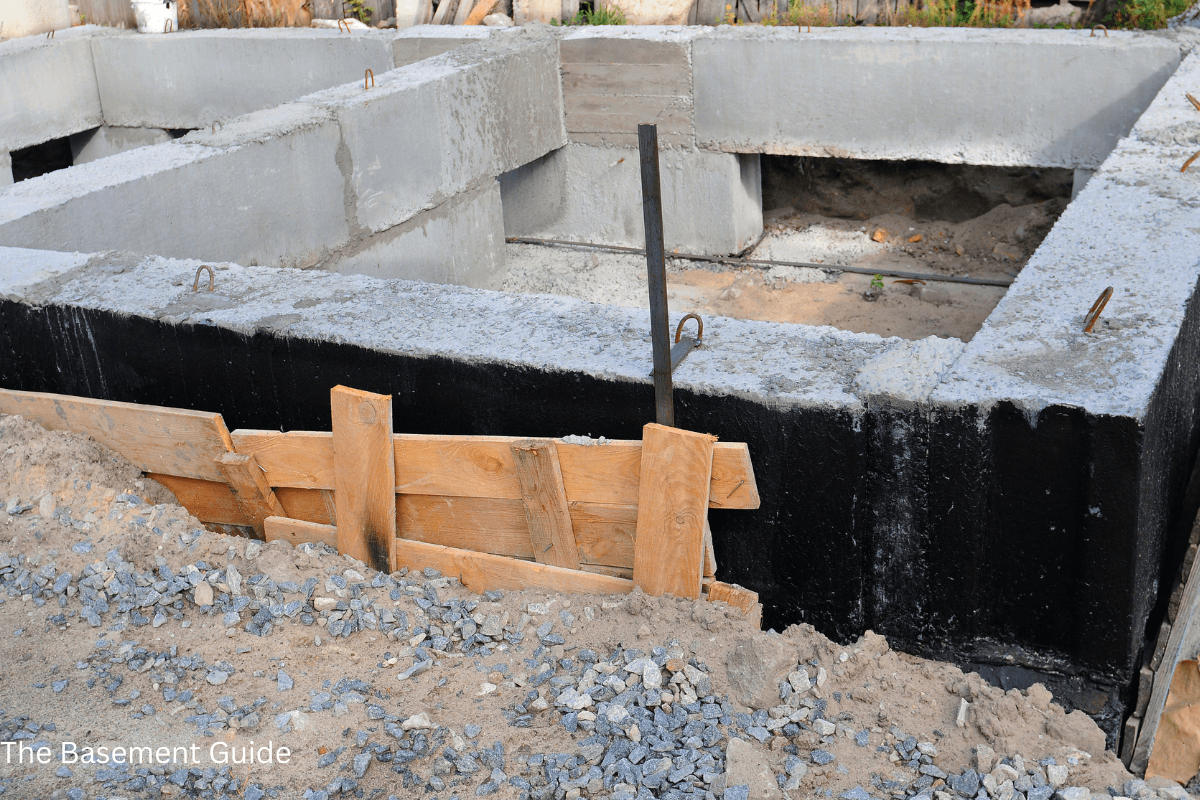
The three most common residential foundation types in the United States are full basements, crawl spaces, and concrete slabs. The type of foundation your home sits on affects everything from construction cost and energy efficiency to moisture risk, storage capacity, and long-term resale value.
A concrete slab foundation costs $4 to $8 per square foot and is the most affordable option. A crawl space foundation costs $7 to $14 per square foot and provides utility access and elevation. A full basement foundation costs $20 to $30 per square foot and adds an entire level of usable space.
For a typical 1,500 square foot home, that translates to $6,000 to $12,000 for a slab, $10,500 to $21,000 for a crawl space, and $30,000 to $45,000 for an unfinished basement.
This guide compares all three foundation types across cost, longevity, energy efficiency, moisture risk, and lifestyle impact so you can make an informed decision whether you are building a new home, evaluating an existing one, or trying to understand the foundation you already have.
Choosing between a basement, crawl space, and slab foundation is one of the most consequential and least reversible decisions in residential construction, because the foundation type determines not just the initial build cost but the home's moisture risk profile, energy performance, usable square footage, and resale value for the entire life of the structure. Unlike most home improvement decisions that can be undone or changed at reasonable cost, converting from one foundation type to another after construction is either technically impossible (slab to basement) or prohibitively expensive (crawl space to basement, starting at $50,000). In practice, geography and climate resolve the decision for most homeowners before personal preference enters the picture: cold-climate regions require deep footings that make basements cost-competitive, warm dry regions favor slabs, and humid or sloped terrain often points to crawl spaces. The cases where a genuine choice exists are new construction in transitional climate zones and renovation projects where the existing foundation type is being evaluated against the cost of a conversion.
If you already have a basement and want to improve it, see our complete basement waterproofing guide or our how to finish a basement guide.
Quick Comparison: Basement vs. Crawl Space vs. Slab
| Feature | Concrete Slab | Crawl Space | Full Basement |
|---|---|---|---|
| Cost per sq ft (2026) | $4 to $8 | $7 to $14 | $20 to $30 |
| Total cost (1,500 sq ft home) | $6,000 to $12,000 | $10,500 to $21,000 | $30,000 to $45,000 (unfinished) |
| Construction time | 1 to 2 days (slab pour) | 1 to 2 weeks | 2 to 4 weeks |
| Lifespan | 50 to 100 years | 40 to 80 years | 80 to 150 years |
| Usable space added | None | Limited utility access only | Full additional level |
| Energy efficiency | High (no air gap) | Low to moderate | High (earth-contact walls) |
| Utility access for repairs | Difficult (embedded in concrete) | Easy | Easy (unfinished areas) |
| Primary moisture risk | Slab cracking, moisture wicking | Humidity, mold, wood rot, pests | Water intrusion, radon |
| Best climate regions | Warm, dry (Southeast, Southwest) | Humid, moderate (Southeast, Midwest) | Cold (Northeast, Midwest, Northern Plains) |
| Resale value impact | Neutral | Slight positive over slab | Significant positive (10 to 20% premium) |
Concrete Slab Foundations: The Most Affordable Option
A slab-on-grade foundation is a single layer of concrete typically 4 to 6 inches thick poured directly onto prepared ground. The ground is leveled, covered with a gravel drainage layer, fitted with a vapor barrier, and reinforced with rebar or wire mesh before the concrete is poured. Monolithic slabs where the footing and floor are poured as a single piece are the most common residential configuration.
Slab foundations are the dominant foundation type in warm-climate states including Texas, Florida, Arizona, and much of the Southeast, where the frost line is shallow or nonexistent and basements are uncommon.
Advantages of Slab Foundations
- Slab foundations are the least expensive to build, with costs of $4 to $8 per square foot for the foundation itself.
- Construction is fast because the slab can be poured in 1 to 2 days plus curing time.
- There is no air gap beneath the home, which eliminates the moisture, mold, and pest risks associated with crawl spaces.
- The direct ground contact provides natural heat retention that can reduce heating and cooling costs by 10 to 20 percent compared to homes with crawl spaces.
- Slabs also provide wheelchair-accessible ground-level entry with no steps.
Disadvantages of Slab Foundations
- The biggest drawback is utility access. Plumbing and electrical lines are embedded in or run beneath the concrete, so any repair requires jackhammering through the slab at a cost of $2,000 to $5,000 per incident.
- Slabs provide no additional storage or living space.
- In cold climates, the slab is susceptible to frost heave cracking if it is not built below the frost line or properly insulated at the edges.
- Without a vapor barrier, ground moisture can wick upward through the concrete and cause humidity problems in the home.
- Slab floors can also feel uncomfortably cold in winter without radiant heating ($5 to $10 per square foot to install).
Who Should Choose a Slab Foundation
A slab foundation is the best choice for warm, dry climates with shallow or no frost line, flat building lots with stable soil, budget-conscious builds where minimizing foundation cost is a priority, accessible homes that need ground-level entry, and properties where added living space below grade is not needed or desired.
Crawl Space Foundations: The Middle Ground
A crawl space foundation elevates the home on short foundation walls typically 18 to 48 inches high, creating a shallow accessible gap between the ground and the floor joists. The crawl space can be ventilated with foundation vents that allow outside air to circulate or encapsulated sealed with a vapor barrier, insulated, and equipped with a dehumidifier for moisture control.
Crawl spaces are common in the Southeast, Midwest, and parts of the Mid-Atlantic where the climate is humid, the terrain is uneven, or the water table makes full basements impractical.
Advantages of Crawl Space Foundations
- The primary advantage is utility access. Plumbing, HVAC ductwork, and electrical wiring run through the crawl space and can be reached for repairs or upgrades without demolishing any part of the home.
- Crawl spaces elevate the home above ground level, providing some protection against minor flooding and surface water.
- They work well on sloped lots where a slab would require expensive grading.
- In areas with termite or pest risk, elevated construction allows for inspection and treatment access.
- Crawl spaces cost less than basements while providing many of the same practical benefits.
See our crawl space encapsulation guide for detailed information on sealing and conditioning crawl spaces.
Disadvantages of Crawl Space Foundations
- Moisture and mold are the biggest risks. An unconditioned crawl space with exposed dirt and ventilation openings allows humid air to enter, condense on cool surfaces, and create persistent dampness that leads to mold growth, wood rot in floor joists, and poor indoor air quality.
- Research suggests that up to 50 percent of the air on the first floor of a home originates from the crawl space, so crawl space moisture problems become whole-house air quality problems.
- Encapsulation solves this but adds $2,000 to $8,000 to the cost.
- Crawl spaces also attract pests including rodents, insects, and termites, requiring ongoing pest management ($200 to $500 per year).
- The air gap beneath the home reduces energy efficiency by 15 to 25 percent compared to a slab if the crawl space is not properly insulated.
- Unlike a basement, a crawl space cannot be converted to livable space because the headroom is too limited.
Who Should Choose a Crawl Space Foundation
A crawl space foundation is the best choice for humid or flood-prone areas where elevation is beneficial, sloped building lots where a slab would require extensive grading, homes where easy utility access is a priority, budgets between slab and basement range, and properties where a full basement is impractical due to high water table or soil conditions.
If you choose a crawl space, invest in encapsulation from the start to avoid the chronic moisture problems that plague ventilated crawl spaces.
Full Basement Foundations: The Maximum Value Option
A full basement involves excavating 8 feet or more below grade, pouring concrete footings and walls or laying concrete block walls, and creating a full underground level beneath the home. The basement floor is a poured concrete slab, and the walls extend from the footings to the first-floor framing above.
Basements can remain unfinished used for utilities, storage, and mechanical equipment or be finished into additional living space including bedrooms, bathrooms, home offices, gyms, and entertainment areas.
Full basements are the standard foundation type in the Northeast, Midwest, and Northern Plains, where building codes require foundations to extend below the frost line 4 to 6 feet deep in many northern states, making the cost difference between a crawl space and a full basement relatively small.
Advantages of Full Basement Foundations
- A basement adds an entire additional level to your home at a fraction of the cost of building upward. Finishing a basement costs $20,000 to $50,000 and can add 50 to 100 percent more usable square footage.
- In cold-climate markets, homes with basements sell for 10 to 20 percent more than comparable homes without them.
- The earth-contact walls provide natural temperature stability, keeping the basement cool in summer and warm in winter with minimal energy input. This reduces whole-house heating and cooling costs by 10 to 30 percent compared to homes on crawl spaces.
- Basements also serve as storm shelters in tornado-prone regions, provide ample storage even when unfinished, and allow full access to plumbing, HVAC, and electrical systems.
For information on finishing your basement, see our how to finish a basement guide, basement finishing cost guide, and pre-finish audit checklist.
Disadvantages of Full Basement Foundations
- Basements are the most expensive foundation type at $20 to $30 per square foot, primarily due to the cost of excavation and the volume of concrete required. Construction takes 2 to 4 weeks, and excavation is weather-dependent.
- Water intrusion is the primary ongoing risk. Basement walls are surrounded by soil that exerts hydrostatic pressure, pushing water through cracks, joints, and porous concrete. Without proper waterproofing and drainage, basements flood.
- Waterproofing a basement costs $3,000 to $10,000 for interior systems or $7,000 to $18,000 for exterior systems. See our basement waterproofing cost guide and interior vs exterior waterproofing comparison.
- Basements also accumulate radon gas, which enters through the soil and concentrates in the enclosed below-grade space. The EPA estimates that 1 in 15 homes has radon levels at or above the 4 pCi/L action level. Testing costs $10 to $30 for a DIY kit. See our radon testing and mitigation guide.
- Finishing a basement requires meeting building codes for egress windows (see our egress window cost guide), ceiling height, electrical, and plumbing.
- A finished basement also requires moisture management through dehumidifiers, vapor barriers, and mold-resistant materials. See our how to prevent basement mold guide.
Who Should Choose a Full Basement Foundation
A full basement is the best choice for cold climates where the foundation must extend below the frost line anyway making the incremental cost of a full basement relatively small, families who need or want additional living, storage, or recreational space, properties where maximizing long-term resale value is a priority, and builds with higher budgets that can absorb the upfront excavation and waterproofing costs.
Always budget for waterproofing and drainage as part of the initial construction, not as an afterthought.
Which Foundation Type Is Right for Your Situation?
Use this decision framework to narrow your choice based on your specific circumstances.
| Your Situation | Best Foundation Choice | Why |
|---|---|---|
| Building in a warm, dry climate (frost line under 12 inches) | Slab | No need to dig below frost line. Cheapest option. Low moisture risk in dry climates. |
| Building on a tight budget (under $200,000 total build cost) | Slab | Foundation cost is 50 to 75 percent less than a basement. |
| Building on a sloped or uneven lot | Crawl space | Adapts to terrain without expensive grading. Slab requires flat ground. |
| Building in a humid, flood-prone area | Crawl space (encapsulated) | Elevation protects against surface water. Encapsulation controls humidity. |
| Building in a cold climate (frost line 3 feet or deeper) | Basement | Code requires deep footings anyway, so the cost difference vs crawl space is minimal. You get a full extra level for a modest incremental investment. |
| Family needs extra living or storage space | Basement | Adds 50 to 100 percent more usable square footage at lower cost per square foot than building up. |
| Maximizing long-term resale value | Basement | 10 to 20 percent resale premium in cold-climate markets. Finished basements return 70 to 100 percent of finishing cost at sale. |
| Need ground-level wheelchair accessibility | Slab | No steps from ground to floor level. |
| High water table or shallow bedrock | Crawl space or slab | Full basement excavation in these conditions is extremely expensive and may require engineered solutions. |
| Want easy access to plumbing and HVAC for future repairs | Crawl space or basement | Both provide accessible utility runs. Slab embeds everything in concrete. |
Foundation Problems by Type: What to Watch For
Every foundation type has characteristic problems. Knowing what to watch for helps you catch issues early and avoid expensive repairs.
Slab Foundation Problems
- Cracking from soil movement or frost heave (repair cost $500 to $2,000 per crack)
- Plumbing leaks beneath the slab that require jackhammering to access ($2,000 to $5,000)
- Ground moisture wicking through the slab if no vapor barrier was installed
- Poor drainage around the slab causing erosion or undermining
Crawl Space Foundation Problems
- Moisture accumulation leading to mold growth and wood rot in floor joists
- Pest infestation (rodents, termites, insects)
- Sagging or uneven floors from deteriorating support joists or posts
- Standing water from poor drainage or high water table
See our crawl space encapsulation guide for solutions.
Basement Foundation Problems
- Water intrusion through walls, floor, or the cove joint. See our wet basement walls guide and water coming up through basement floor guide.
- Foundation wall cracks from hydrostatic pressure or settlement. See our types of foundation cracks guide.
- Wall bowing from lateral soil pressure. See our bowing basement walls guide.
- Radon gas accumulation. See our radon testing and mitigation guide.
- Mold growth from persistent humidity. See our how to prevent basement mold guide.
- Efflorescence (white mineral deposits on walls) indicating moisture migration. See our basement efflorescence guide.
Long-Term Cost and Maintenance Comparison
| Factor | Concrete Slab | Crawl Space | Full Basement |
|---|---|---|---|
| Initial construction cost (1,500 sq ft) | $6,000 to $12,000 | $10,500 to $21,000 | $30,000 to $45,000 |
| Annual maintenance cost (typical) | $100 to $300 | $500 to $1,500 | $300 to $800 |
| Waterproofing required | No (vapor barrier only) | Encapsulation $2,000 to $8,000 | Yes, $4,000 to $18,000 |
| Plumbing repair access | Jackhammer required ($2,000 to $5,000) | Easy through crawl space | Easy through unfinished areas |
| Pest management | Minimal | Ongoing ($200 to $500/yr) | Minimal if sealed |
| Radon risk | Low | Moderate | High (test and mitigate) |
| Energy efficiency | High | Low to moderate | High |
| Usable space potential | None | None (too low) | Full level ($20,000 to $50,000 to finish) |
| Resale value premium | None | Slight | 10 to 20 percent in cold markets |
| Lifespan | 50 to 100 years | 40 to 80 years | 80 to 150 years |
| Major repair risk | Slab crack or under-slab plumbing | Wood rot, mold, pest damage | Water intrusion |
| Conversion to other type | Essentially impossible | $50,000 to $100,000+ to basement | Not applicable |
Frequently Asked Questions About Foundation Types
How much does each foundation type cost in 2026?
A concrete slab foundation costs $4 to $8 per square foot, or $6,000 to $12,000 for a typical 1,500 square foot home, making it the most affordable option by a significant margin. A crawl space foundation costs $7 to $14 per square foot, or $10,500 to $21,000 for the same home size, with the higher end reflecting encapsulation and conditioning work that transforms the crawl space into a properly managed environment. A full basement costs $20 to $30 per square foot, or $30,000 to $45,000 unfinished, primarily because of the excavation volume and concrete required. Finishing a basement adds $20,000 to $50,000 depending on the level of finish, but the finished cost per square foot is typically lower than adding equivalent above-grade space through an addition. These costs include the foundation itself but do not include site preparation, permits, or landscaping restoration. See our basement finishing cost guide for the full finishing budget breakdown.
Is a basement or crawl space better for resale value?
A finished basement adds the most resale value of any foundation type, contributing a 10 to 20 percent premium over comparable homes without basements in cold-climate markets where buyers expect below-grade space. Finished basements typically return 70 to 100 percent of the finishing cost at sale, making them one of the highest-return renovation investments available. Crawl spaces offer a slight resale advantage over slabs in some markets because they provide easy utility access and elevation above surface water, but the difference is modest and market-dependent. Slabs are resale-neutral in warm climates where they are the regional standard and buyers have no expectation of below-grade space. An unfinished basement with documented water problems can actually reduce value compared to a slab by introducing buyer concerns about repair costs and mold risk. See our waterproofing and home appraisal value guide for how foundation condition affects appraisals.
Which foundation type is most energy efficient?
Slabs and basements are comparably energy efficient but achieve their performance through different mechanisms. Slabs eliminate the air gap beneath the home entirely, removing the convective heat loss pathway that makes crawl spaces the least efficient foundation type. Basements benefit from earth-contact walls that stay at a stable 50 to 60 degrees Fahrenheit year-round, reducing both heating and cooling loads by 10 to 30 percent compared to homes on crawl spaces. Crawl spaces are the least energy efficient because the air gap creates heat loss in winter and heat gain in summer, though proper insulation and full encapsulation significantly close the performance gap. In cold climates, a conditioned basement with insulated walls actually outperforms a slab because the earth acts as a thermal buffer against extreme outdoor temperatures. See our basement insulation guide for the R-value requirements by climate zone that apply to basement walls.
Can I convert a crawl space into a full basement?
It is technically possible but extremely expensive and disruptive, making it economically viable only in rare circumstances. The process involves engineering a temporary support structure, jacking up the entire house, excavating beneath it, pouring new concrete footings, walls, and a floor slab, and then lowering the house back onto the new foundation. Costs typically start at $50,000 and can exceed $100,000 depending on home size, soil conditions, and accessibility. Permits are required in every jurisdiction and the process typically takes several weeks of active construction with the home uninhabitable during portions of the work. This is almost never cost-effective compared to building a basement during original construction or adding above-grade square footage through an addition or ADU. The only scenario where conversion is sometimes justified is a property where the land value makes square footage extremely valuable and above-grade expansion is not permitted by zoning.
Which foundation type has the worst moisture problems?
Crawl spaces have the most chronic and persistent moisture problems because they combine three conditions that promote moisture accumulation: exposed bare soil that emits water vapor continuously, limited air circulation that allows humidity to concentrate, and humid outdoor air entering through ventilation openings. Research from building science organizations suggests that up to 50 percent of the air on the first floor of a home with a ventilated crawl space originates from that crawl space, meaning crawl space moisture problems directly affect whole-house air quality. Basements can experience the most expensive moisture damage events because water intrusion can destroy finished spaces, mechanical equipment, and stored belongings in a single flood event. Slabs have the fewest moisture problems overall but are not immune, as ground moisture wicks upward through concrete without a vapor barrier and can cause humidity problems, flooring adhesive failure, and mold beneath finished floors. For crawl spaces, encapsulation is the most effective solution; for basements, interior or exterior waterproofing systems address the problem. See our crawl space encapsulation guide and complete basement waterproofing guide for solutions by type.
Do I need to waterproof a basement foundation?
Yes, without exception, and the waterproofing should be planned as part of initial construction rather than addressed reactively after water problems appear. At minimum, a new basement construction should include exterior dampproofing or a full waterproof membrane on the outside of the foundation walls, a footing drain system to relieve hydrostatic pressure, a slab vapor barrier, a sump pump with battery backup, and proper exterior grading and downspout routing. For existing basements with active water problems, interior drainage systems cost $4,000 to $12,000 and exterior waterproofing with excavation costs $7,000 to $18,000. The decision between interior and exterior systems depends on the source of the water, the severity of the problem, and whether exterior excavation is practical. Waterproofing a basement at construction costs a fraction of what it costs to retrofit later, and a waterproofed basement is a significantly more valuable and marketable asset than one with water history. See our basement waterproofing cost guide and interior vs exterior waterproofing guide for full pricing and method comparisons.
How long does each foundation type last?
A concrete slab lasts 50 to 100 years with proper maintenance, stable soil conditions, and a functioning vapor barrier, with the primary failure modes being cracking from soil movement or frost heave and plumbing failures beneath the slab that require jackhammering to access. A crawl space lasts 40 to 80 years, with lifespan heavily dependent on moisture management: an encapsulated, conditioned crawl space lasts significantly longer than a ventilated one where wood rot and pest damage progressively deteriorate the floor framing. A full basement lasts 80 to 150 years, making it the longest-lasting foundation type, provided waterproofing and drainage are maintained and structural cracks are addressed promptly. All foundation lifespans assume proper exterior drainage, periodic professional inspection, and timely repair of any water intrusion or structural cracking. The most common reason foundations fail prematurely is deferred maintenance on drainage and waterproofing systems rather than any inherent weakness in the foundation material itself. See our types of foundation cracks guide for early warning signs to watch for in any foundation type.
Is it worth getting a soil test before building?
Yes, a geotechnical soil report is one of the most cost-effective investments in a new construction project and is required by most lenders and building departments for any engineered foundation. The report costs $500 to $2,000 and reveals soil bearing capacity, water table depth, the presence of expansive clay or organic fill, and depth to bedrock, all of which directly determine which foundation types are feasible and what engineering measures are required. Expansive clay soils, for example, can make a slab extremely vulnerable to heaving and cracking while also affecting basement wall design requirements, and discovering this after construction begins is far more expensive than knowing upfront. High water tables may make a full basement impractical without specialized waterproofing and drainage systems that add $10,000 to $30,000 to the foundation budget. Organic fill or poorly compacted soil may require deep pilings or engineered footings regardless of foundation type. Skipping the soil test is a false economy that regularly results in expensive surprises during excavation or, worse, foundation problems that surface years after the home is built.
Glossary of Foundation Terms
Slab-on-grade. A foundation type where a concrete slab typically 4 to 6 inches thick is poured directly on prepared, level ground, serving as both the structural foundation and the finished floor of the home. Slab-on-grade construction is dominant in warm-climate states where the frost line is shallow or nonexistent, making deep excavation unnecessary and the cost advantage over other foundation types most pronounced. The primary long-term maintenance concern is plumbing embedded in or beneath the slab, which requires jackhammering to access for repairs at a cost of $2,000 to $5,000 per incident.
Monolithic slab. A slab foundation where the perimeter footing and the floor slab are poured as a single continuous piece of concrete in one operation, creating a unified structural element rather than separate footing and slab components. Monolithic slabs are faster and less expensive to construct than stem-wall slabs with separately poured footings, but they require the building site to be nearly flat and the soil to be stable and well-drained. They are the most common slab configuration in residential construction across the Southeast and Southwest.
Crawl space. A shallow accessible area beneath a home created by building the first floor on short perimeter foundation walls typically 18 to 48 inches high, providing access to plumbing, HVAC ductwork, and electrical systems without the excavation cost of a full basement. The primary ongoing maintenance challenge is moisture control: exposed soil in an unconditioned crawl space emits water vapor continuously, and research suggests that up to 50 percent of the air on the first floor of the home originates from the crawl space. Encapsulation with a vapor barrier, closed vents, and a dehumidifier is the most effective solution for chronic crawl space moisture. See our crawl space encapsulation guide for full details.
Crawl space encapsulation. The process of sealing a crawl space with a heavy-duty polyethylene vapor barrier on the floor and walls, permanently closing foundation vents, and installing a dehumidifier to maintain controlled humidity in the sealed space. Encapsulation eliminates the chronic moisture accumulation, mold growth, and pest attraction associated with ventilated crawl spaces and typically costs $2,000 to $8,000 depending on crawl space size and accessibility. An encapsulated crawl space also significantly improves the energy efficiency of the home above by eliminating the conditioned air loss that occurs through uninsulated floor joists over an unconditioned space. See our crawl space encapsulation guide for product and contractor recommendations.
Full basement. A foundation type that creates a full-height underground level beneath the home, typically 8 feet or more of clear headroom, by excavating below grade and constructing concrete or masonry block walls from the footings to the first-floor framing above. Basements can remain unfinished for utility, storage, and mechanical equipment use, or be finished into additional living space at a cost of $20,000 to $50,000, adding 50 to 100 percent more usable square footage at a lower cost per square foot than above-grade additions. The primary ongoing maintenance responsibilities are waterproofing and drainage to manage hydrostatic pressure, and radon testing and mitigation given that below-grade enclosed spaces accumulate radon gas from surrounding soil. See our complete basement waterproofing guide and radon testing and mitigation guide for the two most important basement maintenance topics.
Frost line (frost depth). The maximum depth to which the ground freezes during winter in a given location, which building codes use to establish the minimum depth for foundation footings to prevent frost heave from lifting and cracking the foundation. Frost depth ranges from 0 inches in southern states to 60 inches or more in northern states like Minnesota and Maine, and in cold-climate regions where deep footings are required anyway, the incremental cost of excavating an additional 2 to 4 feet for a full basement is relatively modest. This is the primary reason basements are the standard foundation type in the Northeast, Midwest, and Northern Plains while slabs dominate in the South. See our bowing basement walls guide for how freeze-thaw cycles in cold climates affect foundation wall integrity over time.
Hydrostatic pressure. The lateral and upward force exerted by water-saturated soil against a foundation wall or floor, which increases with soil moisture content, soil density, and the depth of the foundation below grade. Hydrostatic pressure is the primary driver of water intrusion in basements, foundation wall cracking, and wall bowing, and it is most severe in clay-rich soils that retain water and in areas with high seasonal water tables. Managing hydrostatic pressure through exterior grading, gutters, French drains, and interior or exterior waterproofing systems is the most important ongoing maintenance responsibility for any basement foundation. See our complete basement waterproofing guide and bowing basement walls guide for how hydrostatic pressure affects basement foundations specifically.
Vapor barrier. A sheet of polyethylene plastic or similar low-permeability material installed between the ground and a foundation element to prevent moisture from migrating upward through capillary action, protecting the structural elements and finished surfaces above. Vapor barriers are used in three distinct applications: under slab foundations to prevent moisture wicking through the concrete, on crawl space floors and walls as the primary moisture control layer in an encapsulated space, and behind finished basement walls to prevent condensation from reaching wood framing and drywall. The minimum thickness for residential applications is 6 mil, though 10 to 20 mil reinforced barriers are preferred for crawl space encapsulation where puncture resistance is important. See our best vapor barriers guide for product recommendations by application.
Geotechnical report (soil test). A professional engineering assessment of the soil conditions on a building site that measures bearing capacity, water table depth, soil composition and plasticity, organic content, and depth to bedrock, used to determine which foundation types are structurally feasible and what design modifications are required. The report costs $500 to $2,000 and is typically required by lenders and building departments for engineered foundation designs, though it is valuable even when not required because it identifies soil conditions that affect foundation performance for the life of the structure. Expansive clay, organic fill, poorly compacted soil, and high water tables discovered during a soil test before construction are manageable; the same discoveries after construction require expensive remediation. See our types of foundation cracks guide for the crack patterns that commonly result from soil conditions that were not identified or addressed at construction.
Differential settlement. The condition where one section of a foundation sinks or shifts more than another due to variations in soil composition, moisture content, or compaction beneath different parts of the foundation, creating uneven structural stress that produces cracking, sloping floors, sticking doors and windows, and in severe cases wall separation. Differential settlement is more damaging than uniform settlement because the uneven movement creates shear forces the structure was not designed to resist, and it is most common in homes built on expansive clay soils, organic fill, or sites where soil compaction was inconsistent during construction. Early warning signs include diagonal cracks from door and window corners, doors that no longer latch properly, and visible floor slopes. See our types of foundation cracks guide for how to distinguish differential settlement cracks from other crack types.