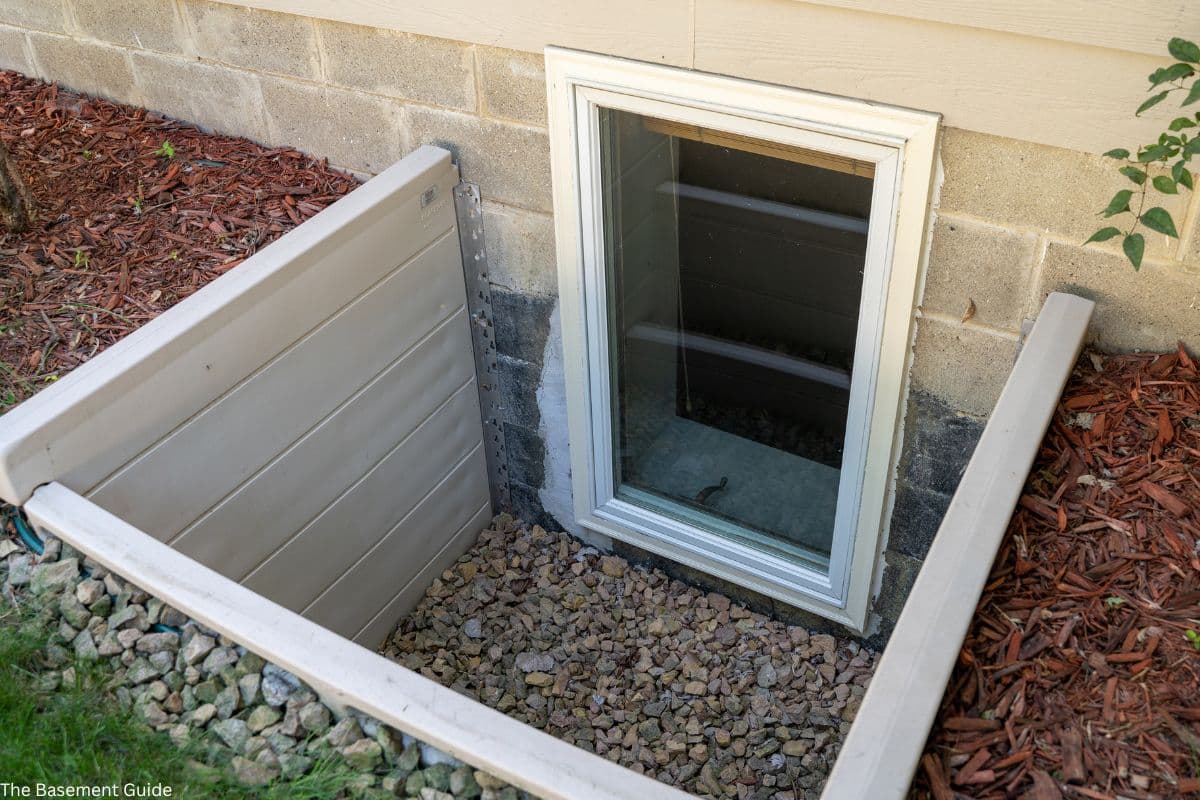
Egress Window
Cost Guide 2026
Thinking about turning part of your basement into a legal bedroom? Here is the complete 2026 breakdown of every dollar from window units to permits and labor.
The Basement Guide Staff
Updated Feb 2026 · 18 min read
In 2026, the average cost for a professionally installed basement egress window sits right around $3,850 to $4,200 nationally, with most homeowners paying between $2,700 and $5,900. This guide breaks down every dollar so you know exactly what you are paying for, what adds extra, and how to get the best value.
A basement egress window installation is a structural modification to the foundation rather than a standard window replacement, which is why the cost range is wider than most homeowners expect. The project requires cutting through a concrete or block foundation wall to create a structural opening, installing a lintel to carry the load above the opening, excavating the exterior soil to create the window well, and then setting the window unit itself — with waterproofing and drainage at every stage. Foundation type is the primary cost driver: poured concrete requires diamond-blade saw cutting at significantly higher labor cost than concrete block, which can be removed block by block. The sequencing relationship to other basement work matters too: egress window installation should happen before interior finishing because the concrete cutting and excavation disturb the floor and wall perimeter, and the new opening must be properly waterproofed before any drywall or insulation goes in around it.
What Exactly Is an Egress Window and Why Do You Need One?
An egress window is a specially sized emergency escape opening required by code for any basement room used as a bedroom or sleeping area. It gives people a quick way out and lets firefighters get in fast. Without one the room cannot legally be called a bedroom. That hurts your resale value and safety.
Even if your basement was finished years ago, converting a space into a bedroom means you need to add proper egress now.
2026 Egress Window Cost Breakdown
Here is where every dollar goes in a typical below-grade basement install.
| Component | National Cost 2026 | What It Covers |
|---|---|---|
| Window unit, frame, casement | $800 – $2,000 | Vinyl or fiberglass, low-E glass |
| Window well (plastic/corrugated) | $400 – $1,200 | Keeps dirt out and gives exit space |
| Excavation, drainage, gravel | $800 – $2,000 | Digging, stone base, pump if needed |
| Concrete or block cutting, lintel | $600 – $1,500 | Structural opening through the foundation |
| Ladder or steps | $100 – $350 | Required if well deeper than 44 inches |
| Waterproofing, flashing, trim | $300 – $600 | Keeps water out and finishes the look |
| Permit, inspections | $150 – $600 | Local requirements |
| Total Professional Install | $2,700 – $5,900 | Everything turnkey |
| National average | $3,850 – $4,200 | |
| DIY materials only | $1,200 – $2,800 | You still need tools, disposal, and usually a permit |
Common Cost Drivers
Deeper basements, poured concrete foundations, and any extra drainage or grading work will push costs toward the higher end of the range.
How Long Does the Job Take?
Most standard installs finish in 1 to 3 days. Day 1 is usually excavation and cutting. Day 2 is setting the window, well, and finishing. Rain or unexpected utilities can stretch it to a third day.
What Kind of Window Is Best for a Basement?
Casement crank-out windows are the clear winner in 2026. They give the largest clear opening and meet code the easiest. Horizontal sliders work too. Avoid hopper or awning styles as they rarely open wide enough for the full 5.7 square feet requirement.
Choose low-E glass and vinyl or fiberglass frames for better energy efficiency in a damp basement.
Do You Need a Window Well and Ladder?
Yes, for almost every basement. The well must be at least 9 square feet total area, project 36 inches from the wall, and be 36 inches wide. If the well is deeper than 44 inches, you must add a permanent ladder or steps — an easy $150 to $300 add-on and a huge safety upgrade.
Can You Install an Egress Window Yourself?
Technically yes if you have masonry experience and the right tools. But most homeowners who start DIY end up calling a pro. Cutting a structural hole in your foundation is risky — one mistake can cause cracks or new water problems. Most towns require a licensed contractor for the permit anyway.
Save the DIY route for above-grade windows only.
Will It Increase Your Home's Value?
Absolutely. Turning a basement space into a legal bedroom usually adds $15,000 to $30,000 in appraised value. That is often 3 to 5 times what you spend. Buyers and appraisers love seeing code-compliant bedrooms.
Do You Need a Permit?
Yes, almost always. Check with your local building department before you start. Expect a few weeks for approval in most areas. The permit proves the work was done to code when you sell or refinance.
Are There Any Rebates or Tax Credits in 2026?
Not many direct rebates, but energy-efficient low-E egress windows can qualify for the federal Energy Efficient Home Improvement Credit — up to $600. Some insurance companies give a small discount for adding life-safety features.
2026 Egress Window Code Requirements
The International Residential Code, still the standard in most states, requires:
- ✓Minimum clear opening: 5.7 sq ft (5.0 sq ft if at grade)
- ✓Minimum height: 24 inches
- ✓Minimum width: 20 inches
- ✓Maximum sill height: 44 inches from floor
Egress Window Cost Factors: What Applies to Your Project?
| Your Situation | Cost Impact | What to Budget |
|---|---|---|
| Poured concrete foundation | High — diamond-blade cutting required | Add $500 to $1,000 over block foundation cost |
| Concrete block foundation | Standard — blocks removed unit by unit | Standard range $2,700 to $5,900 |
| Basement 8 feet deep or less | Standard excavation depth | Standard range |
| Basement 9 feet or deeper | Larger well, more excavation | Add $500 to $1,500 |
| Window well deeper than 44 inches | Ladder or steps required by code | Add $150 to $350 |
| Existing utilities in excavation path | Rerouting or hand digging required | Add $300 to $1,000 |
| Rocky or clay-heavy soil | Slower excavation, possible equipment change | Add $300 to $800 |
| Poor window well drainage, no footing drain | Gravel drain or dry well required | Add $200 to $600 |
| Retroactive install in finished basement | Interior patching and refinishing required | Add $300 to $800 for drywall, trim, paint |
| No permit pulled previously | Retroactive permit required before sale | $150 to $600 plus possible inspection |
| Energy-efficient low-E glass specified | Federal tax credit eligible | Up to $600 credit on qualifying units |
| Multiple egress windows same project | Volume discount likely | Ask contractor for per-window pricing on 2 or more |
| DIY installation, owner-builder permit | Materials only cost | $1,200 to $2,800 in materials, no labor |
Frequently Asked Questions About Basement Egress Windows
Do I need an egress window even if my basement was finished years ago?
Yes, if you are now using any room as a bedroom or plan to list it as a bedroom on a real estate disclosure, an egress window is required regardless of when the basement was finished. The IRC requirement applies to current use, not the date of construction, which means a basement bedroom finished in 2005 without egress is still non-compliant today and will be flagged during any future permit pull, home inspection, or appraisal. Inspectors and appraisers are trained to identify basement bedrooms without proper egress, and a room without it cannot legally be counted as a bedroom in the home's square footage or listing. The cost of adding egress retroactively ($2,700 to $5,900) is almost always recovered in the appraised value increase ($15,000 to $30,000) that comes from converting the space to a legal bedroom. Address it before listing the home rather than after, because a buyer's inspector discovering the violation gives the buyer significant negotiating leverage. See our basement permits guide for how retroactive permits work in most jurisdictions.
What is included in the egress window installation price and what adds extra cost?
A standard professionally installed egress window includes the window unit and frame ($800 to $2,000), the window well ($400 to $1,200), excavation and drainage ($800 to $2,000), concrete or block cutting and lintel installation ($600 to $1,500), waterproofing and flashing ($300 to $600), and permits and inspections ($150 to $600). What adds significant cost beyond the standard scope is foundation type: poured concrete requires diamond-blade saw cutting that costs meaningfully more than removing concrete block unit by unit, and this difference alone can push a mid-range project to the high end of the range. Deep basements (9 feet or more below grade) require more extensive excavation and larger window wells, adding $500 to $1,500. Any unexpected utilities, tree roots, or existing drainage systems in the excavation path add both time and cost. Interior finishing around the new opening (drywall, trim, painting) is almost always excluded from contractor quotes and should be budgeted separately at $300 to $800 depending on finish level.
Will I need a window well and ladder with my egress window?
Yes, virtually every below-grade egress window installation requires a window well, and any well deeper than 44 inches from the basement floor requires a permanently mounted ladder or built-in steps. The window well must provide at least 9 square feet of total floor area, project at least 36 inches from the foundation wall, and be at least 36 inches wide to meet IRC requirements, giving occupants enough room to open the window fully and climb out in an emergency. Plastic corrugated wells are the most common and affordable option at $400 to $800 installed, while galvanized steel wells are more durable and cost $600 to $1,200. A permanently mounted ladder or built-in steps adds $150 to $350 and is required by code when the well depth exceeds 44 inches, which is common in basements with 9-foot or deeper floor-to-ceiling heights. Every well should also have a drainage layer of 6 to 12 inches of gravel at the base connected to the footing drain or a dedicated dry well, because a window well that fills with water during rain pushes water directly through the window frame into the basement.
How long does egress window installation take?
Most standard egress window installations complete in 1 to 3 days once the crew starts on-site work. Day 1 typically covers exterior excavation, concrete or block cutting, and lintel installation. Day 2 covers setting the window unit, installing the window well, backfilling, waterproofing, and flashing. A third day is sometimes needed for final grading, drainage connection, interior patching around the opening, and cleanup. Delays most commonly occur from unexpected utilities in the excavation path, rock or dense clay soil that slows digging, rain that makes concrete work impractical, or permit inspection scheduling that requires an inspection before backfilling. The permit process itself typically takes 2 to 6 weeks before on-site work can begin, which is the longer part of the overall project timeline for most homeowners.
Can I install a basement egress window myself to save money?
Egress window installation is technically within DIY capability for homeowners with masonry experience and access to a concrete cutting saw, but most who attempt it underestimate the scope and end up hiring a contractor partway through. The concrete cutting phase is the highest-risk step: an incorrect cut or missing rebar can cause cracking that propagates through the foundation wall, and improperly sized openings that require widening after the fact cost more to fix than hiring correctly from the start. Most jurisdictions require a licensed contractor for the permit, and an unpermitted egress window installation that is later discovered during a home sale or refinance must be retroactively permitted or removed. The realistic DIY savings are in materials only ($1,200 to $2,800 versus $2,700 to $5,900 total), and those savings come at the cost of significant physical labor, specialized tool rental, permit complications, and structural risk. If you have genuine masonry and concrete experience and can pull a permit in your jurisdiction as an owner-builder, the savings are real. Otherwise, the professional installation cost is worth it for a structural project with this level of consequence. See our DIY vs hiring a pro guide for how to evaluate this decision.
Are there rebates or tax credits for egress window installation?
The most significant financial incentive available in 2026 is the federal Energy Efficient Home Improvement Credit, which covers up to 30 percent of the cost of qualifying energy-efficient windows up to a maximum credit of $600 per year. To qualify, the egress window must meet ENERGY STAR Most Efficient criteria, which requires specific U-factor and solar heat gain coefficient ratings — ask your contractor or window supplier to confirm the specific unit qualifies before purchasing. Some homeowners insurance carriers offer small premium discounts (typically 1 to 5 percent) for adding code-compliant life-safety features including egress windows, particularly on policies in states where basement egress is mandated. State and local rebate programs vary significantly — check with your state energy office and local utility company for any available incentives that apply to your specific window installation. Document all receipts, contractor invoices, and window specifications carefully, as the tax credit requires IRS Form 5695 and proof of qualifying product specs at filing.
Glossary of Egress Window Terms
Clear Opening
The actual usable open space when an egress window is fully opened, measured in square feet and calculated by multiplying the clear opening height by the clear opening width. The IRC requires a minimum clear opening of 5.7 square feet (or 5.0 square feet for windows at grade level) to ensure an adult can exit and a firefighter with equipment can enter in an emergency. Clear opening is distinct from the rough opening cut in the foundation wall — the window frame, sash, and hardware all reduce the clear opening below the rough opening dimensions, which is why window selection must be verified against the clear opening requirement rather than the overall window size.
Window Well
The dug-out semicircular or rectangular area excavated directly outside an egress window that keeps surrounding soil from pressing against the window, provides the physical space needed to open the window fully, and gives occupants room to climb out safely. IRC code requires the window well to have a minimum floor area of 9 square feet, project at least 36 inches from the foundation wall, and be at least 36 inches wide. Every window well should include a drainage layer of 6 to 12 inches of gravel at the base connected to the footing drain or a dry well to prevent water accumulation that would otherwise push directly through the window frame into the basement.
Sill Height
The vertical distance measured from the finished basement floor surface to the bottom interior edge of the egress window opening, which the IRC limits to a maximum of 44 inches to ensure occupants can reach and operate the window without assistance during an emergency. Sill height is one of the most commonly violated egress requirements in older finished basements, particularly where small hopper windows were installed high on the wall to maximize light while minimizing foundation penetration depth. If existing windows are above 44 inches sill height, the only compliant solution is a new window installation at the correct height rather than modifying the existing opening.
Casement Window
A window hinged on one vertical side that swings outward like a door when operated by a crank mechanism, making it the most popular egress window style for basements because the entire sash swings clear to provide the maximum possible clear opening. Unlike double-hung or slider windows where only half the window area opens at any time, a casement window opens the full sash area, making it easier to meet the 5.7 square foot clear opening requirement with a smaller overall window unit. Low-E glass casement windows in vinyl or fiberglass frames are the recommended specification for basement egress applications because they resist moisture, require minimal maintenance, and improve basement energy efficiency.
Lintel
A structural horizontal beam installed directly above a window or door opening in a foundation or load-bearing wall to transfer the weight of the wall and structure above the opening to the sides of the opening rather than allowing it to bear down on the window frame. In egress window installations, the lintel is one of the most critical structural elements because it must be sized by an engineer or experienced contractor to carry the specific load of the foundation wall and floor framing above the opening at that location. Lintel installation is included in standard egress window contractor quotes and is one of the primary reasons egress window installation should not be attempted as a DIY project without structural engineering knowledge.
Low-E Glass
A type of window glass coated with a microscopically thin metallic oxide layer that reflects infrared heat while allowing visible light to pass through, reducing heat loss in winter and heat gain in summer to improve the energy efficiency of the basement space. Low-E egress windows may qualify for the federal Energy Efficient Home Improvement Credit (up to $600) when they meet ENERGY STAR Most Efficient U-factor and solar heat gain coefficient thresholds. For basement applications specifically, low-E glass also reduces condensation on the interior glass surface by keeping the glass warmer, which helps prevent the moisture accumulation that leads to mold growth around window frames in below-grade spaces.
Final Advice for 2026
An egress window is one of the smartest safety and value upgrades you can make to a basement. Spend the money on a quality casement unit, proper well, and a licensed local crew and you will sleep better knowing your family is protected. Ready to move forward? Grab free local quotes from vetted basement pros at the top of the page. They know local codes inside out and can give you an exact number for your foundation and lot.
Related Guides
On thebasement.guide
Basement Finishing Cost 2026
The complete cost breakdown for finishing a basement into livable space, where egress window installation is one of the first and most critical line items in the budget before framing, drywall, and flooring begin.
How to Finish a Basement
The step-by-step finishing guide covering sequence, permits, and how egress window installation fits into the broader project timeline before interior finishing materials are installed.
Pre-Finish Audit Checklist
Everything to verify before starting a basement finishing project, including egress compliance, moisture testing, and structural checks that must be complete before any finishing materials go in.
Basement Permits Guide
When permits are required for egress window installation, what inspections are involved, how retroactive permits work for previously finished basements, and how to navigate the process in your jurisdiction.
Basement ADU and Rental Suite Guide
How egress windows factor into basement ADU and rental suite requirements, including the additional code requirements that apply when a basement unit is rented to a non-family tenant.
Basement Bathroom Guide
How egress windows interact with basement bathroom planning, particularly when a basement suite includes a bedroom that requires its own egress window to qualify as a legal sleeping area.
DIY vs Hiring a Pro for Basement Projects
A full breakdown of which basement projects fall within DIY capability and which require professional installation, with egress window installation firmly in the hire-a-pro category for most homeowners.
Bowing Basement Walls
Why existing structural wall issues must be evaluated and repaired before cutting an egress window opening, since cutting through a compromised foundation wall can accelerate structural failure.
Types of Foundation Cracks
How to assess foundation wall condition before an egress window installation, since crack patterns in the planned cutting zone affect the structural risk of the project.
Complete Basement Waterproofing Guide
How to waterproof the new egress window opening, well, and surrounding foundation wall to prevent the water intrusion that improperly flashed egress windows commonly cause.
Waterproofing and Home Appraisal Value
How egress window installation, combined with waterproofing and finishing, affects appraised value and the legal bedroom count that drives the largest value increases.
Homebuyer's Basement Inspection Checklist
How home inspectors evaluate egress window compliance during a home purchase, including what a non-compliant basement bedroom means for negotiating position and closing timelines.
Basement Renovation Mistakes
The most common and expensive basement finishing mistakes, including skipping egress installation and finishing a basement bedroom without a permit.
From Our Network
Buying a Home with a Septic System · theseptic.guide
For homes where a basement egress window project is being planned alongside a home purchase, this guide covers the septic system due diligence that should happen in parallel with egress and finishing decisions.
Selling a Home with a Septic System · theseptic.guide
Sellers adding egress windows to convert basement rooms to legal bedrooms before listing should coordinate the disclosure of both the new egress installation and the septic system condition as part of their pre-listing documentation package.