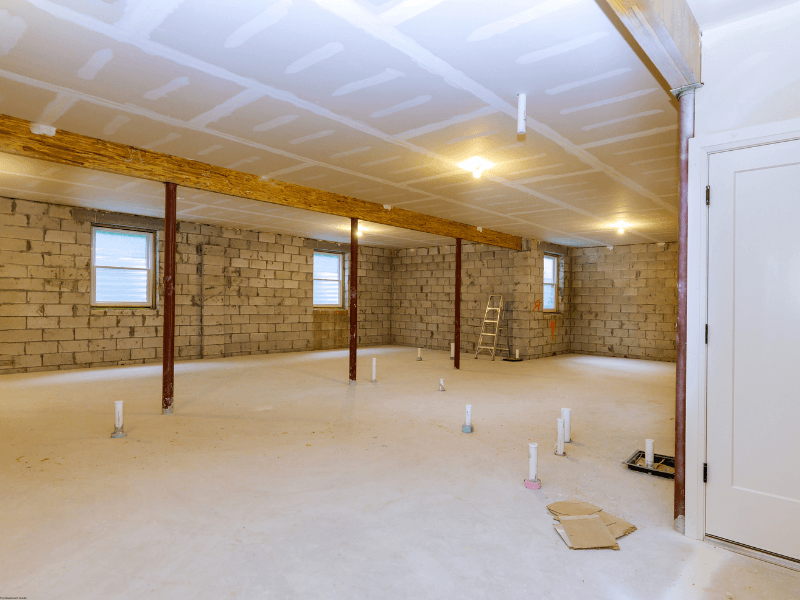
A bowing basement wall is more than a cosmetic problem. It is a structural warning sign that means your foundation is under excessive lateral pressure from the surrounding soil. Left unrepaired, a bowing basement wall can progress from a minor inward curve to a structural failure that needs full wall replacement at $10,000 to $25,000 or more. The good news is that most bowing basement walls are caught early enough to repair with carbon fiber straps or wall anchors at a fraction of that cost.
Bowing basement walls are a specific category of foundation damage in which a wall has physically moved inward from its original vertical position under lateral soil pressure, as distinct from cracking, which can occur without any wall movement. The distinction matters because a cracked wall that has not moved may be stable and cosmetic, while a bowing wall is by definition already failing structurally and will continue to worsen if the pressure causing the movement is not addressed. The two critical variables that determine urgency and repair method are how far the wall has moved (measured in inches of inward displacement) and whether the movement is ongoing or has stabilized. A wall that bowed 1 inch five years ago and has not moved since presents a different risk profile than a wall that has moved a quarter inch in the past three months, even if the total displacement is smaller.
The national average for bowing basement wall repair in 2026 is approximately $4,500, with a range of $2,000 to $12,000 depending on the severity and repair method. This guide covers what causes basement walls to bow, how to identify the warning signs early, every repair method available with 2026 pricing, and how to prevent bowing from happening in the first place.
If you are seeing cracks rather than bowing, start with our types of foundation cracks guide to determine whether your issue is cosmetic or structural.
What Are Bowing Basement Walls?
Bowing basement walls are foundation walls that have curved, leaned, or buckled inward from external pressure. The inward movement is usually most visible at the center of the wall, where it bulges inward like a belly. In severe cases, the top or bottom of the wall may also shift.
Bowing is most common in concrete block (CMU) foundations because the hollow cores make block walls less resistant to lateral pressure than poured concrete walls. However, poured concrete walls can also bow under extreme conditions.
Homes built before the 1980s are at higher risk because older construction standards often used thinner walls, less reinforcement, and no waterproofing membrane on the exterior.
A bowing wall compromises structural stability, creates new entry points for water (see our wet basement walls guide for more on water intrusion through foundation walls), and reduces your home's value by 10 to 20 percent during inspections. If you are buying a home and see signs of bowing, see our homebuyer's basement inspection checklist for what to look for and how to negotiate.
Bowing vs. Leaning vs. Sliding Walls
Contractors use these terms for different kinds of wall movement. Knowing which one you have helps you judge a repair quote.
| Type | What You See | Usual Cause |
|---|---|---|
| Bowing | The wall bulges inward in the middle, often with a horizontal crack about halfway up | Soil pressure along the full height of the wall |
| Leaning or tilting | The top of the wall tips inward while the bottom stays put, often with a crack near the top | Frost or saturated soil near the surface, or a weak connection to the floor framing above |
| Sliding or shearing | The bottom of the wall pushes inward past the top, often with a crack along a low mortar joint | Soil pressure near the footing, most often in block walls |
"Bulging" usually means the same thing as bowing, though some contractors use it for a smaller bump covering a few blocks.
The type matters for the repair. Sliding walls need the bottom of the wall braced at the floor, and leaning walls need a solid connection at the top. Ask any contractor which type you have and how their repair handles it.
What Causes Basement Walls to Bow Inward?
Understanding the root cause of your bowing basement wall is critical because the repair method must address the cause, not just the symptom. Here are the most common causes ranked by frequency.
Hydrostatic Pressure – The Number One Cause
Hydrostatic pressure is the force that water-saturated soil exerts against your foundation walls. After heavy rain or snowmelt, the soil surrounding your basement absorbs water and expands. A single cubic foot of saturated soil can weigh over 120 pounds. That weight pushes horizontally against your basement walls with tremendous force. Poor yard grading that directs water toward the foundation, clogged gutters, and missing or failed exterior drainage all make hydrostatic pressure worse. This is the same force that causes water to come up through basement floors and is the primary reason interior drainage systems and sump pumps exist.
Expansive Clay Soil
Clay-rich soils swell significantly when they absorb water and shrink when they dry. This cycle of expansion and contraction puts repeated stress on foundation walls. The National Association of Home Builders estimates that expansive soils affect approximately 40 percent of homes in the United States, with the highest concentration in the Midwest, Southeast, and parts of Texas.
Frost Heave and Freeze-Thaw Cycles
In cold climates, water in the soil near the foundation freezes and expands, pushing against the wall. When it thaws, the pressure releases, but the wall does not return to its original position. Over many freeze-thaw cycles, the cumulative effect produces measurable inward bowing. This is most common in the upper portions of basement walls where the frost line reaches.
Poor Original Construction
Walls that were built too thin (less than 8 inches for block walls), lack adequate steel reinforcement, or have no exterior waterproofing membrane are more susceptible to bowing. Older homes (pre-1970) are especially vulnerable because construction standards were less rigorous and many builders did not install exterior drainage or dampproofing.
Tree Root Pressure and External Loading
Large trees growing within 15 to 20 feet of the foundation can exert root pressure against basement walls. Additionally, heavy structures built near the foundation (decks, patios, retaining walls, or stored heavy equipment) add vertical and horizontal loads that the foundation was not designed to resist.
Warning Signs of Bowing Basement Walls
Catching bowing early is the difference between a $2,000 repair and a $10,000 to $25,000 wall replacement. Here are the signs to watch for, listed from earliest to most severe.
| Warning Sign | What It Means | Severity |
|---|---|---|
| Horizontal crack running across the wall midway up, typically 1/8 inch wide or more | The wall is bowing inward at the center. This is the single most reliable indicator of active bowing. | High. Call a professional. |
| Inward bulge visible when you sight down the wall from one corner | The wall has moved enough to see with the naked eye. Usually means more than 1 inch of displacement. | High. Call a professional. |
| Stair-step cracks following mortar joints in block walls | Differential pressure is causing sections of the wall to shift. See our foundation cracks guide for more on stair-step cracks. | Moderate to high. |
| Doors and windows upstairs sticking or not closing properly | Foundation movement is transferring to the framing above, distorting door and window openings. | Moderate. Investigate. |
| New water stains, efflorescence, or leaks along the wall | Bowing opens new cracks and gaps that allow water entry. See our basement efflorescence guide for more on white mineral deposits. | Moderate. |
| Vertical cracks widening at the top or bottom | The wall is rotating, not just bowing. This indicates more advanced movement. | High. Call a professional. |
| Gap forming between the wall and the floor or ceiling joists | The wall has shifted enough to separate from the structure above or below. | Very high. Urgent. |
How to Check for Bowing at Home
Hold a long straightedge (a 4-foot level works well) horizontally against the wall at midpoint height. If you see a gap between the straightedge and the wall, measure it. Any inward displacement of more than 1 inch over an 8-foot span warrants a professional inspection. You can also hang a plumb line from the top of the wall and measure the distance to the wall surface at the midpoint. Take photos with a ruler for scale, date them, and check again every 30 days to track any changes. A plastic crack monitor fixed across a horizontal crack makes small changes easy to see between checks.
How to Fix Bowing Basement Walls: Repair Methods and Costs 2026
The right repair method depends on how far the wall has moved and whether the movement is ongoing. Here are the options ranked from least to most invasive.
Carbon Fiber Strap Reinforcement
Best for: Minor bowing of 2 inches or less with no active movement. Carbon fiber straps are high-strength strips (approximately 10 times stronger than steel in tension) that are bonded directly to the wall surface with industrial epoxy. They prevent further inward movement and stabilize the wall in its current position. Installation requires no excavation, takes 1 to 2 days, and causes minimal disruption.
Cost: $2,000 to $5,000 total, or about $350 to $1,000 per strap. Straps are spaced every 4 to 5 feet, which works out to roughly $100 to $250 per linear foot of wall.
Longevity: Permanent when properly installed. Most come with 25-year or lifetime warranties.
Wall Anchors (Earth Anchors or Helical Tiebacks)
Best for: Moderate bowing of 2 to 3 inches, or walls that are still actively moving. Wall anchors consist of a steel plate bolted to the inside of the basement wall, connected by a steel rod to an anchor plate buried in stable soil 10 to 15 feet away from the foundation. The system is tightened to stabilize the wall, and over time, periodic tightening can gradually pull the wall back toward its original position. Installation requires some exterior excavation but is far less disruptive than a full wall replacement.
Cost: $3,000 to $8,000 total, or about $400 to $700 per anchor. Anchors are spaced about every 5 feet, so a 20 to 30 foot wall typically needs 4 to 6.
Longevity: 25 to 50 years with periodic tightening. Most systems include long-term warranties.
Steel I-Beam Bracing
Best for: Severe bowing of 2 to 4 inches, especially when exterior access for anchors is limited. Vertical steel I-beams are installed against the interior face of the bowing wall, bolted to the basement floor at the bottom and secured to the floor joists or a steel beam at the top. They hold the wall in its current position and prevent further movement. I-beams do not pull the wall back to plumb but they stop the progression permanently.
Cost: $4,000 to $10,000 total. Beams are set every 3 to 6 feet along the wall, so price depends mostly on wall length and how the tops are tied into the floor framing.
Longevity: Permanent. Steel I-beams have no moving parts and do not degrade.
Full Wall Replacement
Best for: Extreme bowing exceeding 3 to 4 inches, walls that have partially collapsed, or walls with severe structural deterioration. The process involves excavating along the exterior of the wall, demolishing and removing the damaged wall section, pouring or building a new wall, waterproofing the exterior, backfilling, and restoring the landscape. Full wall replacement is disruptive, typically taking 1 to 3 weeks, and requires heavy equipment access.
Cost: $10,000 to $25,000 or more, or $500 to $1,250 per linear foot.
Longevity: 50+ years for the new wall. This is essentially building a new foundation section.
Repair Cost Summary Table
| Repair Method | Cost Range | Cost Per Linear Foot | Best For | Excavation Required? |
|---|---|---|---|---|
| Carbon fiber straps | $2,000 to $5,000 | $100 to $250 | Minor bowing under 2 inches | No |
| Wall anchors (helical tiebacks) | $3,000 to $8,000 | $400 to $700 per anchor | Moderate bowing, 2 to 3 inches | Minimal exterior |
| Steel I-beams | $4,000 to $10,000 | Priced per wall | Severe bowing, limited exterior access | No |
| Full wall replacement | $10,000 to $25,000 | $500 to $1,250 | Extreme damage or partial collapse | Full exterior excavation |
| Add-on waterproofing (recommended) | $1,500 to $4,000 | $75 to $200 | Preventing recurrence | Varies by method |
| National Average | $4,500 | |||
Insurance rarely covers bowing basement wall repair unless the damage resulted from a sudden covered event like a named storm or flood and you carry flood insurance. See our basement flooding insurance guide and waterproofing finances guide for details on what is and is not covered.
How to Prevent Basement Walls From Bowing
You cannot eliminate all soil pressure, but you can significantly reduce the forces acting on your foundation walls.
- 1. Maintain gutters and downspouts. Clean gutters at least twice a year and extend downspouts so they discharge water 6 to 10 feet away from the foundation. Clogged gutters dump water directly against the foundation wall, which is the fastest path to hydrostatic pressure problems.
- 2. Grade soil away from the house. The ground around your foundation should slope away at a rate of at least 1 inch per foot for the first 6 to 10 feet. If water pools near the foundation after rain, regrading is one of the cheapest and most effective preventive measures.
- 3.Address water intrusion promptly. If you see water entering your basement through walls or the floor, the same hydrostatic pressure causing the water is also pushing on the walls. Fixing the water problem fixes the pressure problem. See our complete basement waterproofing guide and interior vs exterior waterproofing comparison for options.
- 4. Plant trees at least 20 feet from the foundation. Tree roots exert significant lateral force and also draw moisture from the soil, causing uneven drying and settlement patterns that stress foundation walls.
- 5. Install window well covers and drains. Window wells that fill with water during rain create localized pressure points against the wall. Covers prevent debris and most water from entering, and drains carry away what does get in.
- 6. Get annual inspections. A professional foundation inspection costs $100 to $300 and catches early movement before it becomes expensive. This is especially important for homes over 30 years old, homes with block foundations, and homes in clay soil areas.
When to Call a Professional for Bowing Basement Walls
Call a foundation repair professional if any of the following are true: the wall has bowed inward more than 1 inch, you see a horizontal crack across the wall, the bowing appears to be progressing (getting worse over time), you see a gap between the wall and the floor or ceiling, or multiple walls are showing signs of movement simultaneously.
Do not attempt to repair structural bowing as a DIY project. Incorrect repairs can make the problem worse, void insurance coverage, and create liability issues if you sell the home. For guidance on finding a qualified contractor, see our how to hire a basement waterproofing contractor guide. The same vetting principles apply to foundation repair contractors.
Which Repair Method Do You Need?
| Your Situation | Recommended Action | Estimated Cost |
|---|---|---|
| Bowing less than 1 inch, no horizontal crack, no active movement | Monitor monthly for 6 to 12 months before committing to repair | $0 (monitoring only) |
| Bowing less than 1 inch, horizontal crack present | Professional evaluation immediately, crack confirms active lateral stress | $300 (inspection) |
| Bowing 1 to 2 inches, wall appears stable | Carbon fiber straps, stops further movement permanently | $2,000 to $5,000 |
| Bowing 1 to 2 inches, wall still actively moving | Wall anchors, stops movement and allows gradual correction over time | $3,000 to $8,000 |
| Bowing 2 to 3 inches, exterior access available | Wall anchors, most effective at this displacement level | $3,000 to $8,000 |
| Bowing 2 to 4 inches, limited exterior access | Steel I-beams, no excavation required, permanent stabilization | $4,000 to $10,000 |
| Bowing over 3 to 4 inches | Full professional evaluation urgently, replacement likely required | $10,000 to $25,000+ |
| Gap forming between wall and floor or ceiling joists | Emergency, wall has shifted significantly, call a professional today | $10,000 to $25,000+ |
| Multiple walls bowing simultaneously | Systemic drainage failure, repair plus full exterior drainage overhaul | $8,000 to $30,000+ |
| Block foundation with stair-step cracks and bowing | Wall anchors or I-beams depending on displacement level | $3,000 to $10,000 |
| Bowing caused by tree roots within 15 feet | Remove tree, then stabilize wall, roots must be addressed first | $1,500 to $5,000 (tree) plus repair |
| Repair complete but no drainage improvements made | Install exterior drainage and regrade to prevent recurrence | $1,500 to $4,000 |
| Buying a home with bowing walls | Get independent structural engineer report before closing | $300 to $700 (engineer report) |
Frequently Asked Questions About Bowing Basement Walls
What causes bowing basement walls?
The most common cause is hydrostatic pressure from water-saturated soil pushing laterally against the foundation wall with forces that can exceed 100 pounds per square foot at typical basement depths. Expansive clay soils compound the problem by swelling when wet and shrinking when dry, creating a repeated stress cycle that progressively weakens the wall's resistance over years of seasonal moisture changes. Frost heave from freeze-thaw cycles in cold climates pushes against the upper portion of the wall each winter, and the cumulative displacement from multiple seasons produces measurable inward movement. Poor original construction with inadequate wall thickness, missing steel reinforcement, or no exterior waterproofing membrane makes all of these forces more damaging than they would be in a properly built foundation. In most cases the root cause is a water management failure, poor grading, clogged gutters, or missing exterior drainage, that can be addressed alongside the structural repair to prevent recurrence. See our complete basement waterproofing guide for the drainage and grading improvements that reduce hydrostatic pressure.
How much does bowing basement wall repair cost in 2026?
Most bowing basement wall repairs cost $2,000 to $12,000, with a national average of about $4,500. Full wall replacement for severe damage runs $10,000 to $25,000 or more. Carbon fiber straps for minor bowing of 2 inches or less cost $2,000 to $5,000 total and require no excavation. Wall anchors for moderate bowing of 2 to 3 inches cost $3,000 to $8,000 and involve minimal exterior work. Steel I-beams for severe bowing with limited exterior access cost $4,000 to $10,000. Full wall replacement for extreme damage or partial collapse costs $10,000 to $25,000 or more and requires heavy equipment and full exterior excavation. Most repairs should be paired with waterproofing improvements costing an additional $1,500 to $4,000 to address the hydrostatic pressure that caused the bowing in the first place. See our foundation crack repair cost guide for related structural repair pricing.
Can I fix bowing basement walls myself?
DIY repair of bowing basement walls is not recommended under any circumstances, and attempting it can make the situation significantly worse. Structural foundation repairs require accurate measurement of wall displacement, engineering judgment about whether the wall is stable or actively moving, and professional installation techniques that ensure the repair system is properly anchored and tensioned. An improperly installed carbon fiber strap that is bonded to a dirty or damp surface will debond and fail, leaving the wall unprotected. Incorrect wall anchor installation that does not reach stable soil outside the failure zone provides no resistance to the forces causing the movement. The only appropriate DIY action is monitoring: mark cracks with pencil and date, measure displacement with a straightedge, photograph with a ruler for scale, and track changes monthly until a professional evaluates the wall. See our how to hire a basement waterproofing contractor guide for how to find and vet a qualified foundation repair specialist.
Are bowing basement walls dangerous?
Yes, and the level of danger scales directly with how far the wall has moved and whether movement is ongoing. A wall that has bowed more than 2 inches is at meaningful risk of accelerating failure, particularly during periods of heavy rain or frost when lateral soil pressure peaks. At 3 to 4 inches of displacement, the risk of sudden partial collapse increases significantly, which puts the floor structure above at risk of losing lateral support. Even moderate bowing compromises the wall's ability to carry the vertical load of the house while simultaneously resisting soil pressure, a combination that was not in the original structural design. Bowing also opens cracks and gaps that admit water, leading to mold growth, wood rot in floor joists, and further deterioration of both the wall and the structure above. Homes with visibly bowing walls typically lose 10 to 20 percent of their appraised value and become difficult to insure or finance until repairs are documented.
How long do bowing basement wall repairs last?
Carbon fiber straps are a permanent repair when properly installed with industrial epoxy on a clean, dry surface, and most manufacturers provide 25-year or lifetime warranties. Wall anchors last 25 to 50 years and provide the additional benefit of allowing periodic tightening to gradually pull the wall back toward its original position over time, typically at a rate of 1/8 inch per year with annual adjustments. Steel I-beams are permanent with no moving parts, no maintenance requirements, and no degradation over time. Full wall replacement is the most permanent solution at 50 or more years for the new wall, equivalent to new construction. All repair methods should be paired with waterproofing and drainage improvements to address the hydrostatic pressure that caused the bowing, because a repaired wall subject to the same uncorrected forces will eventually show stress again. See our basement waterproofing cost guide for what drainage improvements cost alongside structural repair.
What should I do if my basement wall is only slightly bowed?
If the bowing is less than 1 inch and there are no horizontal cracks running across the wall, monitor it closely before committing to a repair. Mark the ends of any visible cracks with a pencil and date, measure the maximum inward displacement using a 4-foot level or straightedge, and photograph the wall with a ruler in frame for scale. Recheck every 30 days and record the measurements in a log. If the displacement does not increase over 6 to 12 months of monitoring, the wall may be stable, though the forces that caused the movement are still present and can resume during heavy rain or freeze-thaw seasons. Even a stable wall with less than 1 inch of bow should be evaluated by a foundation professional at least once, both for documentation purposes and to confirm that the movement has genuinely stopped rather than simply slowing down. See our homebuyer's basement inspection checklist for the documentation approach that protects you during a future sale.
Does homeowners insurance cover bowing basement wall repair?
Standard homeowners insurance does not cover bowing basement walls in most cases because the damage is classified as gradual deterioration, which is explicitly excluded from virtually all standard policies. Insurance may cover wall damage if it resulted directly from a sudden covered event such as a documented flood (with separate flood insurance), a burst pipe that caused rapid saturation, or a named storm where the connection between the event and the structural damage can be clearly established. Even in covered-event scenarios, the insurer will typically argue that the bowing developed over time and preexisted the triggering event, making claims difficult to win without professional documentation of the wall's pre-event condition. Financing options for uncovered repairs include home equity loans, HELOC draws, and contractor payment plans, which some foundation repair companies offer for larger jobs. See our basement flooding insurance guide and waterproofing finances and insurance guide for detailed coverage and financing information.
How much bowing is acceptable in a basement wall?
Any inward bow means the wall has moved, so no amount is ideal. Under 1 inch with no horizontal crack, measure it monthly for 6 to 12 months. If it doesn't change, the wall may be stable, but have a professional look at it once. From 1 to 2 inches, get a professional evaluation. A stable wall in that range is usually braced with carbon fiber straps. Over 2 inches needs repair, usually wall anchors or steel I-beams, and past 3 to 4 inches replacement becomes more likely. How fast it's moving matters as much as the total: a quarter inch in three months is more urgent than 1 inch that hasn't changed in five years.
How long before a bowing basement wall collapses?
There's no set timeline. Many bowing walls move slowly over years, while others shift quickly after a wet spring or a hard freeze. Full collapse is rare, but the risk climbs past 3 to 4 inches of movement. Treat any of these as urgent: a gap between the top of the wall and the floor joists, a horizontal crack that's getting wider, movement you can measure from one month to the next, or the bottom of the wall sliding inward. If you see any of them, call a foundation professional now instead of waiting for the next measurement.
Should you buy a house with bowing basement walls?
It can be a reasonable buy if the price reflects the repair. Before closing, get an independent structural engineer's report, which typically costs $300 to $700, and at least one written repair quote. Ask the seller for any past repair records and whether a warranty transfers. A wall that's already been repaired with a transferable warranty is lower risk than one that hasn't. Be more cautious if more than one wall is moving or there's a gap at the top of the wall, and expect lenders and insurers to ask for repair documentation. See our homebuyer's basement inspection checklist.
Can crawl space walls bow?
Yes. Block crawl space walls bow for the same reasons basement walls do, mostly saturated or expansive soil and poor drainage, though shorter walls usually hold back less soil. Wall anchors and carbon fiber straps are the most common repairs. Steel I-beams need a concrete base at the bottom, so a crawl space with a dirt floor usually needs a footing poured for each beam, which adds cost.
Glossary of Bowing Basement Wall Terms
- Hydrostatic Pressure
- The lateral force exerted by water-saturated soil against a foundation wall, which increases with soil moisture content, soil density, and wall depth, and is the most common cause of basement wall bowing and water intrusion. After heavy rain or snowmelt, saturated soil can exert more than 100 pounds per square foot of lateral force against a basement wall that was designed to handle far less. Reducing hydrostatic pressure through improved grading, gutters, exterior drainage, and waterproofing is the most effective long-term strategy for preventing bowing recurrence after structural repair. See our complete basement waterproofing guide for drainage solutions that reduce hydrostatic pressure.
- Carbon Fiber Straps
- High-strength reinforcement strips made from woven carbon fiber fabric bonded to a bowing wall surface with structural epoxy, used to prevent further inward movement in walls that have bowed 2 inches or less. Carbon fiber is approximately 10 times stronger than steel in tension, making straps an extremely effective stabilization method despite their thin profile and minimal visual footprint on the wall surface. Proper installation requires the wall surface to be clean, dry, and free of paint or efflorescence for the epoxy bond to achieve its rated strength, which is why professional installation is strongly recommended over DIY application. See our foundation crack repair cost guide for how carbon fiber strap pricing compares to other structural repair methods.
- Wall Anchors (Earth Anchors or Helical Tiebacks)
- A stabilization system consisting of a steel plate on the interior wall surface connected by a steel rod to an anchor plate buried in stable soil 10 to 15 feet outside the foundation, used for moderate bowing of 2 to 3 inches or walls that are still actively moving. The anchor rod can be periodically tightened after installation to gradually pull the wall back toward its original position over time, which makes it one of the few repair methods that can gradually reverse displacement rather than only stopping further movement. Most wall anchor systems require a small amount of exterior excavation to install the outer anchor plate in undisturbed soil outside the zone of lateral pressure.
- Frost Heave
- The upward or lateral expansion of soil caused by water freezing within the soil pore spaces, which exerts significant force against the upper sections of foundation walls in cold climates where the frost line reaches 3 to 6 feet below grade. Frost heave exerts force during the freezing phase and then releases it during the thaw, but the wall does not return to its original position after each cycle, resulting in cumulative inward displacement over multiple freeze-thaw seasons. Proper exterior drainage and insulation of the foundation perimeter reduce frost heave by limiting the amount of water available to freeze in the soil adjacent to the wall. See our basement insulation guide for foundation perimeter insulation approaches.
- Differential Settlement
- The condition where one section of a foundation sinks or shifts more than another due to variations in soil composition, moisture content, or compaction beneath different parts of the foundation, creating uneven stress that causes cracking, bowing, and distortion of door and window openings. Differential settlement is distinct from uniform settlement where the entire foundation drops evenly, and it is more damaging because the uneven movement creates shear forces the structure was not designed to resist. Clay-rich soils with high moisture variability are the most common cause of differential settlement in residential foundations. See our types of foundation cracks guide for how to distinguish differential settlement cracks from hydrostatic pressure cracks.
- Horizontal Crack
- A crack running horizontally across a basement wall, typically appearing at or near the midpoint of the wall height where bending stress from lateral soil pressure is greatest, and the most reliable visual indicator that a wall is bowing inward. Unlike vertical cracks that often result from shrinkage or settlement and may be stable, horizontal cracks indicate active lateral forces and almost always mean the wall has moved or is moving. Any horizontal crack wider than 1/8 inch warrants immediate professional evaluation, and any horizontal crack that is widening over time is an emergency. See our types of foundation cracks guide for how to distinguish horizontal cracks from other crack patterns.
- Expansive Clay Soil
- Soil with a high clay mineral content that undergoes significant volume changes in response to moisture, swelling when wet and shrinking when dry, exerting repeated lateral pressure against foundation walls through seasonal cycles. The National Association of Home Builders estimates that expansive soils affect approximately 40 percent of homes in the United States, with the highest concentrations in the Midwest, Southeast, and parts of Texas and the Mountain West. The swelling pressure of expansive clay can exceed 10,000 pounds per square foot in highly plastic clay soils, making it one of the most damaging foundation conditions regardless of construction quality. See our basement waterproofing cost guide for exterior drainage solutions that reduce clay soil moisture fluctuation.
Related Guides
On thebasement.guide
How to identify and classify every crack pattern in a basement wall, including the horizontal cracks that confirm bowing and the stair-step cracks in block walls that indicate differential pressure.
Pricing for every crack repair method including epoxy injection, polyurethane foam, and carbon fiber reinforcement, relevant when bowing is accompanied by cracking that needs separate treatment.
How the same hydrostatic pressure that causes bowing also drives water through foundation walls, and why addressing water intrusion and bowing together is more cost-effective than treating them separately.
The full waterproofing reference covering every method for managing the hydrostatic pressure that is the root cause of most bowing basement walls.
What drainage and waterproofing improvements cost in 2026, relevant for budgeting the pressure-reduction work that must accompany any bowing wall repair to prevent recurrence.
How interior drainage and exterior membrane systems each address hydrostatic pressure differently, and which approach works best alongside each bowing wall repair method.
The white mineral deposits that often appear alongside bowing as moisture migrates through stressed wall sections, and what they indicate about the severity and duration of the water pressure problem.
How pre-1970 foundations with thinner walls, less reinforcement, and no waterproofing membrane are more vulnerable to bowing, and the specific repair and waterproofing approaches suited to older construction.
What to look for when evaluating a home with suspected bowing walls, how to measure and document displacement before making an offer, and how to negotiate repair credits.
What homeowners insurance covers for foundation damage and when flood insurance applies, relevant for homeowners exploring whether any portion of bowing wall repair costs can be offset by a claim.
Financing options for bowing wall repairs that insurance will not cover, including home equity loans, HELOCs, and contractor payment plans for larger foundation repair projects.
How documented bowing wall repairs and accompanying waterproofing affect appraisal outcomes and buyer confidence, including the 10 to 20 percent value impact of unrepaired bowing.
How to find, vet, and compare quotes from foundation repair specialists, including the questions to ask and the red flags to avoid when selecting a contractor for structural wall repair.
How foundation perimeter insulation reduces frost heave by limiting the moisture available to freeze in soil adjacent to the wall, relevant for homes in cold climates where freeze-thaw cycles are contributing to bowing.
What exterior and interior French drain installation costs, the most common drainage improvement paired with bowing wall repair to reduce the hydrostatic pressure that caused the movement.
From Our Network
The same expansive clay soils and poor drainage conditions that cause bowing basement walls are also the primary contributors to drainfield stress on septic-served properties. This guide covers how soil and drainage conditions affect septic repair costs.
For homes with both bowing walls and a septic system, the saturated soil conditions driving the foundation pressure are often the same conditions stressing the drainfield. This guide covers the warning signs that the septic system is being affected by the same drainage failure.
External Resource
FEMA's technical guidance on foundation performance, flood-related foundation damage, and repair standards relevant for homeowners in flood-prone areas where hydrostatic pressure events are causing bowing.