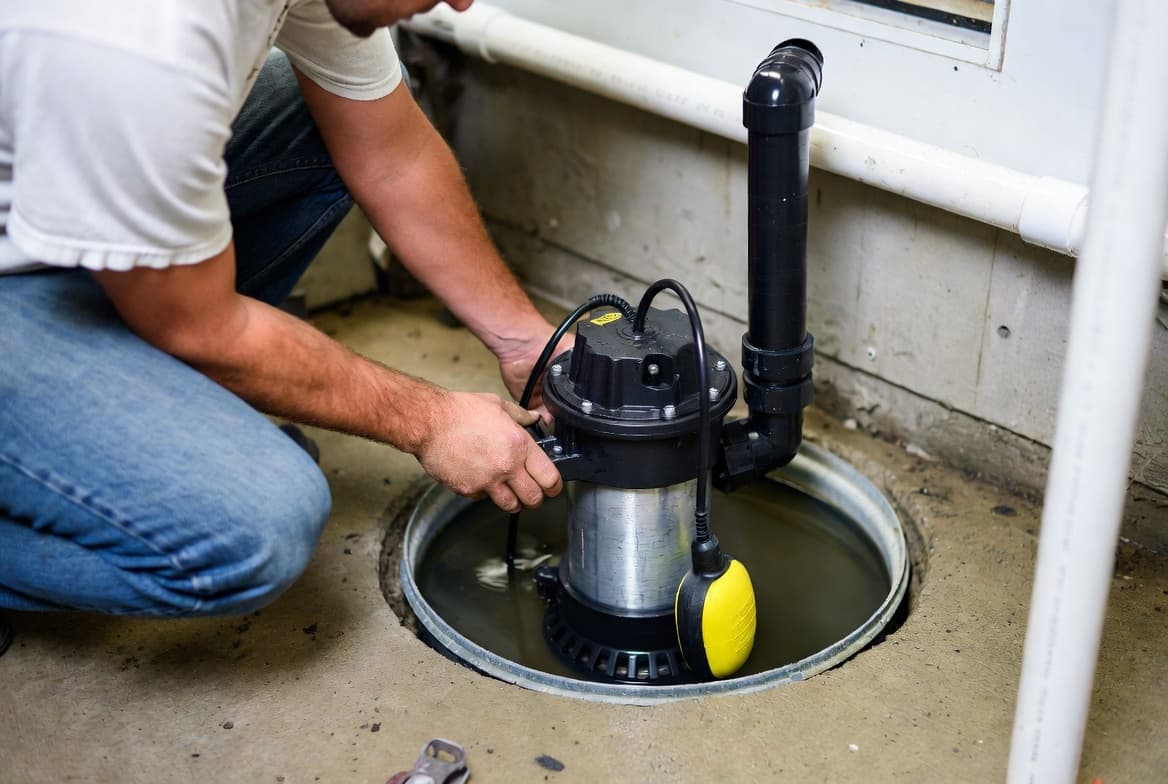
Adding a sump pump for the first time? You're in the right place. This page covers cutting a new pit, installing the pump, and running the discharge line.
Replacing a pump in a pit you already have? That costs $650 to $1,200. See our sump pump replacement cost guide and calculator.
TL;DR
- A first-time sump pump installation with a new pit costs $1,200 to $2,500. Most homeowners pay around $1,800.
- Adding a battery backup brings the total to $1,500 to $3,500.
- The pit is the expensive part. Cutting concrete, digging, and setting the basin adds $500 to $1,000 over a pump swap.
- A crawl space installation usually costs $1,000 to $3,000.
- Expect one day of work. Ask for the pump, pit, discharge line, check valve, and electrical work as separate line items.
Installing a sump pump typically costs $1,200 to $2,500 for a first-time installation with a new pit, with most homeowners paying around $1,800.
Sump pump installation cost depends on three variables that most pricing guides collapse into a single number: whether a pit already exists, which pump type and horsepower the application requires, and whether a battery backup system is included. A simple pump swap in an existing pit runs $650 to $1,200. A new system installed from scratch including concrete cutting, pit excavation, pump, discharge line, and battery backup runs $1,500 to $3,500. Understanding what drives your specific cost requires knowing where you fall on each of those three variables before you call a contractor.
The average cost to install a sump pump in 2026 is $1,200 to $1,800 for a complete new system professionally installed, with most homeowners paying between $650 and $2,500 depending on system complexity. Replacing an existing pump in an established pit is the lower end of that range. A full new installation with pit, primary pump, discharge line, check valve, and battery backup sits at the higher end.
If sump pump installation is part of a larger basement waterproofing project, our cost calculator estimates the full project including drainage and waterproofing scope.
Quick estimate
If you are replacing an existing sump pump rather than installing one for the first time, use our sump pump replacement cost calculator. The calculator is tuned for replacement scenarios and factors pump type, backup system, labor scope, and region for an instant installed price range.
2026 Sump Pump Cost Breakdown
Complete Cost by Scenario
| Scenario | Estimated Cost | What Is Included |
|---|---|---|
| Replacement in an existing pit | $650 to $1,200 | See our replacement cost guide |
| New pump, new pit (no existing system) | $1,200 to $2,500 | Concrete cutting, pit excavation, liner, pump, discharge line |
| Complete system with battery backup | $1,500 to $3,500 | All of the above plus battery backup unit |
| Battery backup only (existing primary pump) | $350 to $900 installed | Backup pump, battery, installation |
| Pedestal pump replacement | $400 to $900 | Pedestal unit, installation labor |
| Submersible pump replacement | $600 to $1,500 | Submersible unit, installation labor |
| High-capacity system (1/2 HP or 3/4 HP) | $1,500 to $4,000 | Larger pump, larger pit if needed, discharge line upgrade |
| Smart sump pump with WiFi monitoring | $800 to $2,000 | Smart pump unit, app setup, installation |
Cost by Pump Type
| Pump Type | Unit Cost | Installed Cost | Best For |
|---|---|---|---|
| Pedestal (1/3 HP) | $80 to $200 | $400 to $900 | Shallow pits, occasional use, tight budgets |
| Submersible (1/3 HP) | $150 to $400 | $600 to $1,500 | Most residential basements, finished spaces |
| Submersible (1/2 HP) | $200 to $500 | $800 to $1,800 | High water table, larger basements |
| Submersible (3/4 HP) | $300 to $700 | $1,000 to $2,500 | Severe flooding, commercial-grade residential |
| Battery backup unit | $150 to $500 | $350 to $900 installed | Secondary protection during power outages |
| Water-powered backup | $200 to $400 | $400 to $700 | Unlimited runtime where municipal water available |
| Smart WiFi pump | $300 to $600 | $800 to $2,000 | Remote monitoring, alert-based maintenance |
Installing new? Consider a combo system. If you're cutting a new pit, it's the cheapest time to add a backup. A combo system puts a primary pump and a battery backup on one discharge line. Our pick is the Basement Watchdog Big Combo, a 1/2 HP cast iron primary with a battery backup and phone alerts through its optional Wi-Fi module. See all our picks in the best sump pumps for 2026.
Basement Watchdog Big Combo: Check Price on Amazon
Key Cost Factors
What drives your sump pump installation cost up or down:
Crawl Space Sump Pump Installation Cost
A crawl space sump pump usually costs $1,000 to $3,000 installed. The pump and basin are the same as a basement system, but the work is slower. Crews dig the pit in a cramped space, often on a dirt floor, and the discharge line has to exit through the rim joist or foundation wall.
Costs climb when the crawl space is very tight, needs a vapor barrier cut and resealed, or when the sump is part of a full encapsulation, which is priced separately. If your crawl space floods regularly, ask whether the quote includes a sealed lid on the basin so it doesn't add humidity to the space.
What Is Included in a Professional Sump Pump Installation
Included in a Complete Installation
- +Pit excavation and liner installation (if no pit exists)
- +Submersible or pedestal pump unit
- +Discharge pipe from pit through basement wall to exterior
- +Check valve on the discharge line to prevent backflow
- +Electrical connection to a dedicated circuit (GFCI protected)
- +Discharge line termination at least 10 feet from foundation
- +Testing and verification before the installer leaves
Typically NOT Included in a Base Quote
- −Battery backup unit (quoted separately, strongly recommended)
- −Discharge line insulation for cold climate installations
- −Smart monitoring equipment
- −Permits (required in some jurisdictions)
- −Interior concrete patching around a new pit (sometimes extra)
DIY vs Professional Installation
What you can realistically do yourself: Replacing an existing submersible pump in an established pit is a manageable DIY project for a homeowner comfortable with basic plumbing and electrical work. The process involves disconnecting the discharge pipe union fitting and unplugging the power cord, lifting the old pump out, lowering the new pump into position, reconnecting the discharge union, and plugging in. A pump swap takes 1 to 3 hours. A first-time installation with a new pit takes 4 to 8 hours, usually one day. DIY savings on a pump swap run $150 to $300 in labor.
What to hire a professional for: New pit installation requires concrete cutting with a diamond-blade saw, excavation, pit liner installation, and concrete patching, work that requires specialized equipment and experience. Electrical work connecting the pump to a dedicated GFCI circuit should be done by a licensed electrician in most jurisdictions. Discharge line routing through finished walls or underground requires planning that a professional can execute more reliably than most DIYers.
| Task | DIY Feasibility | Estimated DIY Savings |
|---|---|---|
| Pump swap in existing pit | Yes | $150 to $300 |
| Battery backup installation | Yes | $100 to $200 |
| New pit installation | No | Not recommended |
| Discharge line routing (simple) | Possible | $100 to $200 |
| Electrical connection | No (permit required) | Not recommended |
How Long Does a Sump Pump Last
A submersible sump pump typically lasts 7 to 10 years under normal use conditions, with cast-iron models like the Zoeller M53 lasting toward the upper end and entry-level thermoplastic models in high-use applications lasting toward the lower end. Pedestal pumps last 10 to 25 years because the motor stays dry above the pit and does not experience the corrosion that shortens submersible motor life.
The most reliable indicator that a pump needs replacement is increased cycling frequency, unusual noise, or a pump that runs but does not move water effectively. Do not wait for complete failure, a pump that fails during a heavy storm with no backup in place can result in thousands of dollars of flood damage.
Budget $500 to $1,500 for pump replacement every 7 to 10 years as an ongoing maintenance cost of basement waterproofing.
Does Homeowners Insurance Cover a Sump Pump?
Standard homeowners insurance does not cover sump pump replacement as routine maintenance or equipment failure. However, some policies include water backup and sump pump failure endorsements that cover water damage resulting from a sump pump failure during a storm event. These endorsements typically cost $50 to $150 per year to add to a standard policy and provide $5,000 to $25,000 in coverage for water damage caused by pump failure or drain backup.
Check your policy specifically for a water backup endorsement. If you do not have one, adding it is worth the cost given that sump pump failure during a power outage is one of the most common causes of basement flooding. See our basement flooding insurance guide for full coverage details.
What Will Your Sump Pump Installation Cost?
| Your Situation | What You Need | Estimated Cost |
|---|---|---|
| Existing pump failed, pit in good condition | Submersible pump replacement | $650 to $1,200 |
| Existing pump working but 7 to 10 years old | Proactive pump replacement | $650 to $1,200 |
| No sump pump or pit, basement has water issues | New pit plus submersible pump | $1,200 to $2,500 |
| Existing pump but no battery backup | Battery backup unit added to existing system | $350 to $900 installed |
| Complete new system from scratch | Pit, pump, discharge line, battery backup | $1,500 to $3,500 |
| High water table, basement floods during storms | 1/2 HP or 3/4 HP high-capacity submersible | $800 to $2,500 |
| Finished basement, quiet operation required | Submersible pump with sealed pit cover | $650 to $1,500 |
| Shallow pit under 18 inches | Pedestal pump (submersible will not fit) | $400 to $900 |
| Flat yard, no gravity discharge point | Pump plus buried discharge line to street or dry well | $1,000 to $2,500 |
| Want remote monitoring and flood alerts | Smart WiFi sump pump | $800 to $2,000 |
| DIY pump swap, have basic plumbing skills | Pump unit only, self-install | $150 to $500 in materials |
| Power outages common in your area | Primary pump plus battery backup | $1,500 to $3,500 |
| Primary pump failed during storm, emergency service | Emergency call premium applies | $900 to $2,000 |
Glossary
Sump Pit (Sump Basin)
The cylindrical or rectangular excavated basin installed below the basement floor at the lowest point of the drainage system where water collects before the pump removes it, typically 18 to 24 inches in diameter and 24 to 36 inches deep for residential applications. The pit must be large enough to accommodate the pump unit with clearance, allow the float switch to operate through its full range of motion without obstruction, and hold enough water volume to prevent the pump from short-cycling on and off too rapidly. Installing a new pit in an existing basement requires cutting through the concrete floor and excavating 2 to 3 cubic feet of soil, adding $500 to $1,000 to the total installation cost.
Submersible Pump
A sealed pump unit that sits at the bottom of the sump pit fully submerged in water when active, using a float switch to detect rising water and pump it out through a discharge line. Submersible pumps are the standard choice for most residential basements because they operate quietly (the water muffles motor noise), handle higher flow rates than pedestal models, and fit entirely within the pit with no components above the floor surface. They cost more than pedestal pumps upfront ($150 to $700 for the unit) and have a shorter lifespan (7 to 10 years) due to continuous water exposure, but their performance and installation footprint advantages make them the preferred choice for most applications. See our best sump pumps 2026 guide for current top-rated submersible models.
Pedestal Pump
A pump design where the motor is mounted on a tall shaft above the pit with only the impeller extending into the water, keeping the motor dry and accessible without removing it from the pit. Pedestal pumps are less expensive upfront ($80 to $200 for the unit), last longer (10 to 25 years) because the motor stays dry, and are easier to service and inspect since the motor is visible above the floor. The tradeoffs are higher noise levels (the exposed motor runs at 55 to 65 decibels versus 45 to 50 for submersibles), lower flow capacity, and a tall shaft extending 3 to 4 feet above the pit that is incompatible with finished basement spaces. See our submersible vs pedestal sump pump guide for a full comparison.
Float Switch
The sensor mechanism that activates and deactivates a sump pump by detecting the water level in the pit, rising with the water to trigger the pump on and dropping as the pit empties to shut it off. Tethered float switches hang from the pump body and activate when the float rises to the end of the tether, while vertical float switches activate at a fixed height and are more reliable in narrow pits where a tethered float might catch on the pit wall. Float switch failure is one of the most common causes of sump pump performance problems, and testing the float for freedom of movement should be part of every annual pump test.
Check Valve
A one-way valve installed on the discharge line above the pump that prevents water from flowing back down into the pit after the pump shuts off, avoiding the short-cycling that occurs when backflow water immediately re-triggers the float switch. Without a check valve, the pump runs in short repeated cycles that waste energy, accelerate motor wear, and prevent the pit from fully emptying between cycles. Check valves cost $10 to $30 and should be installed as part of any sump pump installation or replacement. A check valve that is not functioning properly is one of the first things to inspect when a pump seems to be running more frequently than expected.
Battery Backup Pump
A secondary pump system powered by a dedicated sealed lead-acid or lithium battery that activates automatically when the primary pump loses power or fails, providing continued water removal during power outages and primary pump failures. Standard battery backup systems provide 7 to 10 hours of pumping capacity on a fully charged battery, with the battery requiring replacement every 3 to 5 years. Water-powered backup systems use municipal water pressure to operate without a battery and provide unlimited runtime, but consume significant municipal water in the process. See our backup power for sump pumps guide for a full comparison of backup options.
Discharge Line
The pipe that carries water pumped out of the sump pit to a discharge point well away from the foundation, typically 1.5 to 2 inch diameter PVC running from the pump through the basement wall and terminating at least 10 feet from the foundation at grade level or connected to a storm drain where permitted. The discharge line must maintain a continuous slope away from the pump to prevent water from draining back into the pit when the pump is off, and must be insulated where it passes through unheated spaces to prevent freezing during winter operation. An improperly located discharge point that terminates too close to the foundation can cause the pumped water to re-enter the soil and cycle back into the pit, increasing pump run time and wear.
Frequently Asked Questions
How much does sump pump installation cost in 2026?
Sump pump installation costs $650 to $2,500 for most residential projects in 2026, with the national average for a complete new system sitting around $1,200 to $1,800. A simple pump replacement in an existing pit at the lower end runs $650 to $1,200 including labor and the pump unit. A full new installation including concrete cutting, pit excavation, pump, discharge line, and battery backup runs $1,500 to $3,500. The single biggest cost variable is whether a sump pit already exists, new pit installation adds $500 to $1,000 to any project. Always get at least three written quotes that specify the pump model, horsepower, discharge routing, and whether battery backup is included before committing to a contractor. See our sump pump buying guide for how to choose the right pump before pricing installation.
How much does it cost to replace a sump pump vs install a new one?
Replacing a pump in an existing pit costs $650 to $1,200 installed. A first-time installation with a new pit costs $1,200 to $2,500, because the crew has to cut the concrete floor, dig the pit, set the basin, and run a new discharge line. See our replacement cost guide for replacement pricing by pump type.
Is a battery backup sump pump worth the cost?
Yes, a battery backup sump pump is one of the highest-return additions available for any basement waterproofing system and should be considered mandatory rather than optional. Power outages most frequently occur during the heavy thunderstorms and hurricanes that generate the most water, leaving a primary pump without electricity exactly when it is needed most. A battery backup unit costs $300 to $800 installed and provides 7 to 10 hours of pumping capacity on a full charge, which covers the duration of most storm events. The cost of a backup unit is a fraction of the average basement flood damage claim, which runs $3,000 to $10,000 for water extraction, drying, and content replacement. Batteries require replacement every 3 to 5 years at $50 to $150, making the ongoing cost minimal relative to the protection provided. See our backup power for sump pumps guide and battery vs water-powered backup comparison for full guidance.
How long does sump pump installation take?
A pump swap takes 1 to 3 hours. A first-time installation with a new pit takes 4 to 8 hours, usually one day. Complex installations involving new pit cutting through thick poured concrete, long discharge line routing through finished walls, or simultaneous battery backup installation can take a full day. DIY pump swaps in existing pits typically take 1 to 3 hours for a homeowner comfortable with basic plumbing. The permit process, where required, adds 1 to 4 weeks to the overall timeline before on-site work can begin.
What size sump pump do I need for my basement?
For most residential basements up to approximately 1,500 square feet with a normal water table, a 1/3 HP submersible pump provides sufficient capacity at 2,500 to 3,000 gallons per hour. Basements with high water tables, chronic flooding during heavy rain, or square footage above 1,500 square feet benefit from a 1/2 HP pump rated at 3,500 to 4,500 gallons per hour. Severe flooding situations, very large basements, or properties in flood-prone areas may require a 3/4 HP pump. The key sizing metric is whether the pump can remove water faster than it enters during a peak inflow event, an undersized pump that runs continuously without lowering the water level in the pit needs to be replaced with a higher horsepower model. See our submersible vs pedestal sump pump guide for the full sizing and type selection framework.
Can I install a sump pump myself to save money?
Replacing an existing sump pump in an established pit is a manageable DIY project that saves $150 to $300 in labor for a homeowner comfortable with basic plumbing. The process involves disconnecting the discharge union fitting, unplugging the power cord, lifting out the old pump, lowering the new pump into position, reconnecting the discharge line, and testing by pouring water into the pit. New pit installation is not a realistic DIY project for most homeowners because it requires a concrete cutting saw, proper pit sizing and liner installation, and electrical work that requires a permit and licensed electrician in most jurisdictions. An incorrectly installed pit that is too small, too shallow, or improperly positioned relative to the floor drain system will underperform and may require professional correction at greater total cost than hiring correctly from the start. See our DIY vs hiring a pro guide for an honest assessment of which basement projects fall within DIY capability.
Can you add a sump pump to an existing basement?
Yes. Most sump pumps are added to basements years after the house was built. A crew cuts a hole in the concrete floor near the lowest point or where water collects, digs a pit about 2 feet deep, sets a basin, and runs a discharge line out through the wall. It usually takes one day and costs $1,200 to $2,500. If water comes in along the walls, the pump is often paired with an interior drain, which costs more. See our French drain cost guide.
How much does it cost to install a battery backup sump pump?
Adding a battery backup to an existing sump pump costs $350 to $900 installed. If you're installing a new pit, a combo system with a primary and backup pump brings the full job to $1,500 to $3,500. Plan on replacing the battery every 3 to 5 years for $50 to $150.