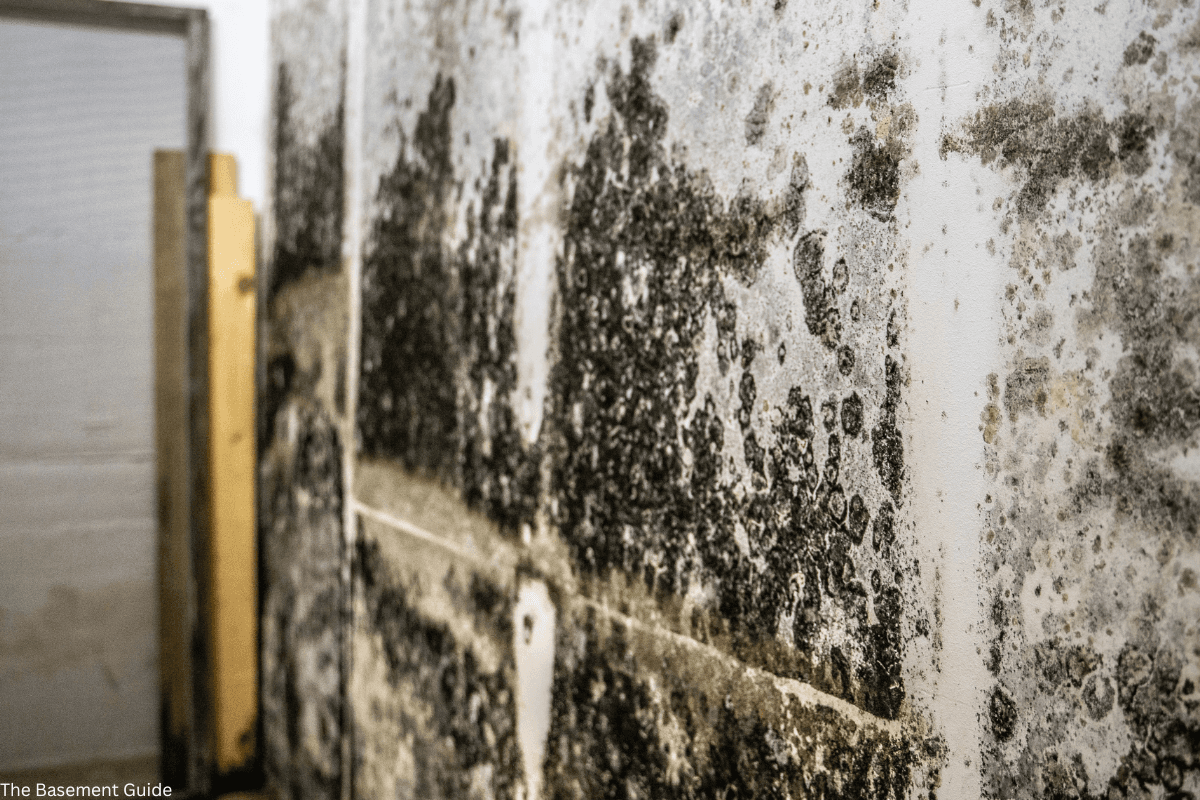
Basement mold affects an estimated 50 to 60 percent of homes in the United States at some point. It thrives in basements because basements naturally provide the three conditions mold needs to grow: moisture, organic material to feed on, and limited airflow. The EPA states that indoor mold growth begins within 24 to 48 hours of a surface staying wet, which means prevention is almost entirely about moisture control.
Basement mold prevention is a layered system of moisture management practices rather than a single product or intervention, because mold has multiple entry pathways into a basement and no single measure addresses all of them simultaneously. The layers work in sequence from the outside in: exterior water management (grading, gutters, drainage) reduces the volume of water reaching the foundation; waterproofing and crack sealing limits how much of that water penetrates the foundation; a dehumidifier manages the ambient humidity that remains after waterproofing; and air circulation prevents that residual moisture from settling on surfaces long enough to support growth. Skipping any layer leaves a gap that the others cannot fully compensate for, which is why homeowners who run a dehumidifier but neglect exterior drainage, or who seal cracks but never address chronic condensation, still experience mold despite their efforts. Prevention is also fundamentally different from treatment: prevention eliminates the conditions that allow mold to establish, while treatment addresses mold that has already grown and requires a separate remediation process to remove it safely.
The good news is that basement mold is nearly 100 percent preventable with consistent habits and the right tools. This guide covers why basements are so prone to mold, how to control humidity and moisture at every source, how to spot early warning signs before mold spreads, what to do if you find mold growing, and what prevention costs compared to the cost of professional mold remediation.
If you already have visible mold and need removal pricing, see our mold remediation cost guide. If your basement smells musty but you cannot see mold, see our musty basement smell guide for how to track down the source.
Why Basements Are Prone to Mold Growth
Basements create ideal mold conditions that most other rooms in your home do not. Understanding why helps you target prevention efforts where they matter most.
Moisture From the Ground and Walls
Concrete is porous. Even a foundation wall that appears dry is constantly absorbing small amounts of moisture from the surrounding soil through a process called capillary action. This moisture migrates through the concrete and evaporates on the interior surface, raising humidity levels in the basement air. Foundation cracks, the cove joint where the floor meets the wall, and gaps around pipes provide additional pathways for water and water vapor to enter. See our wet basement walls guide for a detailed breakdown of every moisture entry point.
Condensation on Cool Surfaces
Basement walls and floors stay cool year-round because they are in contact with the ground. When warm, humid air from the rest of the house or from outside enters the basement, it hits these cool surfaces and releases moisture as condensation. This condensation wets surfaces that then become mold growth sites. The effect is worst in summer when warm outdoor air meets cool basement surfaces, and it can also occur in winter when heated indoor air contacts cold exterior walls.
Organic Materials That Feed Mold
Mold feeds on organic materials. Basements are full of them: drywall paper backing, wood studs and floor joists, cardboard storage boxes, carpet and carpet padding, fabric on furniture, and even accumulated dust which contains organic particles. Any of these materials that stay damp for 24 to 48 hours or more can begin supporting mold growth.
Limited Air Circulation
Basements typically have fewer windows, no direct HVAC supply in older homes, and areas behind furniture, storage boxes, and built-in shelving where air stagnates. Stagnant air allows moisture to accumulate on surfaces without evaporating, creating the persistent dampness that mold requires.
How to Control Basement Humidity and Prevent Mold
Humidity control is the foundation of basement mold prevention. If you keep relative humidity below 50 percent consistently, mold cannot establish itself even if organic materials are present.
Keep Relative Humidity Below 50 Percent Year-Round
The EPA recommends indoor humidity between 30 and 50 percent to prevent mold growth. For basements, aim for 45 percent or below as a consistent target. Above 55 percent, mold spores can begin germinating on surfaces within days.
How to achieve this: Run a properly sized dehumidifier with a built-in humidistat and auto-drain hose so it operates continuously without needing manual emptying. For most basements (500 to 1,500 square feet), a 50 to 70 pint capacity dehumidifier is appropriate. Undersized units run constantly without achieving target humidity. See our best basement dehumidifiers guide for product recommendations and our dehumidifier myths guide for sizing mistakes to avoid.
Place digital hygrometers in 2 to 3 locations around the basement (near the dampest wall, in the center, and near any finished area) and check readings weekly. If humidity consistently exceeds 50 percent despite running a dehumidifier, you have a water intrusion problem that the dehumidifier alone cannot solve.
Manage Exterior Water Before It Reaches the Foundation
The majority of basement moisture problems originate outside the home, not inside. Controlling exterior water is the single most effective mold prevention strategy.
Gutters and downspouts. Clean gutters at least twice a year (spring and fall) and ensure downspouts discharge water at least 6 feet from the foundation. Clogged gutters overflow and dump water directly against the foundation wall, which raises hydrostatic pressure and drives moisture through the concrete.
Yard grading. The ground surface should slope away from the foundation at a rate of at least 1 inch per foot for the first 6 to 10 feet. If water pools near the foundation after rain, regrading is one of the cheapest and most impactful improvements you can make.
Window wells. Install window well covers to prevent rain from accumulating in window wells, and ensure each well has a gravel drain at the bottom. A flooded window well pushes water directly through the basement window frame.
Foundation cracks. Seal any visible cracks in the foundation with epoxy or polyurethane injection. Even hairline cracks allow water vapor to pass through. See our types of foundation cracks guide for how to assess severity and our foundation crack repair cost guide for pricing.
Waterproof From the Inside
For basements with persistent moisture intrusion that exterior improvements alone cannot solve, interior waterproofing provides the next layer of defense.
Sealers and coatings. Waterproof paint and masonry sealers like DRYLOK or RadonSeal reduce moisture transmission through concrete walls and floors. These products work for minor dampness but will not stop active water leaks under pressure. See our waterproof basement paint and sealers guide and our DRYLOK vs RadonSeal comparison for product details.
Vapor barriers. A polyethylene vapor barrier installed on basement walls before finishing prevents moisture in the concrete from reaching drywall and insulation. This is essential if you plan to finish your basement. See our best vapor barriers guide.
Interior drainage and sump pump. For basements with recurring water entry, an interior perimeter drainage system paired with a sump pump collects water at the wall-floor joint and removes it before it can spread across the floor. This is the standard professional solution for wet basements. See our sump pump buying guide and our french drain cost guide for options and pricing. Always install a battery backup pump to keep the system running during power outages when storms are most likely. See our backup power for sump pumps guide.
Improve Basement Air Circulation
Moving air prevents moisture from settling on surfaces long enough to support mold growth.
Keep furniture and storage away from walls. Leave at least 6 inches of space between stored items and basement walls. This allows air to circulate behind items and prevents hidden moisture pockets where mold grows undetected.
Run fans. A ceiling fan on low speed or one or two oscillating fans improve air movement throughout the space, especially in corners and behind shelving.
Vent exhaust fans to the outside. If your basement has a bathroom or laundry area, make sure exhaust fans vent to the outside, not into the basement or attic. Venting humid air into the basement defeats the purpose entirely.
Maintain your HVAC system. Service your heating and cooling system annually. Change air filters every 60 to 90 days. If your basement has HVAC supply and return vents, keep them open and unobstructed to maintain air circulation.
How to Spot Early Signs of Basement Mold
Catching mold early means a $20 cleaning project instead of a $1,500 to $5,000 professional remediation job.
| Warning Sign | What It Means | What to Do |
|---|---|---|
| Musty or earthy smell that is strongest in the basement | Mold is actively growing somewhere, even if you cannot see it. The smell comes from microbial volatile organic compounds (MVOCs) released by mold colonies. | Track the odor to its source. Check behind furniture, under carpet, inside wall cavities, and around the sump pit. See our musty basement smell guide. |
| Small dark spots on walls, ceiling, or floor joists | Visible mold colony in early stages. Colors range from black, green, and white to orange and pink depending on the species. | Clean immediately with a non-bleach mold cleaner. Fix the moisture source. |
| White, powdery deposits on concrete walls | This is likely efflorescence (mineral deposits from water moving through concrete), not mold. However, efflorescence confirms active moisture migration, which means mold conditions exist. | Address the moisture source. See our basement efflorescence guide. |
| Allergy symptoms that improve when you leave the basement | Mold spores trigger allergic reactions including sneezing, congestion, itchy eyes, and respiratory irritation. If symptoms reliably worsen in the basement and improve elsewhere, airborne mold is likely present. | Test air quality with a mold test kit or hire an air quality professional. Consider a HEPA air purifier for immediate relief. |
| Peeling paint or bubbling on walls | Moisture is migrating through the wall and pushing the paint off the surface. The damp area behind the paint is a prime mold growth site. | Remove the loose paint, check for mold behind it, and address the moisture source before repainting with waterproof sealer. |
| Humidity consistently above 55 percent despite running a dehumidifier | The dehumidifier is undersized, the moisture source is too large for the dehumidifier to overcome, or there is active water intrusion that needs to be addressed at the source. | Investigate water entry points. Upgrade the dehumidifier if undersized. Consider professional waterproofing. |
What to Do If You Find Mold in Your Basement
For Small Areas Under 10 Square Feet
You can clean this yourself. Spray the area with a non-bleach mold cleaner (Concrobium Mold Control is the most widely recommended product for home use). Wipe or scrub hard surfaces. Discard porous materials that are badly affected (carpet, drywall, cardboard). Improve ventilation and fix the moisture source. Do not use bleach on porous surfaces because bleach kills surface mold but does not penetrate into porous materials where mold roots grow.
For Large Areas Over 10 Square Feet or Health Concerns
Call a professional mold remediation company. Professional remediation typically costs $1,500 to $5,000 for a standard basement, though extensive infestations can cost $10,000 or more. Remediation includes containment, air filtration, removal of affected materials, antimicrobial treatment, and verification testing. See our mold remediation cost guide for a detailed pricing breakdown.
For Anyone With Respiratory Conditions
If anyone in the household has asthma, chronic lung disease, or a compromised immune system, treat any visible mold as a professional job regardless of size. Disturbing mold during cleaning releases spores into the air, which can cause serious respiratory reactions in sensitive individuals.
Recommended Tools & Products
These four tools help thousands of readers stay ahead of mold. They are the ones we use ourselves.
Mold Test Kit
My Mold Detective Mold Test Kit
Includes air sampling plates and surface swabs with lab results in days. Perfect for checking after water events or every spring.
Check Price on Amazon →Mold Control Spray
Concrobium Mold Control Spray
EPA-registered, bleach-free spray that kills mold and leaves a protective barrier. Odorless and safe around kids and pets once dry. Great for walls, joists, and furniture.
Check Price on Amazon →HEPA Air Purifier
Levoit Core 600S True HEPA Air Purifier
Handles large basements quietly with an app for real-time air quality. Captures 99.97 percent of mold spores. Run on auto and watch the musty smell vanish.
Check Price on Amazon →Moisture Meter
Klein Tools ET140 Pinless Moisture Meter
Scans drywall, concrete, and wood without holes. Instant readings with clear alerts. Check suspect areas monthly to catch damp spots early.
Check Price on Amazon →Seasonal Basement Mold Prevention Checklist
🌱 Spring
Deep clean the basement and check for any mold that may have developed over winter. Test humidity levels and recalibrate hygrometers. Clean gutters and downspouts before spring rains. Inspect the sump pump by pouring water into the pit and confirming it activates and shuts off correctly. Check yard grading for any settling that may have occurred over winter.
☀️ Summer
Run the dehumidifier continuously, especially during humid weather. Keep basement windows closed on humid days (opening windows when outdoor humidity is higher than indoor humidity makes the problem worse). Monitor humidity weekly and watch for condensation on cool surfaces. This is peak mold season for basements.
🍂 Fall
Clean gutters and downspouts again before fall rains. Inspect the foundation exterior for new cracks or settling. Service the HVAC system before heating season. Test the sump pump and battery backup. Remove any cardboard boxes or organic debris stored against walls during summer.
❄️ Winter
Watch for condensation on cold basement walls and cold water pipes. Insulate exposed cold water pipes with foam pipe insulation to prevent condensation dripping onto surfaces below. If the basement is unheated, a small space heater running occasionally can prevent surface temperatures from dropping low enough to cause heavy condensation. Monitor for ice dams on the roof, which can cause meltwater to enter the basement through unusual paths.
How Much Does Basement Mold Prevention Cost?
Prevention is dramatically cheaper than remediation. Here is what each prevention measure costs compared to the cost of professional mold removal.
| Prevention Measure | Cost | How Often |
|---|---|---|
| Dehumidifier (50 to 70 pint) | $200 to $350 to purchase, $50 to $100 per year in electricity | One-time purchase, replace every 5 to 8 years |
| Digital hygrometers (2 to 3 units) | $10 to $30 each | One-time purchase |
| Gutter cleaning | $100 to $250 per visit or free if DIY | Twice per year |
| Downspout extensions | $10 to $30 each | One-time purchase |
| Foundation crack sealing (DIY epoxy kit) | $20 to $80 per crack | As needed |
| Waterproof paint or sealer (DIY) | $30 to $60 per 5-gallon pail | Every 5 to 10 years |
| HEPA air purifier | $200 to $500 | One-time purchase, filter replacement $30 to $80 per year |
| Professional mold remediation (the cost of NOT preventing) | $1,500 to $10,000+ | Hopefully never |
Total annual cost of a solid prevention program: approximately $200 to $500 per year including dehumidifier electricity, gutter cleaning, and occasional supplies. This is 10 to 50 times less expensive than a single professional remediation visit.
Mold Risk and Response Guide
| Your Situation | Mold Risk Level | Recommended Action |
|---|---|---|
| Humidity consistently below 45 percent, no water history, no odor | Low | Continue current prevention program, inspect monthly |
| Humidity 45 to 55 percent, no visible mold or odor | Moderate | Upgrade dehumidifier if undersized, improve exterior drainage, monitor weekly |
| Humidity consistently above 55 percent | High | Investigate active water intrusion sources, address before mold establishes |
| Musty odor but no visible mold | High | Mold present but hidden — inspect behind walls, under carpet, around sump pit |
| Small visible mold patch under 10 sq ft, dry surface, isolated | Moderate | DIY clean with Concrobium, fix moisture source, monitor for recurrence |
| Visible mold over 10 sq ft | High | Professional remediation recommended |
| Mold on drywall or wood framing | High | Professional remediation — porous materials must be removed, not just cleaned |
| Mold discovered after a flood or sump pump failure | High | Professional remediation — assume mold is present in wall cavities and subfloor |
| Mold present and household member has respiratory symptoms | Critical | Professional remediation immediately, do not disturb mold during cleaning |
| White powdery deposits on concrete (efflorescence) | Moderate | Not mold but confirms active moisture migration — address water source |
| Peeling paint or bubbling on walls | Moderate | Active moisture behind wall — investigate and address before finishing |
| Condensation on cold water pipes dripping onto surfaces | Moderate | Insulate pipes with foam pipe insulation, monitor for mold on surfaces below |
| Mold discovered before listing home for sale | High | Professional remediation plus documentation before listing |
| Post-remediation, recurring mold in same location | High | Moisture source was not fully addressed — professional inspection required |
Frequently Asked Questions About Preventing Basement Mold
How do I prevent mold in my basement?
Preventing basement mold requires a layered approach that addresses moisture at every entry point rather than relying on a single product or fix. Start with exterior water management: clean gutters twice a year, extend downspouts at least 6 feet from the foundation, and ensure the yard grades away from the house at 1 inch per foot for the first 6 to 10 feet. Then address the foundation itself by sealing cracks with epoxy or polyurethane injection and applying a waterproof sealer or coating to porous concrete walls. Run a properly sized dehumidifier continuously with a humidistat set to maintain 45 percent or below, and place digital hygrometers in 2 to 3 locations to verify the target is being achieved. Keep stored items at least 6 inches from walls to allow air circulation, and do a visual inspection monthly checking behind furniture, under shelving, and along the base of walls. See our complete basement waterproofing guide for the full waterproofing approach that underpins any effective mold prevention program.
What humidity level causes mold in a basement?
Mold spores can begin germinating on surfaces when relative humidity stays above 55 percent for an extended period, and aggressive growth conditions develop at 60 percent and above where new colonies can establish within 24 to 48 hours on any damp organic surface. The EPA recommends keeping indoor humidity between 30 and 50 percent to prevent mold growth, and for basements specifically, 45 percent or below is the recommended consistent target because basement surfaces tend to stay cooler than the rest of the house and are more prone to condensation. Between 50 and 55 percent, the risk is moderate but the margin for error is thin, as any temporary spike from a rain event, laundry, or open windows can push conditions past the threshold. A digital hygrometer is the only reliable way to know your actual basement humidity, as the air may feel dry while the reading is above 55 percent. Humidity that consistently exceeds 50 percent despite a running dehumidifier indicates an active water intrusion problem that the dehumidifier alone cannot solve. See our basement humidity guide for the full target ranges by season and basement use type.
Can I use bleach to kill basement mold?
Bleach is effective at killing mold on non-porous surfaces like tile, glass, sealed concrete, and metal, where it can reach and destroy the entire mold structure on contact. However, bleach does not penetrate into porous materials like drywall, wood framing, floor joists, or unsealed concrete where mold roots (called hyphae) grow into the material. On porous surfaces, bleach kills the surface mold and creates the visual appearance of a clean surface, but leaves the root structure intact so the mold regrows within days or weeks once moisture conditions return. For porous surfaces, use a product specifically designed to penetrate and kill mold at the root level, such as Concrobium Mold Control, which kills mold and leaves a protective barrier that inhibits regrowth. Additionally, bleach is harmful to the beneficial bacteria in septic systems when it enters the drain system, which is a consideration for homes on septic. See our network's best septic-safe cleaning products guide for bleach alternatives that are both effective against mold and safe for septic systems.
Will a dehumidifier prevent basement mold?
A properly sized dehumidifier running continuously is the single most effective tool for preventing basement mold because it directly controls the ambient humidity that mold needs to grow and reproduce. However, a dehumidifier alone will not solve the problem if you have active water intrusion from foundation cracks, a failed sump pump, poor exterior drainage, or a flooded window well, because those sources introduce water faster than any dehumidifier can remove it. The dehumidifier manages the ambient moisture that remains after waterproofing and drainage have done their work, making it the last layer of defense rather than the first. Size matters significantly: an undersized dehumidifier runs continuously without reaching the target humidity, burning electricity without solving the problem, while an appropriately sized 50 to 70 pint unit for most basements cycles on and off and maintains consistent control. Always connect the dehumidifier to a drain hose for continuous drainage rather than relying on emptying the reservoir manually, as a full reservoir shuts the unit off and allows humidity to rise unchecked. See our best basement dehumidifiers guide for sizing guidance and product recommendations.
How often should I check my basement for mold?
Do a visual walk-through of your basement at least once a month, systematically checking behind furniture, under shelving, around the sump pit, near any previous water stains or efflorescence, along the base of all walls where the floor meets the foundation, and on exposed wood floor joists overhead. Check hygrometer readings at least weekly, and more frequently during high-humidity summer months when outdoor air entering the basement can spike indoor humidity rapidly. After any water event including heavy rain, flooding, a plumbing leak, or a sump pump failure, inspect within 24 to 48 hours because the EPA confirms mold can begin growing on wet surfaces within that window. Use a pinless moisture meter to scan wall surfaces and floor joists for elevated moisture readings in areas that do not show visible staining, as mold often grows inside wall cavities or behind insulation before it is visible. Document any findings with photographs and dates so you can track whether conditions are improving, stable, or worsening over time.
What does basement mold look like?
Basement mold appears as spots or patches that can be black, dark green, gray, white, orange, or pink depending on the species, and can have a flat, powdery, fuzzy, or cottony texture depending on the growth stage and the surface it is growing on. On drywall, mold typically appears as irregular dark spots or staining that does not wipe clean and may be accompanied by a soft or deteriorated surface texture as the paper backing is consumed. On wood floor joists and framing, mold often appears as a gray, green, or black discoloration with a fuzzy surface texture, and in early stages may look like dirt that does not brush off. On concrete walls, mold may appear as black or green patches, often concentrated near cracks, the cove joint, or areas where efflorescence is present. Do not confuse mold with efflorescence, which is a white powdery mineral deposit on concrete that is not mold but does indicate active moisture migration. See our basement efflorescence guide for how to distinguish the two.
Is basement mold dangerous to your health?
Mold exposure can cause a range of health effects depending on the species, the concentration of airborne spores, and the sensitivity of the individual exposed. Common effects include allergic reactions (sneezing, congestion, itchy and watery eyes, skin irritation), respiratory symptoms (coughing, wheezing, shortness of breath), and headaches from prolonged exposure to microbial volatile organic compounds (MVOCs). Children, elderly individuals, people with asthma, and anyone with a compromised immune system are at significantly higher risk of more serious respiratory infections from mold exposure. The stack effect in homes means basement mold spores are continuously pulled upward into the living areas, so basement mold is a whole-house air quality problem rather than a localized basement problem. Some species such as Stachybotrys chartarum (black mold) produce mycotoxins that are associated with more serious health effects, though any mold present in visible quantity in a living space should be treated as a health concern regardless of species. If anyone in the household is experiencing respiratory symptoms that worsen at home and improve when away, professional mold testing and remediation is warranted.
Does mold in the basement affect the rest of the house?
Yes, basement mold directly affects air quality throughout the entire home due to the stack effect, the natural movement of air upward through a building driven by warm air rising. Research suggests that up to 50 percent of the air on the first floor of a home originates from the basement or crawl space, meaning airborne mold spores from a basement colony are continuously distributed through the living areas above. In homes with forced-air HVAC systems, this distribution is accelerated because basement air is actively drawn into the return air system and circulated to every room in the house. Mold spores that settle in HVAC ductwork can then colonize the ducts themselves if any moisture is present, creating a secondary contamination source that is expensive to clean professionally. Running a true HEPA air purifier in the basement significantly reduces the airborne spore count before it reaches the upper floors. See our best basement air purifiers guide for units sized for basement air volume.
Should I test for mold or just clean it?
If you can see mold, testing is generally unnecessary because the visible growth is itself confirmation that mold is present and the moisture source needs to be addressed regardless of species. Testing is most valuable in four specific situations: when you smell mold but cannot locate the source visually and need to confirm its presence before opening walls; when you need documentation for insurance claims, real estate disclosure, or legal purposes; when you want airborne spore counts to assess whether remediation was successful; or when a household member has health symptoms suggesting mold exposure but no visible growth has been found. A basic home test kit with lab analysis costs $10 to $50 and confirms mold presence and species. Professional air quality testing costs $200 to $600 and provides more detailed spore count data and species identification that can guide remediation scope decisions. After professional remediation, post-remediation clearance testing is strongly recommended to verify that spore counts have returned to normal levels before closing up containment barriers and reoccupying the space.
Glossary of Basement Mold Terms
Relative Humidity
The amount of moisture in the air expressed as a percentage of the maximum moisture that air can hold at a given temperature, with higher temperatures allowing air to hold more moisture before reaching saturation. Relative humidity above 55 percent creates conditions that support mold growth on surfaces, while below 50 percent mold cannot establish even when organic materials are present. The EPA recommends maintaining indoor relative humidity between 30 and 50 percent, and for basements specifically, 45 percent or below is the recommended target because basement surfaces are cooler and more prone to condensation. See our basement humidity guide for seasonal targets and monitoring guidance.
Efflorescence
A white, chalky mineral deposit that appears on concrete, brick, or masonry block surfaces when water migrates through the material, dissolves soluble salts, and then evaporates on the interior surface leaving the salts behind as a powdery residue. Efflorescence is not mold and poses no direct health risk, but it is a reliable indicator that water is actively migrating through the wall, which means the moisture conditions that support mold growth exist in or near that wall section. Any efflorescence should be treated as a signal to investigate and address the moisture source rather than simply cleaning the deposit off the surface. See our basement efflorescence guide for how to distinguish it from mold and how to address the underlying moisture source.
Capillary Action
The process by which water is drawn upward or laterally through the pore spaces of a porous material like concrete by surface tension forces, independent of gravity and pressure, drawing moisture from wet soil into the foundation wall continuously even without cracks. Capillary action is a persistent low-level moisture source that contributes to the baseline humidity in any basement with an untreated concrete foundation, and it is the reason that waterproof coatings applied to the interior face of concrete walls can reduce moisture transmission even in the absence of visible cracks or active water pressure. Blocking capillary action requires either a waterproof coating or sealer on the concrete surface or a drainage system that relieves the moisture before it can migrate through. See our waterproof basement paint and sealers guide for products that address capillary moisture transmission.
Hydrostatic Pressure
The force exerted by water in saturated soil against a foundation wall or floor, which increases with soil moisture content and depth and pushes water through cracks, joints, and porous concrete into the basement under active pressure rather than just capillary wicking. Hydrostatic pressure is the primary driver of serious water intrusion events and also contributes to foundation wall cracking and bowing over time as the sustained lateral force exceeds the wall's structural capacity. Managing hydrostatic pressure through exterior grading, gutters, French drains, and interior or exterior waterproofing systems is the most important step in preventing the water intrusion that creates mold conditions. See our complete basement waterproofing guide and bowing basement walls guide for how hydrostatic pressure affects both moisture and structural integrity.
MVOC (Microbial Volatile Organic Compound)
A gas produced by mold, bacteria, and other microorganisms as a byproduct of their metabolic activity, which is responsible for the characteristic musty or earthy odor associated with mold growth in basements. MVOCs are detectable by smell before visible mold colonies become apparent, making the musty odor one of the earliest and most reliable warning signs that mold is actively growing somewhere in the space even when it cannot yet be seen. Different mold species produce different MVOC profiles, which is why basement mold smells can range from earthy and musty to sharp and chemical depending on what is growing. See our musty basement smell guide for how to trace the odor to its source.
HEPA Filter (High-Efficiency Particulate Air)
A mechanical filtration standard requiring that a filter capture at least 99.97 percent of particles at 0.3 microns in diameter, the most penetrating particle size, which includes the full size range of mold spores (typically 1 to 30 microns in diameter). Air purifiers equipped with true HEPA filters effectively reduce the concentration of airborne mold spores in a basement, limiting their dispersal to upper floors through the stack effect and providing meaningful relief for occupants with mold allergies or respiratory conditions while source remediation is underway. True HEPA filters must be distinguished from "HEPA-type" or "HEPA-style" filters, which do not meet the same efficiency standard and are significantly less effective at capturing fine particles. See our best basement air purifiers guide for units that meet the true HEPA standard.
Vapor Barrier
A sheet of polyethylene plastic or similar low-permeability material installed on basement walls or floors to prevent water vapor from passing through porous concrete into the living space by capillary action or vapor diffusion. Vapor barriers are essential when finishing a basement because they protect the drywall and wood framing of the finished wall from moisture that would otherwise migrate through the concrete and cause mold growth hidden inside the wall cavity. Minimum thickness for basement wall applications is 6 mil polyethylene, though 10 to 20 mil reinforced products provide better durability during installation and longer service life. See our best vapor barriers guide for product recommendations by application type.
Mold Remediation
The professional process of safely containing, removing, and treating mold growth in a building to return airborne spore counts to normal background levels, which involves physical containment of the affected area with negative air pressure to prevent cross-contamination, HEPA air filtration, removal and disposal of contaminated porous materials, antimicrobial treatment of affected surfaces, and post-remediation clearance testing. Professional remediation costs $1,500 to $10,000 or more depending on the extent of the infestation, the materials affected, and whether structural components like wall framing or floor joists require removal. Remediation addresses mold that has already grown and is a separate process from prevention, which eliminates the moisture conditions that allow mold to establish in the first place. See our mold remediation cost guide for detailed pricing by scope and affected material type.
Stack Effect
The natural movement of air upward through a building driven by the buoyancy of warm air, which creates a continuous low-pressure zone in the basement that draws basement air (including mold spores, humidity, radon, and other contaminants) upward into the living areas above. The stack effect is most pronounced in cold weather when the temperature difference between the warm interior and the cold exterior is greatest, and in taller buildings where the vertical pressure differential is larger. Research suggests that up to 50 percent of the air on the first floor of a home may originate from the basement or crawl space, which is why basement mold and radon are whole-house health concerns despite originating in a below-grade space. See our radon testing and mitigation guide for how the same stack effect that distributes mold spores also draws radon into living spaces.
Related Guides
On thebasement.guide
What professional mold remediation costs by scope, affected material type, and basement size, relevant when prevention has failed and active mold requires professional removal.
How to trace a musty odor to its source when mold is present but not yet visible, including the inspection sequence that locates hidden growth behind walls, under flooring, and inside cavities.
Target humidity ranges by season and basement use type, and the tools and strategies for maintaining the below-50-percent level that prevents mold from establishing.
Top-rated dehumidifiers for maintaining mold-preventing humidity levels, with sizing guidance for basements from 500 to 2,500 square feet and features that matter for continuous unattended operation.
The most common mistakes homeowners make when using dehumidifiers, including undersizing, wrong placement, and misunderstanding what a dehumidifier can and cannot do for mold prevention.
True HEPA air purifiers that reduce airborne mold spore counts in basements, limiting their distribution to upper floors through the stack effect and providing relief for occupants with mold sensitivities.
How water enters through foundation walls and the specific repair approaches for each water entry pathway, relevant for addressing the moisture sources that lead to mold growth on and behind basement walls.
How to distinguish the white mineral deposits of efflorescence from mold, and why efflorescence is a reliable indicator that mold conditions exist nearby even when no mold is yet visible.
The full waterproofing reference covering every method for managing the moisture that is the root cause of basement mold, from exterior grading through interior drainage systems.
What professional waterproofing costs in 2026, relevant for budgeting the waterproofing work that forms the foundation of any effective long-term mold prevention program.
How to identify and seal the foundation cracks that provide water vapor entry pathways and create the localized moisture conditions where mold concentrates on basement walls.
Pricing for crack sealing methods from DIY epoxy kits to professional injection, the first line of interior waterproofing defense for mold prevention.
Product recommendations for the polyethylene vapor barriers that protect finished basement walls from the moisture vapor migration that causes hidden mold growth inside wall cavities.
A comparison of the two most widely used waterproof concrete sealers for reducing the capillary moisture transmission that contributes to baseline basement humidity and mold risk.
The full guide to interior concrete coatings that reduce moisture transmission through basement walls, a cost-effective first step in mold prevention for basements with minor dampness.
How to choose the right sump pump for active water removal from the basement, the most important equipment decision for any basement with recurring water entry.
Why battery backup sump pumps are essential for mold prevention, given that power outages most often occur during the storms that generate the most water, leaving the primary pump inactive exactly when it is most needed.
How the same foundation sealing and waterproofing work that prevents mold also reduces radon entry pathways, making the two goals complementary in below-grade spaces.
Everything to verify before finishing a basement, including mold inspection, moisture testing, and waterproofing verification that must be completed before any organic materials are installed.
How to evaluate a basement for mold risk during a home purchase, including the inspection sequence, the questions to ask, and how mold findings affect negotiating position.
From Our Network
Bleach-based mold cleaners kill beneficial septic tank bacteria when they enter the drain system. This guide covers plant-based cleaning alternatives that are effective against mold on non-porous surfaces and safe for septic systems.
For homes where a basement musty smell is suspected to be mold but may be septic gas entering through dry P-traps or failed seals, this guide covers how to distinguish between the two odor sources and address each one.
External Resource
The EPA's comprehensive mold course covering the science of mold growth, health effects by exposure level, prevention strategies, and remediation standards used by professional contractors.